

More news on this day
Emirates has become the latest Gulf mega-carrier to be pulled into an unprecedented wave of airport shutdowns and mass flight cancellations, as sweeping airspace restrictions across Bahrain, the United Arab Emirates, Qatar, Saudi Arabia and Jordan upend aviation networks between Europe, Asia and Africa.
Get the latest news straight to your inbox!
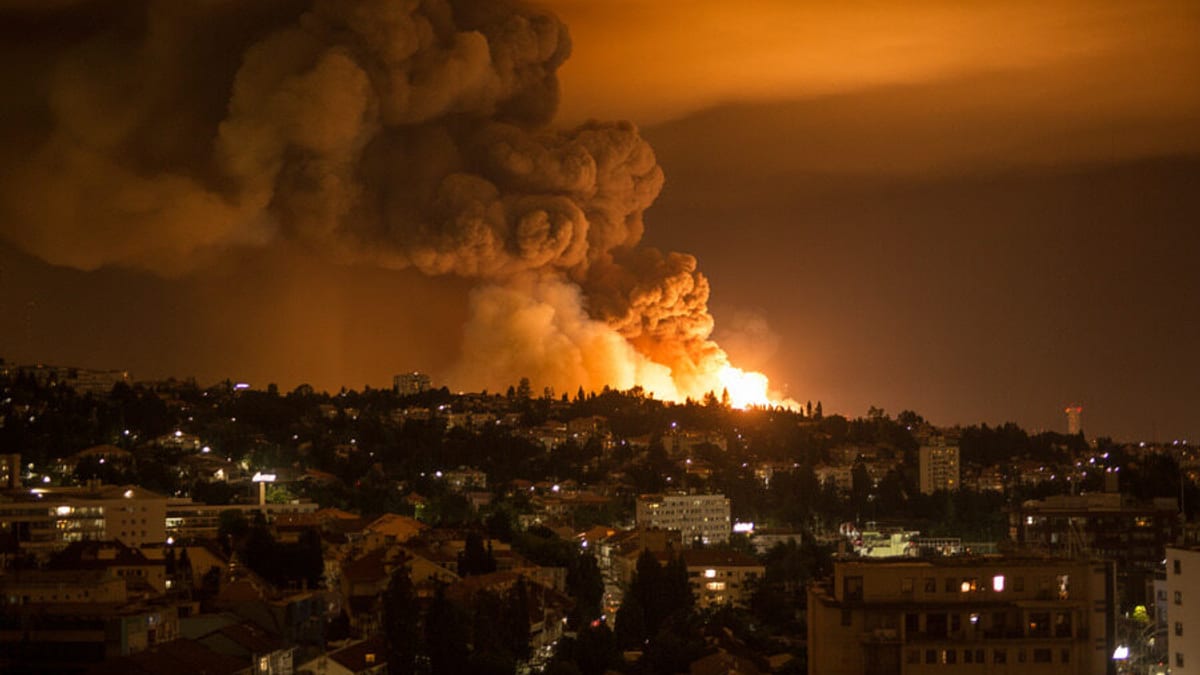
Image by Latest International / Global Travel News, Breaking World Travel News
Regional Conflict Freezes Key Gulf Air Corridors
Publicly available advisories show that from late February into March 2026, airspace across several Middle Eastern states shifted from partial curbs to widespread closures for civilian traffic following escalating military action involving Iran, the United States and regional powers. Bahrain, Qatar, Kuwait and the United Arab Emirates were among the first to impose stringent limits, later joined by Jordan with partial restrictions that further narrowed viable routings for long haul services.
Analysis of open flight data and industry bulletins indicates that by early March many of the Gulf’s busiest hubs were effectively cut off from overflight access in multiple directions, forcing airlines either to suspend operations outright or attempt significant detours that were not always operationally or commercially viable. Reports on the broader economic fallout from the conflict describe a near total halt in scheduled services for some leading Middle East carriers at the height of the closures.
These restrictions have coincided with temporary shutdowns or sharply curtailed operations at major airports, including Dubai International and Abu Dhabi, following missile and drone activity in the wider Gulf. Regional port and travel advisories describe airspace in most Gulf countries as closed or heavily constrained, with passenger movements limited to occasional relief or repositioning flights.
The result has been a cascading impact well beyond the region, as flights between Europe and Asia that usually traverse Gulf and Levant skies were either cancelled in large numbers or forced onto longer routings through alternative corridors, adding hours to journey times and straining airline schedules worldwide.
Emirates, Saudia, Qatar Airways, Etihad and Others Slash Schedules
Among the Gulf giants, Emirates, Saudia, Qatar Airways, Etihad Airways, flydubai and Gulf Air have all faced profound operational disruption as the conflict unfolded. Travel alerts compiled by corporate travel managers and aviation security firms in early March note that Emirates temporarily suspended scheduled flights to and from Dubai for several days, while Etihad halted commercial services to and from Abu Dhabi until at least early March as airspace restrictions tightened.
Qatar Airways has been particularly affected by the closure of Qatari airspace, with regional media coverage stating that the carrier’s regular operations out of Doha remain largely suspended, shifting focus at times to limited relief services for stranded passengers. Separate economic analyses of the conflict’s impact on aviation suggest that Qatar Airways has cancelled the vast majority of its normal schedule since late February as a direct consequence of airspace bans and security concerns.
Saudia has also implemented sweeping suspensions. A regional port and travel advisory from early March details that Saudi Arabia’s flag carrier halted flights to Bahrain, Kuwait, Amman, Dubai, Abu Dhabi and Doha, alongside suspensions to several other regional destinations, reflecting the breadth of the closure regime. Royal Jordanian and other Middle Eastern airlines have issued similar notices warning of ongoing cancellations to and from hubs caught inside restricted airspace zones.
Gulf Air, based in Bahrain, has meanwhile been hit by the effective closure of its home country’s airspace. Passenger accounts and airline updates referenced in travel forums describe repeated cancellations of Bahrain bound flights and a pivot to using Saudi Arabia’s Dammam as a temporary operating point for some services, underscoring how carriers are improvising around closed skies and damaged or constrained airports.
Airport Shutdowns and Historic Flight Cancellations
Industry trackers and operational bulletins describe the scale of flight cancellations across the Middle East as the most severe since the onset of the COVID 19 pandemic. Open source tallies of airline activity indicate that closures affecting the UAE, Qatar, Kuwait, Bahrain and neighboring states have triggered thousands of cancellations per day at peak disruption, stranding large numbers of travelers across the Gulf, South Asia and Europe.
Dubai International Airport, the world’s busiest international hub in 2024 by passenger numbers, has experienced multiple full or near full shutdowns of commercial operations as a result of the conflict. Travel advisories directed at corporate clients warn that all flights to and from Dubai were suspended for extended periods in early March, with passengers urged to avoid traveling to the airport without confirmed departure times.
Abu Dhabi and Kuwait City have seen similar turbulence, with published accounts pointing to damage at airport facilities and the grounding or diversion of aircraft as missile and drone incidents unfolded. Port and aviation security reports for early March note that airspace in most Gulf countries was either closed or subject to tight restrictions, leaving only a handful of corridors open for limited traffic and emergency movements.
The squeeze on capacity has reached beyond flag carriers. International airlines from Europe, Asia and Africa have cut or suspended services into the Gulf and wider Middle East, citing both the lack of usable airspace and increased operational risk. Carriers ranging from Singapore Airlines and Japan Airlines to European operators such as Lufthansa have scaled back or redirected flights that would normally transit Gulf hubs, further amplifying the disruption felt by global travelers.
Reroutings Through Alternate Hubs as Oman and Egypt Step In
With much of traditional Gulf airspace constrained, airlines have scrambled to identify alternative routings between Europe, Asia and Africa. Aviation consulting analyses and government statements from neighboring states highlight a marked increase in traffic through Oman and Egypt, whose skies have remained comparatively accessible despite wider regional instability.
An advisory on Middle East port and airspace conditions from early March notes that while Oman imposed some restrictions, its airspace and main international airport remained open, allowing select airlines to continue operating and to facilitate crew changes. This relative openness has enabled Muscat to emerge as an ad hoc resilience hub for certain carriers seeking to bridge disrupted routes between South Asia, East Africa and Europe.
In North Africa, Egypt has gained prominence as a critical aviation corridor. Reporting from regional media describes how airlines have rerouted flights from Europe across the Mediterranean and through Egyptian airspace before continuing on to Asian destinations, partially offsetting the loss of direct overflight paths across the Gulf and Levant. Cairo has consequently seen a spike in transit traffic as carriers test new schedules and flight timings around evolving military risk assessments.
These emergency routings, however, carry significant cost implications. Longer flight paths demand more fuel at a time when oil markets are reacting sharply to the closure of the Strait of Hormuz and threats to energy infrastructure, adding financial pressure to airlines already hit by lost revenue from cancelled services. Network planners are therefore weighing the trade off between preserving connectivity and limiting exposure to higher operating costs and ongoing uncertainty.
Economic Shock for Gulf Aviation and Tourism
The wave of cancellations and airport shutdowns is feeding directly into a broader economic shock for the Gulf aviation sector and its tourism dependent economies. Economic assessments of the conflict’s impact on air travel describe sharp declines in passenger numbers, plummeting load factors and severe revenue losses for Middle East carriers, with knock on effects for hotels, retail, and wider service industries linked to hub airports.
Analysts cited in recent business coverage estimate that airlines such as Qatar Airways have cancelled the overwhelming majority of flights since hostilities escalated, with other Gulf carriers operating only skeleton schedules or relief services for stranded travelers. This sudden collapse in capacity is already echoing in travel demand to nearby leisure markets, where reports from Cyprus, Greece and other Mediterranean destinations point to rising cancellation rates and weaker forward bookings from Gulf and Israeli source markets.
Financial markets have responded to the turmoil with sharp falls in airline and travel related stocks, particularly in the days immediately following major escalatory events in late February and early March. Commentary from investment banks underscores the dual hit facing carriers: disrupted route networks due to airspace closures and higher input costs as fuel prices rise in response to threats to regional oil and gas exports.
For now, the outlook for Emirates, Saudia, Qatar Airways, Etihad, flydubai, Gulf Air and their regional peers remains highly uncertain. Published advisories continue to stress that airspace restrictions and airport closures can be tightened or extended at short notice, leaving airlines with limited visibility on when full scale operations might resume and forcing travelers worldwide to factor prolonged volatility into their plans.