

More news on this day
Gulf mega-carriers led by Emirates, Saudia, Qatar Airways, Etihad, Flydubai and Gulf Air are contending with one of the worst operational crises since the pandemic, as sweeping airspace restrictions across Bahrain, the United Arab Emirates, Qatar, Saudi Arabia and Jordan trigger airport shutdowns, mass flight cancellations and global knock-on disruption.
Get the latest news straight to your inbox!
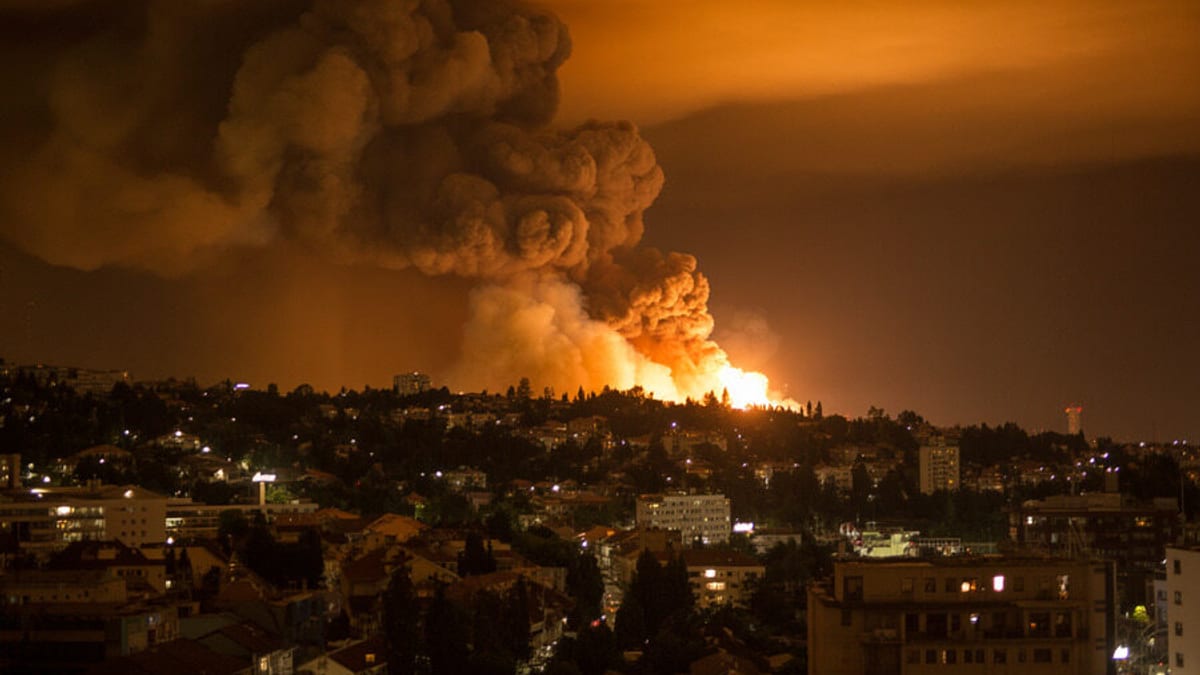
Image by Global Travel Alerts, Advisories, International Travel Alerts
Regional Conflict Triggers Widespread Airspace Closures
Airspace across key Middle Eastern countries has been periodically closed or heavily restricted since late February 2026 in response to escalating conflict involving Iran, Israel and the United States. Publicly available aviation advisories describe closures or severe limitations in the skies over Bahrain, the UAE, Qatar, Saudi Arabia, Jordan and several neighboring states, forcing carriers to ground aircraft or reroute around large no-fly zones.
Reports indicate that on and after 28 February, coordinated missile and drone strikes targeting infrastructure in the Gulf prompted Bahrain, Qatar, Kuwait and the UAE, among others, to shut their airspace to most civil traffic. Subsequent assessments from risk consultancies and industry bodies describe the situation as one of the most disruptive episodes for regional aviation in years, with ripple effects stretching well beyond the Middle East.
Travel and security bulletins issued in early March describe airspace across much of the Gulf region as either closed or operating under tight restrictions, with frequent short-notice changes. Airlines planning long-haul routes between Europe, Asia, Africa and Australasia have faced sudden airspace shutdowns, periods of complete ground stops and recurring diversions as missile and drone alerts trigger additional constraints.
Jordan has at times adopted a partial closure of its airspace as a precaution, according to multiple travel advisories, adding another layer of complexity on a corridor that is normally central for east-west traffic. Even where airports remain open, approach paths and overflight options have been curtailed, reducing capacity and lengthening journey times.
Emirates, Etihad, Flydubai And Gulf Air Slash Schedules
The region’s heavyweight carriers have been hit particularly hard. Analysis cited in recent aviation and business coverage suggests that Emirates, Etihad Airways, Qatar Airways and other Gulf operators collectively carried a significant share of Europe to Asia traffic before the crisis, meaning closures in their home region immediately reverberated across global networks.
Public flight-tracking data and airline updates show that Emirates sharply reduced its operations from several hundred daily flights to a fraction of its normal schedule in the first days of March. Etihad has suspended many departures from Abu Dhabi at various points, while Flydubai has operated only limited services, prioritizing shorter regional links when security assessments permitted.
Bahrain-based Gulf Air has experienced some of the most dramatic disruption. Travel agency notices and passenger updates describe the airline as effectively grounded at times in March after Bahrain’s airspace was closed, with temporary arrangements shifting some operations to Saudi Arabia’s Dammam airport when feasible. The carrier’s reliance on a single hub in a heavily affected airspace corridor has left little flexibility to maintain regular passenger schedules.
Beyond the Gulf, carriers such as Malaysia Airlines, AEGEAN and Air India have also extended or expanded cancellations to destinations including Doha, Jeddah, Madinah, Dubai and Abu Dhabi, illustrating how closures in a relatively compact region can unsettle flight programs across multiple continents.
Saudia, Qatar Airways And Regional Players Grapple With Groundings
Flag carrier Saudia and Doha-based Qatar Airways have likewise been swept up in the turmoil. Advisories collated by travel management firms point to suspended services linking Saudi cities with Gulf neighbors including Bahrain, Kuwait, Doha, Dubai and Abu Dhabi during the most intense phases of airspace closure.
Qatar Airways, whose hub at Hamad International Airport normally functions as a major connector between Europe, Asia, Africa and Australasia, has seen a particularly steep drop in activity. Industry data referenced in recent reports suggests the airline has had to cancel the vast majority of its scheduled flights since hostilities escalated, as Qatari airspace restrictions and regional risk assessments made normal hub-and-spoke operations unviable.
Other regional airlines, including Kuwait Airways and carriers based in Lebanon, Iraq and Jordan, are reported to have suspended or curtailed services on routes into the Gulf, both in response to direct airspace closures and to minimize exposure to missile and drone trajectories. Turkish and Pakistani airports have emerged as temporary choke points, with local media noting dozens of cancellations and delays on Middle East routes as aircraft and crews are left out of position.
The cumulative impact has been described in several analyses as a historic level of grounding for Middle Eastern carriers. What began as a regional security crisis has evolved into a structural shock for hub-focused airlines that depend on predictable overflight rights and dense connecting banks to sustain their business models.
Global Flight Map Redrawn As Traffic Diverts Around The Gulf
With key Gulf airspace closed or constrained, the global flight map between Europe and Asia has shifted almost overnight. Coverage in travel and aviation media highlights Egypt as one of the principal beneficiaries, with Cairo and the country’s airspace becoming a vital corridor for rerouted services that would normally cross the Gulf or northern Middle East.
Long-haul carriers from Europe and Asia have increasingly favored tracks skirting the southern Mediterranean and North Africa before turning east toward the Indian Ocean, avoiding restricted zones over the Gulf, Iraq, Syria and parts of Jordan. This has added flight time, consumption of costlier jet fuel and operational complexity, even for airlines not directly based in the Middle East.
Data cited by economic and sector analysts suggests that airspace closures in the UAE, Qatar, Kuwait, Bahrain and neighboring states have generated more than 4,000 daily cancellations at the height of the crisis, stranding or delaying hundreds of thousands of passengers. Major international hubs from Singapore and Bangkok to Istanbul and European capitals have reported knock-on disruptions as missed connections cascade through timetables.
Industry experts quoted in recent market commentary argue that, while some flights are gradually resuming on amended routings, the conflict is likely to reshape long-haul planning for months. Airlines are weighing the costs of lengthier detours against the commercial imperative to maintain links between Europe, Asia and Australasia, while factoring in evolving security guidance that can change within hours.
Economic Toll Mounts For Middle East Aviation And Tourism
The financial damage to Middle Eastern aviation is mounting quickly. Economic analyses published in recent days estimate that major regional airlines, including Emirates, Etihad and Qatar Airways, face losses running into the billions as prolonged closures erode revenues while fixed costs remain high. The heavy reliance of Gulf economies on aviation, tourism and associated services magnifies the impact.
Market reports describe a sharp sell-off in global travel and airline stocks as investors factor in higher fuel costs, longer routings and uncertainty over when full access to Middle Eastern airspace will return. Analysts note that while airlines based in the region account for less than a tenth of global seat capacity, they play an outsized role in connecting continents, so disruptions have a disproportionate effect on premium traffic and long-haul demand.
Tourism sectors in Gulf hubs such as Dubai, Abu Dhabi and Doha are also under pressure, with hotel bookings, luxury retail and events business hit by the sudden loss of transit and stopover visitors. Some forecasts cited in business coverage suggest that retail and hospitality revenues in affected cities could fall sharply in March as visitor numbers contract.
For travelers, the advice from travel agents, insurers and airline websites remains consistent: expect continuing volatility, monitor flight status closely and be prepared for last-minute changes or extended detours. While partial reopenings of airspace are beginning to ease the worst of the gridlock, the scale of the current shutdowns underscores how quickly conflict in a critical aviation crossroads can reverberate through the global travel system.