

More news on this day
Premium cabins on marquee Gulf carriers Emirates and Qatar Airways are showing unusual pockets of emptiness as regional tensions, airspace closures and shifting travel patterns disrupt demand for high-end seats across the Middle East.
Get the latest news straight to your inbox!
Regional Crisis Ripples Through Gulf Aviation Hubs
The latest escalation involving Iran, Israel and the United States has triggered a chain reaction across Middle East aviation, with closed airspace, altered flight paths and suspended services reshaping passenger flows through key Gulf hubs. Publicly available information shows that large parts of regional airspace have periodically shut or been designated high risk since late February 2026, forcing airlines to cancel or reroute thousands of flights.
Dubai and Doha, home to Emirates and Qatar Airways respectively, have been among the most affected hubs. Recent coverage indicates that Gulf airports have seen substantial schedule disruptions as airlines weigh security assessments against the economics of maintaining long-haul connections. Some carriers from outside the region have pulled back capacity to the Middle East, limiting feed into Emirates and Qatar Airways networks and weakening the steady stream of transit passengers that usually fill their premium cabins.
Economic analysis of the conflict suggests that wider regional tourism may fall sharply in 2026, with international arrivals to Gulf Cooperation Council states projected to decline if instability persists. That softer demand environment, combined with operational constraints, is contributing to noticeable gaps in first and business class on some routes that were once reliably full.
The crisis has effectively stress-tested the hub-and-spoke systems built around Dubai and Doha. Even modest increases in flight times due to detours around closed airspace can erode connection banks and discourage time-sensitive premium travelers, who may now prefer more direct options via European or Asia-Pacific hubs that avoid the Gulf altogether.
Empty Premium Seats Contrast With Packed Economy Cabins
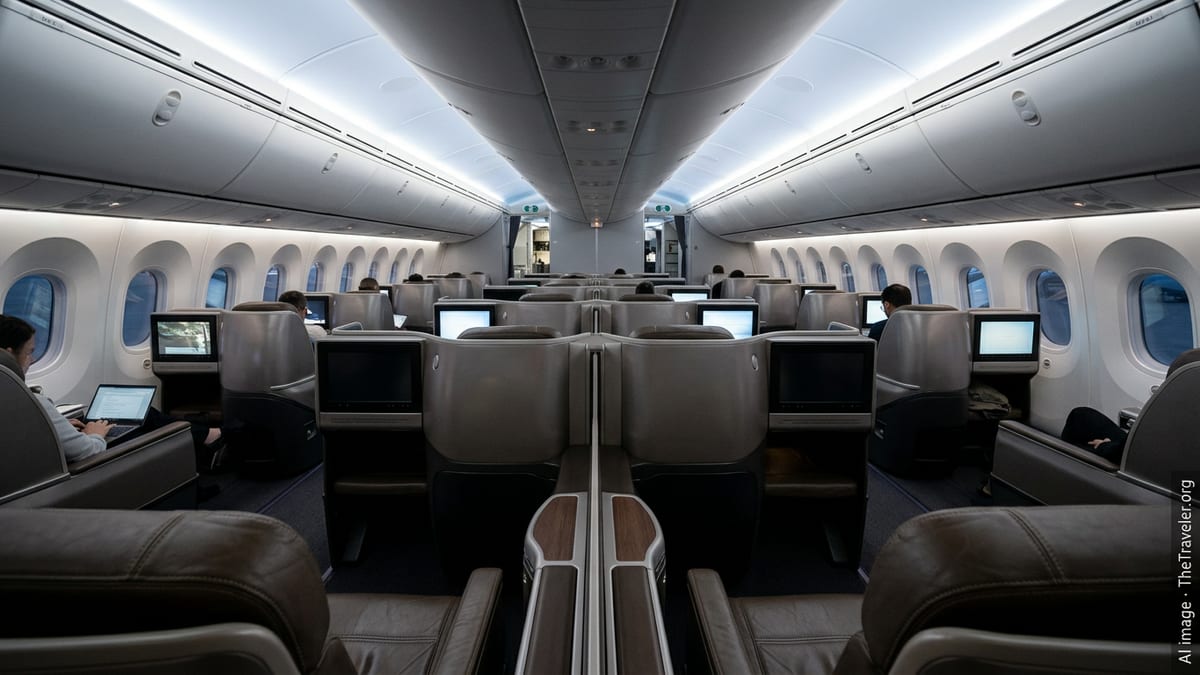
While economy cabins on many long-haul routes remain heavily booked or even oversubscribed, traveler reports and seat maps shared online point to a growing number of empty first and business class seats on certain Emirates and Qatar Airways services. In some cases, passengers describe flying in premium cabins with several unoccupied suites, even as the rest of the aircraft appears tight for space.
This divergence reflects how geopolitical shocks hit different market segments. Price‑sensitive travelers often have fewer alternative routings and may accept longer journeys or complex itineraries through the Gulf when other corridors are closed. High‑yield corporate and luxury passengers, by contrast, are more likely to postpone trips, switch to videoconferencing, or rebook on carriers that can offer shorter or perceived safer routings through Europe or East Asia.
Analysts also note that premium fares on Asia–Europe routes have become highly volatile. On some days, first and business class prices spike as capacity is withdrawn; on others, they soften sharply when demand drops away at short notice. For Emirates and Qatar Airways, this volatility can produce flights where high-end cabins are partially empty, particularly on corridors where corporate travel has retreated and tourism flows have yet to recover.
At the same time, the airlines continue to operate aircraft fitted with large numbers of premium seats, a reflection of investments made when demand for luxury travel outpaced other segments. In a period of sudden geopolitical risk, that configuration can amplify the visibility of unoccupied suites at the front of the plane.
Operational Constraints and Strategic Capacity Choices
The picture is further complicated by how the two Gulf carriers are managing their fleets and schedules in response to rapidly shifting restrictions. Publicly available flight data and industry analysis show Qatar Airways parking or repositioning widebody aircraft as Qatar’s airspace faces intermittent closures and security reviews, while Emirates has been rerouting services around sensitive corridors and adjusting frequencies on select routes.
Such moves can lead to mismatches between aircraft size and actual demand. Upgauging a flight to protect overall seat capacity when another frequency is canceled may result in more first and business seats than the market can absorb on a given day. Conversely, retaining a flagship aircraft like the Airbus A380 on a route for cargo and high‑yield potential can produce a cabin with a handful of passengers spread across dozens of suites.
Airlines also use revenue‑management tactics that make empty premium seats more visible. Blocking seats for potential last‑minute buyers, elite upgrades or disrupted passengers can leave award travelers and online seat‑map watchers with the impression of chronically underfilled cabins. In the current environment, where last‑minute corporate travel is subdued and some connecting flows have dried up, those held-back seats may never be sold, remaining empty at departure.
Industry observers suggest that both Emirates and Qatar Airways are walking a tightrope: maintaining the premium-heavy capacity that defines their brands, while trimming frequencies and fine-tuning aircraft deployment to avoid flying large numbers of unoccupied high-end seats over extended periods.
Shifts in Passenger Behavior and Competitive Dynamics
Changing traveler behavior is another factor behind partially empty first and business cabins. Reports from global travel agencies indicate that some customers who once routed reflexively through Dubai or Doha are now choosing itineraries via Singapore, Bangkok, or European hubs to avoid perceived risk corridors. In markets such as Australia, where Gulf carriers historically dominated long-haul connectivity to Europe, bookings have shifted toward Asia-Pacific airlines with more direct routings that bypass the Middle East.
This diversion of premium traffic reduces the pool of high-yield passengers available to Emirates and Qatar Airways, especially on trunk routes between Europe and Asia. Even where the Gulf airlines continue to operate, the combination of longer flight times, uncertainty around last‑minute airspace changes, and complex rebooking rules has encouraged some frequent business travelers to diversify away from a single hub strategy.
At the same time, the ongoing crisis comes after a period in which Gulf airlines heavily invested in next-generation premium products. Emirates has been rolling out refurbished A380 and Boeing 777 cabins, while Qatar Airways has relied on its Qsuite business product to attract high-spend customers. Those investments assume a stable environment and sustained appetite for long-haul corporate and luxury travel, conditions now challenged by security concerns and macroeconomic headwinds.
Competitors are responding quickly. Carriers based in East and Southeast Asia have seen surging demand on Europe-bound routes and are adjusting capacity and pricing accordingly. As these airlines capture more premium traffic, Emirates and Qatar Airways face additional pressure to discount or accept lower load factors in their own premium cabins, even as they contend with higher costs from detours and operational complexity.
Outlook for Gulf Premium Travel Demand
The trajectory of first and business class demand for Emirates and Qatar Airways will largely depend on how long regional tensions persist and how quickly traveler confidence returns. Economic forecasts for 2026 point to a range of scenarios, from a relatively swift recovery in international arrivals if security conditions improve, to a deeper and more prolonged downturn if conflict remains unpredictable.
In the near term, aviation analysts expect continued volatility in premium cabin load factors. Some flights may still depart nearly full in first and business, particularly on resilient corridors such as London–Dubai or Doha–Sydney, while others show visible gaps as last‑minute bookings evaporate or high-spend travelers divert to alternative hubs. Airlines are likely to respond with tactical fare promotions, targeted upgrades and flexible rebooking policies to stimulate demand without permanently eroding pricing power.
Longer term, the current episode is prompting questions about the vulnerability of hub‑and‑spoke models that depend heavily on geopolitical stability in a single region. For Emirates and Qatar Airways, the sight of empty suites at the front of otherwise busy aircraft underscores how quickly premium demand can unravel when regional risks rise. It may accelerate moves to diversify networks, deepen partnerships beyond the Gulf and refine fleet plans to give the airlines more agility when crises hit.
For travelers, the unusual availability of first and business class seats on some Gulf flights presents both opportunity and uncertainty: potential access to cabins that once sold out weeks in advance, set against a backdrop of rapidly changing schedules and security advisories that can alter the picture with little warning.