

More news on this day
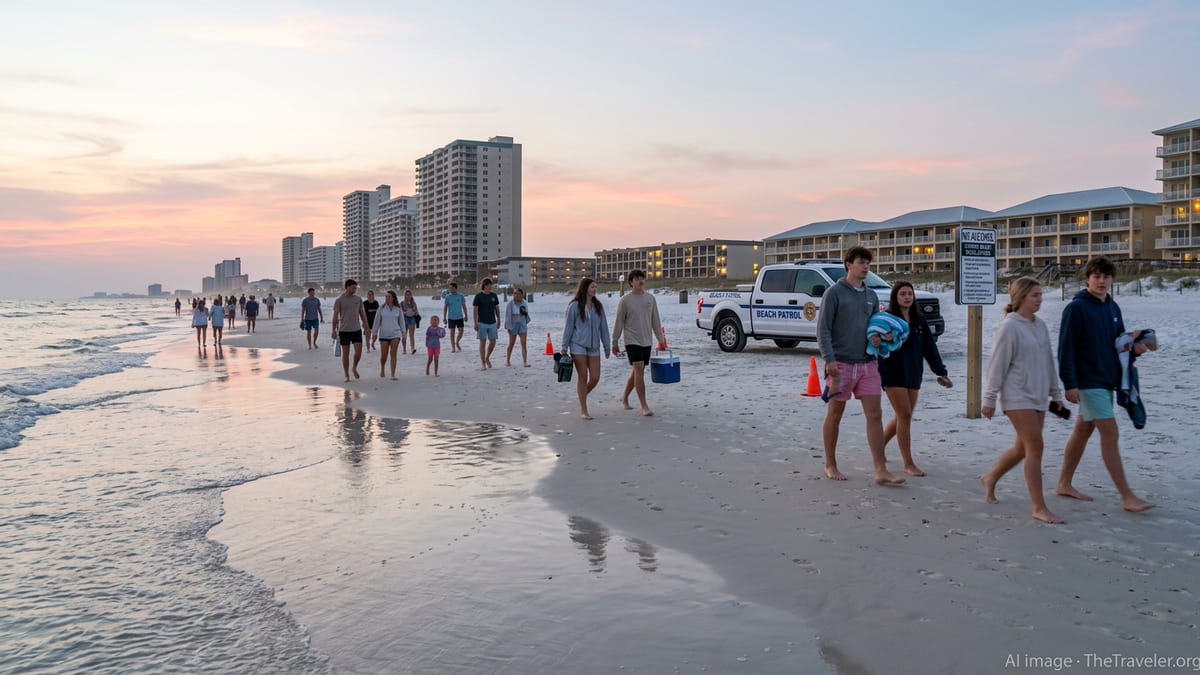
Two of the Gulf Coast’s best-known spring break destinations, Gulf Shores in Alabama and Panama City Beach in Florida, are entering the 2026 season with some of their toughest rules yet, using alcohol bans, curfews and stricter beach regulations to curb the chaos that once defined March along their shores.
Get the latest news straight to your inbox!
Panama City Beach Extends a Decade of Tough Spring Break Rules
Panama City Beach has spent the past decade reshaping its spring break image, and the 2026 season continues that strategy with firm restrictions that are now familiar to repeat visitors. Publicly available information from the city and tourism offices shows that alcohol is prohibited on the sandy beach throughout the entire month of March, from March 1 to March 31, at all hours of the day and night.
Local guidance indicates that the city’s seasonal ordinances also cap alcohol sales in bars and stores at 2 a.m. during March, while possession or consumption of alcohol in commercial parking lots and vehicles is barred. These rules were first adopted in the mid‑2010s after high-profile incidents and crowd-control problems, and reports indicate they have been credited with reducing the raucous party atmosphere that once drew national attention.
In addition to alcohol limits, visitors face a broad list of behavior-related restrictions. Published city and tourism materials reference long-standing bans on fighting, drug use, dangerous balcony behavior and excessive noise, as well as limits on riding outside vehicles and detailed beach safety rules. The overall framework is designed to give local law enforcement and city staff more tools to intervene early when gatherings begin to grow unruly.
Travel industry coverage notes that these policies have altered who comes to Panama City Beach in March and April, shifting the area’s spring business mix toward families and older travelers. While college visitors still arrive, they now do so under a markedly different rulebook than the freewheeling spring breaks of a decade ago.
New Curfews and “High Impact” Zones Target Nighttime Crowds
For 2026, Panama City Beach and surrounding Bay County are layering on additional measures intended to control nighttime crowds during the busiest period of the season. County notices describe a “High Impact Period” running from March 28 through April 11, when a temporary curfew takes effect for unaccompanied minors in designated high-traffic areas.
During this window, public information from Bay County indicates that unaccompanied people under 18 face an overnight curfew from 8 p.m. to 5 a.m. in specified high-impact zones, which include stretches of Front Beach Road, Middle Beach Road and Thomas Drive, along with nearby neighborhoods and commercial areas. The rules allow exceptions for minors who are with a parent or approved adult, commuting to or from work, heading to school or religious events, or dealing with emergencies.
County and city communications further outline the ability to close or restrict access to beaches, parks, parking areas and rights-of-way if crowds reach unsafe levels. Sections of the beach and certain access points can be closed overnight, and “special event zones” around popular gathering spots such as Pier Park can be activated by administrative order during peak weekends, bringing lower speed limits and higher fines for violations.
Tourism officials continue to promote Panama City Beach’s broader attractions, encouraging visitors to enjoy restaurants, shopping areas and nature preserves, but they also urge travelers to review local maps and posted signs to understand when and where these special spring break rules apply. The message is clear that nighttime loitering and large unsupervised gatherings will face tighter scrutiny than in past years.
Gulf Shores Adopts Targeted Alcohol Ban on City Beaches
Across the state line in Alabama, Gulf Shores is again using a targeted alcohol ban to manage the spring break rush on its public beaches. City documents adopted for the 2025 and 2026 seasons outline a policy that prohibits alcohol possession and consumption on the Gulf-front beaches during the core spring break period, which the city defines broadly across March and much of April.
The restrictions apply to the sandy public beaches within Gulf Shores city limits, including stretches improved through local beach restoration projects. Reports referencing recent council actions indicate that the alcohol ban is activated seasonally, rather than year-round, specifically in response to crowd levels associated with student holidays and school breaks across the region.
Visitors should note that these city rules exist alongside separate, permanent regulations in nearby Gulf State Park, where state park authorities prohibit alcohol in the beach areas under their control. Together, the overlapping city and state policies mean that many of the most popular stretches of sand in and around Gulf Shores are alcohol-free for much of the spring.
Regional media coverage from recent seasons suggests that the approach has been accompanied by stepped-up communication efforts. Ahead of spring break, local tourism channels and news outlets frequently highlight the beach alcohol ban and remind visitors that violations can lead to citations or arrests, a strategy aimed at deterring rowdy party crowds and keeping the destination more comfortable for families.
Curfews, Rentals and Enforcement Shape Who Comes to the Coast
Along with alcohol bans, new and existing curfew rules are shaping the broader spring break environment on both sides of the Florida–Alabama line. In Bay County, the minor curfew during the High Impact Period gives deputies and Panama City Beach officers legal grounds to disperse clusters of teenagers and young adults late at night in specific zones, a step local reports describe as a direct response to crowd-control challenges in previous years.
Vacation rental policies also play a role. Publicly circulated guidelines for the Panama City Beach area emphasize that short-term rentals cannot be leased to groups under 21 during high-impact times, limiting the ability of younger spring breakers to rent entire homes or condos. In Gulf Shores, travel forums and local advisories similarly highlight minimum-age requirements of 25 or older for many rental properties, a practice that effectively pushes the youngest party-focused visitors out of the market.
Law-enforcement agencies across the region have announced increased staffing for March and early April, with local news outlets describing larger patrols along beachfront corridors and rapid responses to noise and disorder complaints. While beach communities continue to market themselves as welcoming to visitors, the combined effect of bans, curfews, and rental restrictions is to prioritize what officials and business leaders often term “responsible tourism.”
For travelers planning trips in 2026, these measures mean that spring break on the central Gulf Coast now looks substantially different than it did a decade ago. Panama City Beach, once shorthand for unrestrained college crowds, now promotes its rules as part of a broader safety campaign, while Gulf Shores underscores that its beaches are not intended as a high-intensity party zone.
What Visitors Should Expect for Spring Break 2026
For prospective visitors, the evolving regulatory landscape in Gulf Shores and Panama City Beach translates into a need for careful pre-trip planning. Travelers who are accustomed to bringing coolers of beer to the shoreline or gathering in large late-night groups on the sand will find that many of those activities are now explicitly prohibited, particularly during March.
Families and older travelers, however, may see advantages. Reports from recent seasons suggest that crowd behavior has become more subdued, with fewer large-scale disturbances and more emphasis on daytime recreation such as dolphin cruises, fishing charters and visits to nearby state parks. Hospitality businesses in both destinations now market spring as a time for a more relaxed beach experience rather than a single-minded party season.
Tourism organizations encourage visitors to review official city and county spring break pages before arrival, pay close attention to beach signage, and respect flag systems and access closures. Those who wish to drink are generally directed toward licensed bars and restaurants away from the sand and reminded to arrange safe transportation at night.
As the 2026 season unfolds, Gulf Shores and Panama City Beach are positioned as case studies in how popular coastal communities are recalibrating the balance between economic reliance on spring break and the desire for public safety and community comfort. Whether these measures become a long-term model for other beach towns will depend on how visitors adapt to the new expectations along the Gulf Coast.