

More news on this day
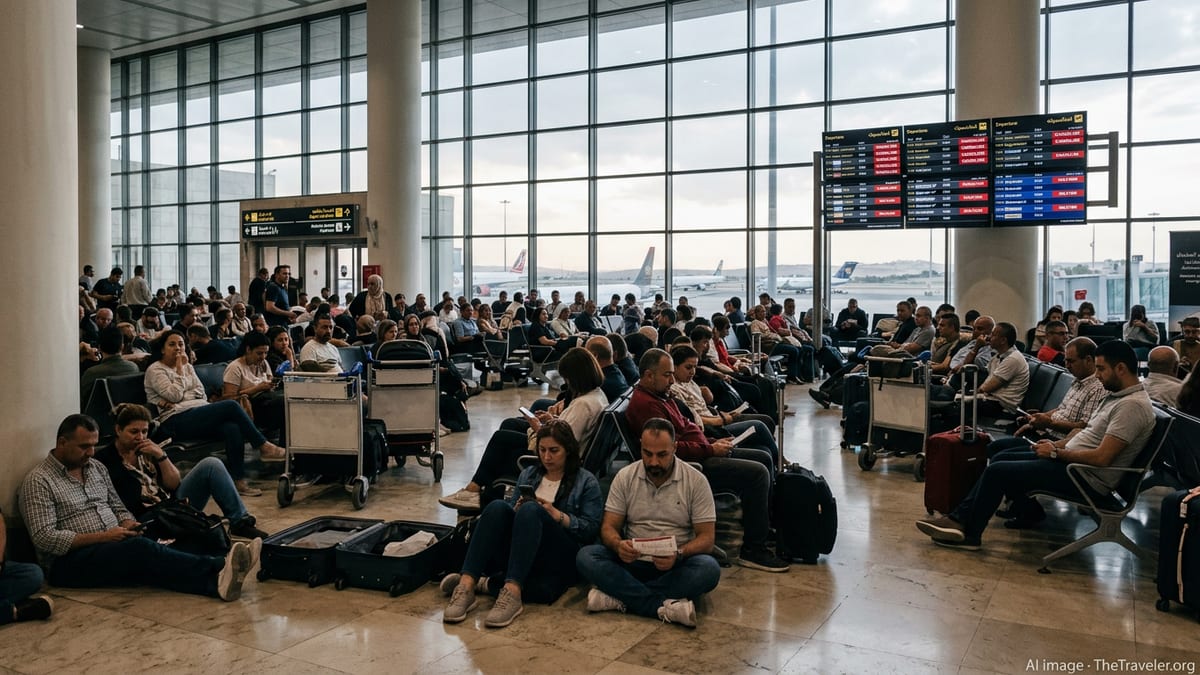
Qatar has introduced an automatic one-month extension for expiring entry visas as regional airspace closures and conflict-related disruptions continue to strand travelers across the Middle East, aligning Doha with new relief measures in Kuwait, the United Arab Emirates, Saudi Arabia, Bahrain and Jordan aimed at stabilizing tourism and easing pressure on visitors caught in the crisis.
Get the latest news straight to your inbox!
Coordinated Visa Extensions Across the Gulf
Publicly available information indicates that Qatar’s Ministry of Interior has approved a one-month automatic extension for entry visas that have expired or are about to expire, applying broadly to tourist and visit categories. The measure, reported in early March 2026, allows affected visitors to remain in the country without immediate penalty or costly paperwork while commercial flight schedules remain volatile.
Specialist mobility advisories and regional travel coverage show similar relief taking shape across the Gulf. Kuwait has authorized one-month extensions for stranded visitors whose visas lapsed while they were unable to depart, while the United Arab Emirates has announced emergency 30-day grace periods for tourists, visit-visa holders and some transit passengers whose documents expired between late February and the end of March 2026.
Saudi Arabia, Bahrain and Jordan are also cited in regional briefings as participating in temporary visa leniency programs, generally granting at least one additional month of lawful stay and waiving overstay penalties for travelers who can demonstrate that cancellations, diversions or airspace closures prevented them from exiting on time. The combined effect is a patchwork of broadly similar one-month extensions across key Middle Eastern transit and tourism hubs.
These measures are framed as time-limited responses to an extraordinary shock to regional connectivity, rather than permanent changes to entry rules. However, the convergence around a one-month relief window underscores an emerging regional norm for handling mass stranding events, particularly in aviation-dependent economies.
Middle East Disruptions Reshape Travel Plans
The new visa concessions are unfolding against the backdrop of a broader escalation in the Middle East that has disrupted flight paths, closed sections of airspace and triggered widespread schedule cuts. News reports describe long-haul services between Europe, the Americas and Asia being rerouted around conflict zones, adding hours to journey times and concentrating traffic into a smaller number of safe corridors.
Key Gulf hubs such as Doha, Dubai, Abu Dhabi and Kuwait City have been heavily affected, with multiple carriers curbing frequencies or temporarily suspending routes as a precaution. Industry analyses compare the scale of the disruption to previous regional crises, noting that the current shock has stranded not only tourists but also migrant workers, business travelers and religious pilgrims whose itineraries relied on dense Gulf transfer networks.
Travel and tourism research cited in regional media estimates that the Middle East’s visitor economy is losing hundreds of millions of dollars a day in foregone spending as flights remain limited and travelers postpone or cancel trips. Against this backdrop, emergency visa extensions serve a dual purpose: they provide immediate legal certainty for people stuck in place and they help cushion the reputational impact on destinations that depend on a perception of reliability and hospitality.
For travelers already in the region, the main practical consequences are extended hotel stays, rebooked itineraries and, in some cases, rapid shifts to alternative gateways outside the affected airspace. For the Gulf states, the challenge is to manage humanitarian obligations to stranded visitors while preserving long-term competitiveness as global aviation and tourism centers.
What the One-Month Extensions Mean for Travelers
In practice, the one-month extensions in Qatar and neighboring states are designed to be as automatic and frictionless as possible for most visitors. Reports on Qatar’s policy, for example, indicate that eligible entry visas are extended in the system without the holder needing to visit an office or pay additional government fees, as long as they remain compliant with other local laws.
In the UAE, publicly available guidance notes that tourists and visitors whose visas expired between late February and March receive a 30-day grace period to remain in the country legally. If onward travel remains impossible, they may apply for an additional 30 days or, in limited humanitarian circumstances, longer-term stay options, typically by presenting proof of cancelled flights or closed routes.
Saudi Arabia, Bahrain and Jordan are reported to be following a similar logic. Authorities in these countries have signaled that travelers will not be penalized for overstays directly linked to the current crisis, providing they regularize their status once safe exit options resume. In several cases, governments have also eased conditions for short-term re-entry or onward transit to facilitate staggered repatriation flights and rerouted itineraries.
For individual travelers, this generally translates into more time to secure scarce seats, reorganize complex multi-leg journeys and coordinate with employers, schools or families back home. It also reduces the psychological pressure of watching a visa expiry date approach while borders, airports and airlines remain in flux.
Impact on Doha, Kuwait City and Gulf Tourism Recovery
The visa extensions are tightly linked to broader efforts to safeguard the tourism sectors of Doha, Kuwait City, Dubai, Abu Dhabi and other Gulf destinations. Before the latest disruptions, these cities had invested heavily in events, new hotels and expanded route networks, aiming to capture sustained growth in leisure and business travel following the pandemic-era downturn.
Industry commentary suggests that by taking a more flexible stance on stay permissions, Gulf governments are seeking to preserve traveler confidence and signal that visitors will not be left in precarious legal situations during crises. In Qatar and the UAE, reports highlight coordination between immigration agencies, tourism bodies, airports and hotel operators to keep stranded guests legally covered, housed and, where possible, moved onto repatriation or alternative commercial flights.
Kuwait City and Bahrain, while smaller as global transit hubs, have also adopted measures presented as part of a wider support package for aviation and hospitality. One-month visa extensions for stranded visitors help maintain occupancy in hotels and serviced apartments, provide an economic lifeline for local service businesses and demonstrate regional solidarity in managing the fallout from airspace closures.
Jordan’s participation in visa leniency, combined with its role as an overland and short-haul air gateway, positions Amman as an important pressure valve in the evolving travel map. With some carriers using Jordanian territory as a staging point for rerouted services, the ability to host travelers for an additional month without complex formalities supports both humanitarian aims and the country’s tourism receipts.
Key Practical Tips for Stranded and Prospective Visitors
For travelers currently in Qatar, Kuwait, the UAE, Saudi Arabia, Bahrain or Jordan, the main message from public advisories is to verify how the one-month extension is recorded and what documentation is needed to depart once flights resume. In many cases, the extension is digital, but carrying printed confirmations from airline notifications or local announcements can help avoid confusion at check-in and border control.
Those planning future trips through Gulf hubs in the coming weeks are being encouraged by travel industry bulletins to build in greater flexibility. This can include choosing tickets that allow date changes, monitoring airline travel advisories closely, and being prepared for longer routings that bypass affected airspace. Travel insurance policies should be reviewed to understand coverage for war-related disruptions, cancelled flights and extended hotel stays.
Visitors who find themselves stranded are also advised in public guidance to maintain regular contact with their home country’s consular services, which may help coordinate special flights or provide information about safe exit routes. At the same time, travelers should keep accommodation providers informed of changing departure dates, as some hotels in Doha, Dubai and Abu Dhabi have been reported as working alongside tourism departments to facilitate extensions or capped-rate stays.
Above all, observers emphasize that the one-month visa extensions now common across Qatar, Kuwait, the UAE, Saudi Arabia, Bahrain and Jordan are designed as safety nets, not invitations to remain indefinitely. Once commercial options stabilize, travelers are expected to depart promptly or, where necessary, follow local procedures for any further extensions, helping both visitors and host countries move from emergency management toward a more durable phase of tourism recovery.