

More news on this day
Gulf travel links are facing renewed pressure as the United Arab Emirates joins Qatar, Bahrain, Jordan, Kuwait, Iraq and other countries in restricting incoming passengers from Oman, while Oman Air extends widespread flight cancellations until March 31 in response to the ongoing regional war and airspace closures across much of the Middle East.
Get the latest news straight to your inbox!
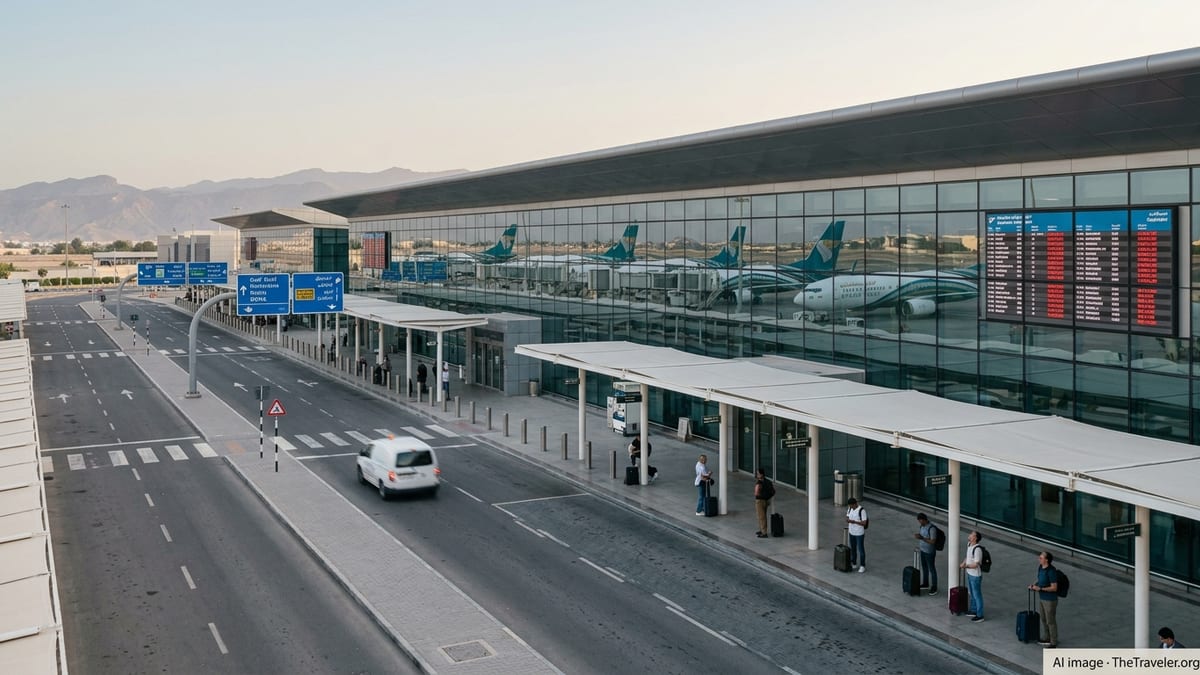
Regional War Triggers New Layer of Travel Disruption
The latest travel measures come against the backdrop of an intensifying conflict involving Iran, Israel and multiple regional actors, which has already led to missile and drone attacks, including on aviation and energy infrastructure in the Gulf. Publicly available reporting shows that the United Arab Emirates and several neighboring states have faced repeated airspace disruptions and temporary closures as they respond to cross-border strikes and heightened security threats around key hubs such as Dubai and Abu Dhabi.
Advisories circulated to airlines and corporate travel clients in early March describe a patchwork of closures and restrictions across Bahrain, Qatar, Kuwait, Iraq and Jordan, as authorities seek to limit exposure to overflight risks and potential attacks on civilian aircraft. These measures have dramatically reduced the number of scheduled commercial flights operating in the region, forcing carriers to trim networks or suspend services entirely on short notice.
Within this context, travel from Oman has become increasingly sensitive. Although Omani airports remain among the few functioning gateways in the region, the country’s proximity to conflict-affected airspace and its role as an alternative corridor have heightened risk assessments among neighboring governments. That reassessment is now being reflected in formal entry restrictions aimed at passengers arriving from Oman by air and, in some instances, via land routes.
UAE Joins Neighbors In Halting Incoming Travel From Oman
According to recent travel advisories and aviation bulletins, the United Arab Emirates has introduced specific limitations on inbound passenger movements from Oman, aligning itself with a wider group of states that includes Qatar, Bahrain, Jordan, Kuwait and Iraq. While the technical details vary between countries, the overall effect is to significantly curtail non-essential travel originating in Oman.
In practice, the measures are being implemented through a combination of suspended commercial flights, restrictions on point-to-point ticket sales and tighter screening of itineraries that involve transiting Oman before entering the UAE or other Gulf hubs. Airlines and travel management companies are advising passengers that routings which previously relied on Muscat or Salalah as convenient waypoints into the wider region may no longer be viable through at least the end of March.
Publicly available information indicates that the Emirati move is part of a coordinated risk-mitigation effort among Gulf and Levant states in response to ongoing airspace warnings. By limiting arrivals from Oman, these countries are attempting to reduce traffic flows through potentially exposed corridors while they wait for clearer guidance from aviation safety bodies and military planners on the stability of the air environment.
The new restrictions also illustrate how quickly regional connectivity can fragment when multiple flight information regions are affected at once. Routes that once depended on seamless links between Muscat, Dubai, Doha, Manama, Amman, Kuwait City and Baghdad have been partially dismantled in a matter of weeks, complicating mobility for residents, migrant workers and transit passengers alike.
Oman Air Extends Cancellations To March 31
Oman Air has responded to the shifting risk landscape with a rolling series of flight cancellations and schedule reductions. Recent updates indicate that the carrier has extended many of these cancellations through March 31, reflecting both operational challenges and uncertainty surrounding the reopening timeline for neighboring airspace.
The airline’s published guidance highlights that services across several regional markets remain suspended, with particular disruption on routes that normally rely on overflight permissions in Bahrain, Kuwait, Iraq, Jordan and the United Arab Emirates. Long-haul operations are also affected where traditional flight paths pass through or near conflict-impacted flight information regions, obliging the carrier to consider lengthy detours or temporary withdrawal from certain city pairs.
Travel industry bulletins emphasize that Oman Air customers holding tickets for travel up to March 31 are being encouraged to monitor schedules closely and explore rebooking or refund options. In many cases, alternative connectivity is limited, as other regional airlines are grappling with similar constraints or have already suspended their own flights to and from Oman due to the broader airspace environment.
The extension to the end of March underscores how the conflict has moved beyond short-lived disruption and into a phase of sustained operational impact on civil aviation, making it harder for carriers such as Oman Air to plan near-term capacity with confidence.
Airspace Closures Redraw the Gulf’s Aviation Map
The current situation has its roots in a cascade of airspace advisories issued since late February, as missile and drone activity expanded across the Gulf and Levant. Aviation safety authorities have warned operators about elevated risks in the flight information regions covering Bahrain, Iran, Iraq, Israel, Jordan, Kuwait, Lebanon, Oman, Qatar, the United Arab Emirates and Saudi Arabia, prompting airlines to reassess routings and overflight permissions.
Industry analyses and consultancy reports describe a temporary redrawing of the Middle East’s aviation map. Traditional north-south and east-west corridors that once passed routinely over the Gulf have been restricted or closed to most civilian traffic, forcing carriers to consider detours over the Arabian Sea, the Red Sea or alternative land routes through parts of North Africa and South Asia.
For Oman, these changes have created a paradox. On one hand, the country’s airports have at times served as critical resilience hubs, offering a staging point for humanitarian flights, repatriations and limited commercial services when other gateways were more heavily affected. On the other hand, the clustering of regional airspace restrictions has made it more complicated and, in some cases, more costly to operate safe and efficient services into and out of the country.
Neighboring states, facing their own security calculations, have increasingly opted to place direct limits on traffic from Oman rather than rely solely on dynamic rerouting. The result is a network that is both thinner and more fragmented, with passengers often needing multiple rebookings or alternative plans to complete journeys that were routine only weeks earlier.
Travelers Face Uncertainty As Airlines and Regulators Adapt
For travelers, the combination of halted incoming travel from Oman to many Gulf and Levant destinations and Oman Air’s extended cancellations translates into considerable uncertainty. Passengers with itineraries involving Muscat or other Omani airports through March 31 are being advised, in public notices and airline statements, to check flight status frequently, allow additional time for border crossings and be prepared for last-minute schedule changes.
Corporate travel managers and tour operators are, in turn, reassessing their regional plans. Many are pausing non-essential business trips, rerouting critical travel through remaining open corridors, or temporarily shifting meetings and events online to avoid the risk of travelers becoming stranded by sudden policy shifts or new airspace warnings.
Regulators and aviation bodies continue to update guidance as the conflict evolves. While there is no clear timeline for a full normalization of regional airspace, observers note that decisions on reopening are likely to be gradual and heavily dependent on security assessments. As long as missile and drone activity remains a credible threat to civil aviation, restrictions on incoming passengers from Oman and extended cancellations by carriers such as Oman Air are expected to remain a feature of the Middle East travel landscape.
For now, industry experts recommend that anyone planning to travel into, out of, or via Oman in the coming weeks maintain flexible arrangements and closely follow official airline communications, as the situation across Gulf and Levant air corridors continues to shift.