

More news on this day
Gulf aviation hubs in Bahrain, Kuwait, Qatar, Saudi Arabia and the United Arab Emirates remain on high alert this week, as a rapidly escalating conflict involving Iran, the United States and Israel forces airspace closures, severe flight disruption and a surge in international travel warnings affecting millions of passengers.
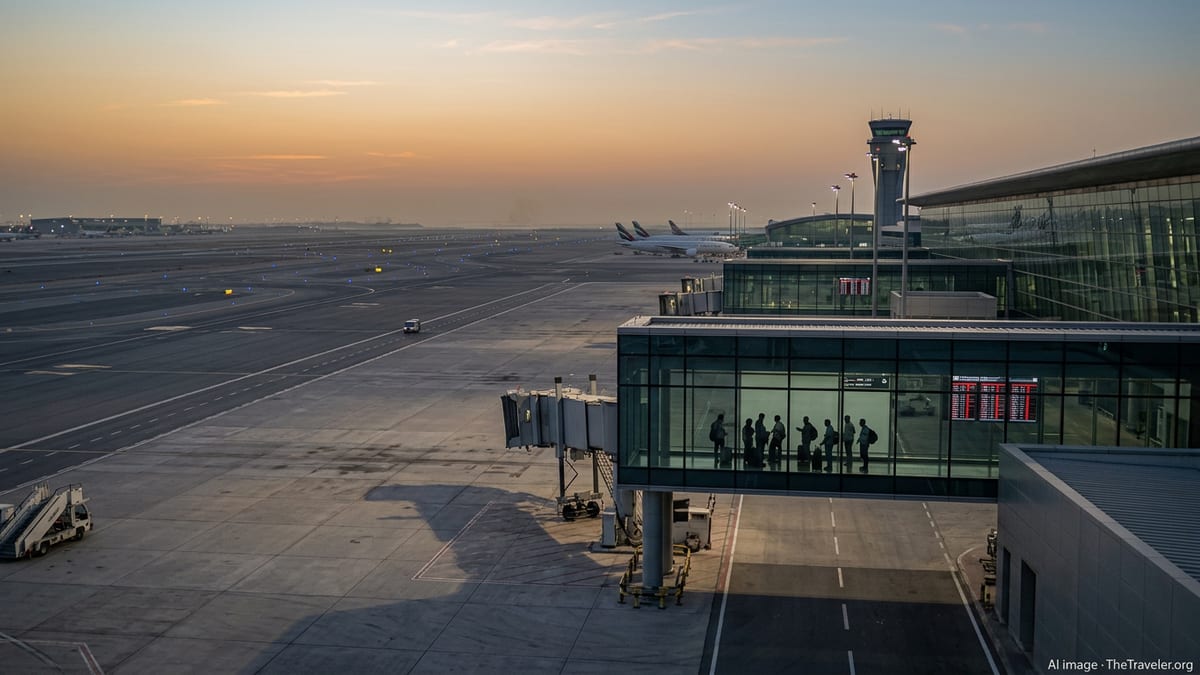
Airspace Closures and Partial Reopenings Across the Gulf
Since coordinated United States and Israeli strikes on Iran at the end of February, the skies over much of the Gulf have seen unprecedented restrictions. Aviation authorities in Bahrain, Kuwait and Qatar imposed near-total shutdowns of their airspace in the first days of the crisis, effectively grounding almost all commercial traffic and forcing long-haul carriers to reroute around the region.
The United Arab Emirates and Saudi Arabia, home to some of the world’s busiest transit airports, initially moved to sharply curtail flights before shifting to a patchwork of partial reopenings. Dubai and Abu Dhabi have begun operating limited schedules again, but aircraft movements remain far below normal levels and subject to sudden change as security assessments are updated.
Europe’s aviation safety regulator has extended conflict-zone warnings for the wider Middle East, advising airlines to avoid or exercise extreme caution in the airspace of Bahrain, Kuwait, Qatar, Saudi Arabia and the UAE. Many global carriers have responded by cancelling or diverting flights, even on routes technically permitted to operate, citing concern for crew and passenger safety.
Regional data collected from flight tracking providers shows that traffic over Bahrain and Qatar in particular has dropped to a fraction of typical volumes, with only occasional government, military or evacuation flights visible. Saudi airspace remains partly open but with restricted corridors near the Gulf and Iraq, and operators are treating routings through the area as high risk.
International Travel Warnings and Who They Affect
The aviation turmoil has been accompanied by a cascade of government advisories warning citizens to avoid travel to the Gulf. The United States has issued sweeping alerts urging Americans to leave multiple Middle Eastern countries, including Bahrain, Kuwait, Qatar, Saudi Arabia and the UAE, citing serious safety risks and the possibility of further attacks on civilian infrastructure.
Other governments have followed suit. Japan has raised its alert level for the same Gulf states to one step below its maximum, explicitly advising against all non-essential travel and recommending that nationals in the region prepare for potential evacuation. Several European foreign ministries now classify much of the Gulf as a high-risk destination and are chartering special flights to extract tourists and expatriates where possible.
For travelers, the change in language is significant. In many cases, guidance that previously focused on heightened vigilance has shifted to clear instructions not to travel or to leave as soon as a safe commercial option becomes available. Insurance coverage is also being affected, with some policies excluding trips that go ahead against government advice.
Embassies are warning that consular assistance may be limited if conditions deteriorate further. Travelers who choose to remain in Bahrain, Kuwait, Qatar, Saudi Arabia or the UAE are being urged to register their presence with diplomatic missions, monitor official channels closely and keep contingency plans ready should new airspace closures cut off outbound routes at short notice.
Impact on Major Hubs, Airlines and Transit Passengers
Dubai, Doha and other Gulf hubs built their reputations as reliable connecting points between Europe, Asia, Africa and Australasia. The current conflict has upended that model, leaving thousands of transit passengers stranded worldwide as airlines scramble to reconfigure networks that depend on seamless Gulf connections.
Flag carriers based in the region have cancelled the majority of flights in recent days, particularly services touching Bahrain, Kuwait and Qatar, and have only cautiously begun rolling out limited relief or evacuation flights. Some UAE and Saudi airlines are operating reduced schedules focused on repatriating citizens and residents, but they are warning passengers not to go to the airport without confirmed bookings.
International airlines that once relied on the Gulf for stopovers are now lengthening journeys with detours over Turkey, Egypt or Central Asia. These reroutings add hours of flying time, increase fuel burn and drive up operating costs, which analysts say will ultimately feed through to higher fares if disruptions persist.
Airport terminals that usually bustle with connecting travelers are instead dotted with stranded tourists, business travelers and migrant workers waiting on uncertain rebooking options. Scenes of long queues at airline desks and departure boards filled with cancellations have been reported from major airports as far afield as London, Bangkok and Singapore, reflecting the global reach of the Gulf’s aviation shutdown.
What Travelers Need To Know Right Now
For anyone with imminent plans to travel to or through Bahrain, Kuwait, Qatar, Saudi Arabia or the UAE, the situation demands flexibility and constant monitoring. Airlines and airports across the region are repeatedly urging passengers not to head to terminals unless they have been rebooked onto an operating flight and have received explicit confirmation that their service is going ahead.
Flight status information can change within hours as military activity, missile alerts or drone interceptions prompt temporary airspace closures. Travelers booked on long-haul itineraries that include Gulf transit points should speak with their airlines or agents as early as possible to explore rerouting via alternative hubs in Europe, North Africa or Asia that are currently operating more reliably.
Travel experts recommend checking both airline updates and official foreign ministry advisories before departure, bearing in mind that warnings may have implications for insurance coverage and employer travel policies. Those already in the region should keep passports, essential documents and medications easily accessible in case a short-notice departure opportunity arises on a relief or commercial flight.
Above all, visitors are being advised to remain patient and prepared for extended delays. With conflict still active and airspace controls under constant review, there is no clear timeline for a full restoration of normal flight operations across Bahrain, Kuwait, Qatar, Saudi Arabia and the UAE.
Outlook for Regional Travel and Tourism
The Gulf’s travel and tourism sector, which has invested heavily in attracting visitors and establishing global aviation hubs, is bracing for a sharp downturn. Analysts expect international arrivals to the wider Middle East to fall significantly this year if the conflict and airspace restrictions continue, hitting hotels, tour operators, conference venues and cruise lines that rely on stable flight connectivity.
In the short term, governments and airlines are focused on crisis management, from repatriating stranded travelers to protecting critical infrastructure against further attacks. Airports are maintaining heightened security measures and, in some cases, activating emergency waivers on overstay fines to ease the burden on visitors unable to depart on schedule.
Longer term, industry observers say the current shock could accelerate efforts by some carriers to diversify away from single-hub models and invest in alternative routings that reduce dependence on any one region’s airspace. For now, however, the Gulf remains at the center of the disruption, and both leisure and business travelers will need to factor instability into their plans for the foreseeable future.
Until there is a sustained easing of tensions and a clear rollback of airspace warnings, Bahrain, Kuwait, Qatar, Saudi Arabia and the UAE are likely to remain on high alert, and their once seamless skies will continue to challenge airlines and passengers alike.