

More news on this day
Unseasonal heavy rain, strong winds and dust storms sweeping across Qatar, the United Arab Emirates, Oman and neighboring Gulf states in March 2026 are disrupting air travel, closing outdoor attractions and forcing tourists to rapidly rework itineraries in some of the region’s most popular destinations.
Get the latest news straight to your inbox!
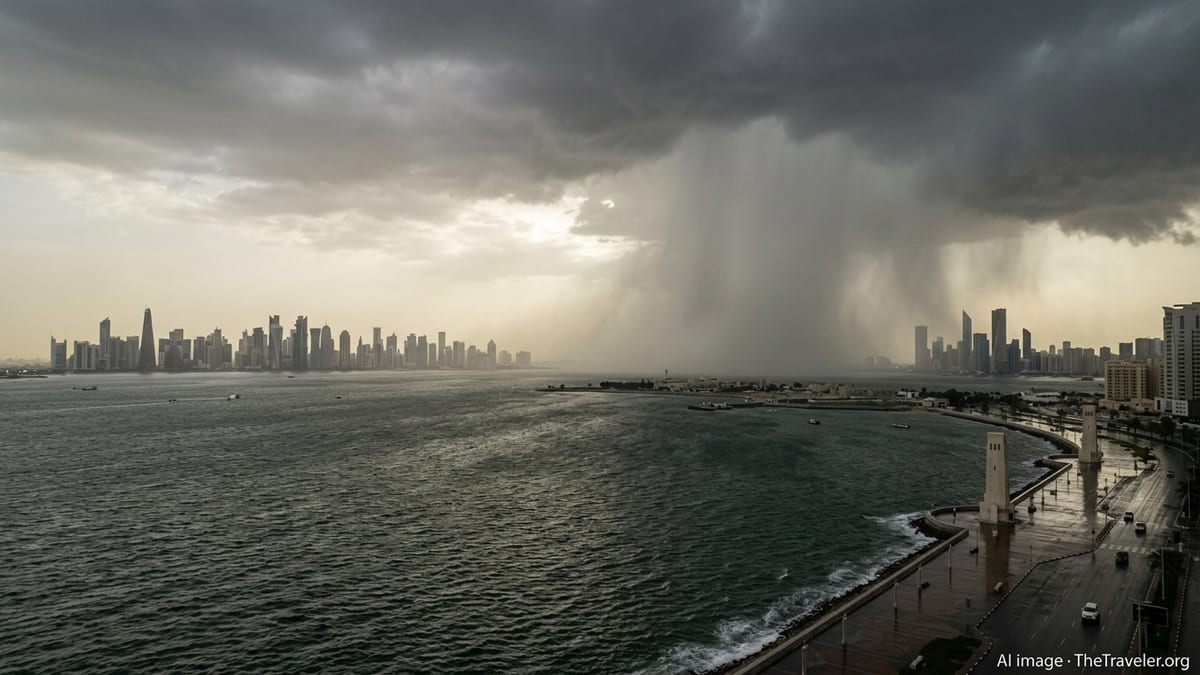
Regional Storm System Hits Multiple Gulf States at Once
Publicly available forecasts and local reports indicate that a powerful storm system is driving unstable weather across much of the Arabian Peninsula in late March 2026. Heavy downpours, strong gusts and blowing dust have been reported in Qatar, the United Arab Emirates, Oman, Saudi Arabia and Bahrain, affecting both major cities and coastal resort areas. The pattern follows several days of warnings from meteorological agencies and community channels highlighting the likelihood of intense rainfall and localized flooding.
In the UAE, residents and visitors in Dubai and Abu Dhabi are reporting very heavy rain on March 24, with social media images showing waterlogged streets and reduced visibility. Community bulletins describe the current conditions as among the most intense since the notable flooding in 2024, although forecasters emphasize that this event is spread over several days rather than concentrated in a single 24 hour period. Similar instability has been noted across the country’s east, including Fujairah, where thunderstorms and strong winds are expected.
Qatar is experiencing parallel conditions, with strong winds and dust reducing visibility in Doha and surrounding areas. Previously published coverage from Qatar in 2025 documented how dust storms can trigger public health advisories and transport slowdowns, and the current pattern is reviving concerns about exposure to airborne sand and the resilience of outdoor infrastructure. The latest disturbances come on top of an already challenging period for regional aviation following weeks of security related airspace disruption earlier in March.
Oman has also faced significant weather stress. Heavy rainfall and flash floods around March 20 in northern governorates, including Muscat, have already been documented, with fast rising wadis inundating roads and low lying districts. As the same regional system feeds moisture into southern areas, travelers in coastal hubs such as Salalah are being advised through public channels to monitor changing forecasts carefully, particularly where steep terrain increases the risk of landslides and sudden runoff.
Flight Schedules, Airport Operations and Detours
The combination of severe weather and broader regional instability is having a cumulative impact on Gulf aviation at the height of the spring travel period. Earlier in March, a travel advisory circulated by a risk consultancy noted that commercial operations at Hamad International Airport in Qatar were largely suspended, with the facility only partially open for specific authorized flights. The same document pointed to heavy disruption at Bahrain International Airport and capacity constraints at Kuwait International Airport.
Those pre existing constraints are now interacting with weather related delays. In the UAE, storm systems bringing heavy rain and strong winds have prompted airlines and airports to warn of potential schedule changes as crews work around low visibility, waterlogged aprons and storm cells along approach paths. Travelers passing through Dubai International and Abu Dhabi’s main airport are reporting longer ground times, busier rebooking desks and fuller transit hotels as connections are missed.
In Oman, recent storms and floods in Muscat and nearby governorates temporarily cut road access to some districts and affected operations at key ports. While Muscat International Airport has remained usable, surface access to and from the terminal has at times been slowed by standing water and traffic diversions. Farther south, Salalah’s airport continues to serve domestic and regional flights, but travelers are finding that departures can be adjusted at short notice as local squalls move through the Dhofar coast.
Across the wider region, travelers have also been dealing with a separate but overlapping layer of disruption linked to missile and drone activity targeting several Gulf states since late February 2026. Public advisories for Qatar Airways passengers describe temporary authorizations and limited repatriation services operating out of Doha, while emphasizing that a broader waiver policy applies for bookings between late February and mid March. The return of severe weather at the end of the month is complicating efforts to stabilize schedules.
On the Ground: City Breaks and Desert Escapes Affected
Within the cities themselves, popular visitor experiences are adjusting to the conditions. In Dubai, tourism forums describe rain pooling along key arterial roads and around some waterfront districts, leading to slow moving traffic and localized closures. Announcements shared via local media indicate that municipalities in neighboring emirates such as Sharjah have introduced free public parking during the worst of the rain to ease congestion and keep vehicles off flooded side streets.
The wet weather is particularly disruptive for classic Gulf itineraries built around rooftop dining, beach clubs and open air shopping. In Dubai and Abu Dhabi, beach operators and marinas can scale back services when waves build and lightning is in the area, leaving visitors to pivot toward indoor malls, museums and family entertainment centers. Tour operators that would normally send guests into the desert for dune drives and campsite dinners often suspend those excursions on stormy days, both to protect fragile terrain and to avoid the risk of vehicles becoming stuck in saturated sand.
In Qatar, similar pressures are being felt at waterfront promenades and outdoor cultural venues. Dust and sandstorms can prompt closures or reduced hours at open air heritage sites, while strong winds make dhow cruises and water sports less appealing. Local coverage in 2025 highlighted the health impacts of repeated dust intrusions, and travelers with respiratory conditions are now being encouraged through public advisories to carry masks or avoid the worst of the airborne sand when visibility drops.
Oman’s tourism mix presents a different set of challenges. Adventure travelers drawn to wadis, canyons and mountain roads near Muscat often rely on dry crossings that can become dangerous in minutes when upstream rain hits. Recent floods have reinforced long standing local guidance that visitors should never attempt to drive through fast moving water in wadis or underestimate runoff in what appear to be dry channels. In Salalah and the Dhofar region, where coastal resorts market misty cliff views and green hills during the monsoon season, early season storms can still trigger rockfalls on mountain roads and temporary trail closures.
Health, Safety and Infrastructure Under Strain
Beyond immediate transport and itinerary changes, the latest run of severe weather is once again testing infrastructure across Gulf destinations that are accustomed to extreme heat but still adapting to more frequent heavy rainfall events. Academic and policy research over recent years has documented how cities such as Muscat and Doha, built around wadis and low lying coastal plains, are increasingly exposed to flash flooding when short, intense storms overwhelm drainage networks.
Drainage and stormwater upgrades are under way in several Gulf cities, but the current storms are illustrating how quickly streets can still become impassable when rain falls in bursts over built up areas. Videos and images emerging from Dubai, Abu Dhabi and parts of northern Oman show vehicles partially submerged on underpasses and roundabouts, echoing similar scenes from notable Gulf floods in 2018 and 2024. Tourists driving rental cars are particularly vulnerable when they lack local experience of which routes tend to flood first.
Dust and sandstorms create a different type of strain, particularly in Qatar, Saudi Arabia and Bahrain. Public information campaigns in recent years have emphasized the respiratory and visibility impacts of dust events, and the latest storms are again prompting reminders to limit outdoor exertion, use eye protection and drive with extra caution. For tourism operators, recurring dust events can mean repeated cleaning of outdoor facilities, reduced appeal of al fresco dining and temporary halts to outdoor shows.
In combination with ongoing security tensions and earlier airspace restrictions, the severe weather episodes of March 2026 are reinforcing the importance for Gulf destinations of contingency planning that accounts for multiple overlapping risks. Tourism boards and private operators are increasingly promoting flexible booking policies, travel insurance and real time communication channels to help visitors adjust plans when skies turn quickly from blue to brown or deep gray.
What Travelers Should Expect in the Coming Days
Short range forecasts suggest that unsettled conditions across parts of the Gulf are likely to persist for several days, with further rounds of rain and storms possible through the end of the week. For Dubai, Abu Dhabi and other UAE cities, community weather discussions point to rainfall arriving in waves, with some breaks but also renewed bursts of heavy showers and thunderstorms. Similar patterns are anticipated in eastern parts of the country and across the Hajar Mountains, which can feed runoff toward both UAE and Omani lowlands.
In Qatar, publicly available outlooks highlight the potential for continuing strong winds and dusty conditions around Doha, particularly as regional weather systems interact with local temperature contrasts. Travelers arriving or departing through Hamad International Airport, already affected by earlier flight restrictions this month, are being advised through airline communications and travel advisories to monitor their bookings closely and allow extra time for check in and security.
Oman’s northern governorates, still dealing with the aftermath of mid March flash floods, remain sensitive to additional rain, even if totals are lower than during the peak of the recent event. Visitors based in Muscat are being encouraged through local channels to follow route advisories, avoid driving through wadis after dark and stay alert to sudden changes in water levels. In Salalah, where weather can change rapidly along the coast and in the surrounding mountains, hotels and tour companies are adjusting excursion schedules day by day.
Across the wider Gulf, including Saudi Arabia and Bahrain, the immediate impact for tourism is a shift toward indoor activities, flexible sightseeing and a higher likelihood of delays. Travelers planning near term trips are being urged, through publicly available advisories and community reports, to build additional slack into itineraries, stay attuned to both weather and security updates, and recognize that the region’s famed winter sunshine occasionally gives way to dramatic, travel altering storms.