

More news on this day
Weeks of airspace closures and military tensions across the Gulf have forced Qatar Airways, Emirates, Etihad and Singapore Airlines to slash or reroute services, reshaping some of the world’s busiest long haul corridors and leaving passengers facing rolling schedule changes well into late spring.
Get the latest news straight to your inbox!
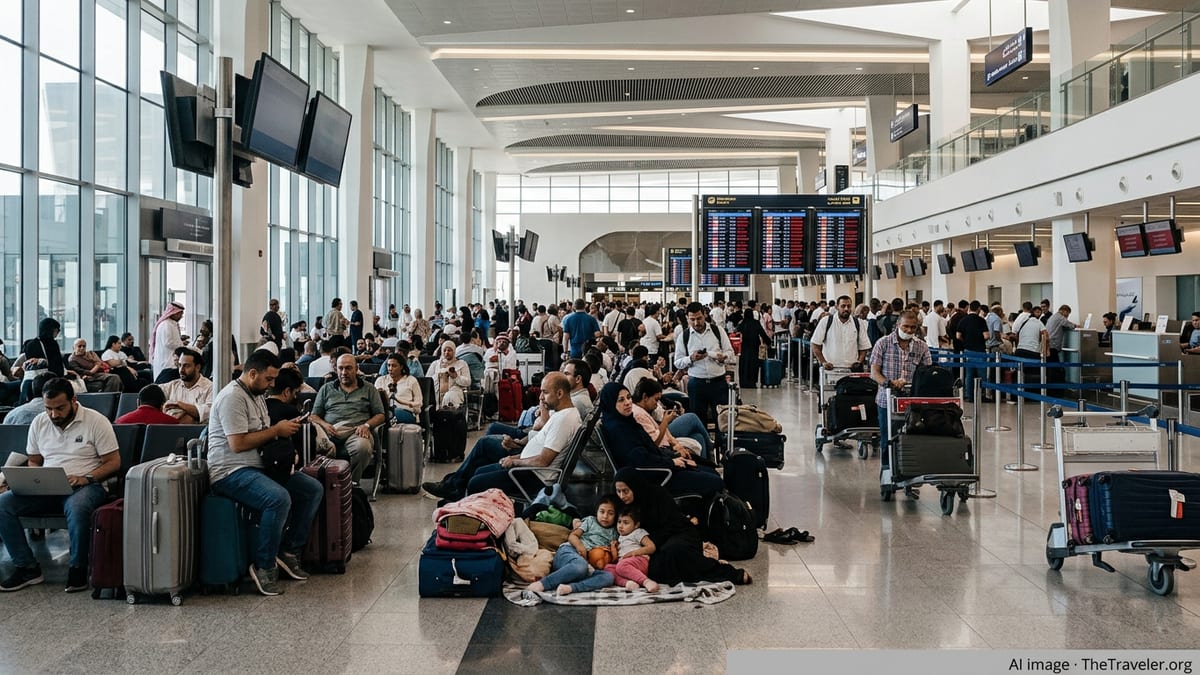
Regional conflict reshapes key global transit hubs
The latest phase of the Iran war has triggered an unprecedented aviation shock across the Middle East, with multiple states closing or tightly restricting airspace since February 28. Publicly available information shows that Bahrain, Iraq, Israel, Kuwait, Qatar, Syria and the United Arab Emirates have all imposed limitations that disrupted normal traffic patterns and forced airlines to divert, delay or cancel thousands of flights.
Independent industry trackers estimate more than 14,000 flights have been canceled out of the wider Middle East since the end of February, with average fares on some Asia–Europe routes rising by around a quarter as capacity disappeared and longer routings increased fuel burn and flying time. Airlines that rely on Gulf hubs to connect Asia, Africa and Europe have been particularly exposed, and many are now rebuilding operations in smaller, more tentative steps than after previous crises.
Dubai, Doha and Abu Dhabi normally act as high frequency “bridge” points for traffic between continents. The current pattern of rolling restrictions, pop up closures and fast changing military risk assessments has undermined that model, forcing carriers to hold more reserve time in their schedules and sometimes operate complex dog-leg routings that skirt conflict zones.
For travelers, the net effect is a network that looks stable on paper but remains vulnerable to overnight adjustments, even on routes that appear far from the front lines. Many of the latest changes are concentrated through late April and May, but airlines are already warning that timetables could be revised again at short notice.
Qatar Airways: from full suspension to cautious rebuilding
Qatar Airways has been hit harder than most of its regional rivals because Qatari airspace itself was closed during the early phase of the conflict. A March 2 service update on the airline’s newsroom confirmed that scheduled commercial flights from Doha were temporarily suspended after the national regulator halted normal air navigation, blocking routine arrivals and departures at Hamad International Airport.
In the days that followed, Qatar’s civil aviation authority allowed only limited emergency movements. Public documents show that narrowly defined corridors were opened for evacuation and cargo services, including relief flights to major European hubs such as London, Paris, Madrid, Rome and Frankfurt, while standard commercial passenger operations remained largely on hold.
More recent schedules published by regional travel outlets indicate that Qatar Airways is now working toward a revised network plan that runs through at least mid June, with a view to rebuilding to more than 120 destinations by mid May if conditions allow. These plans are framed as provisional and subject to regulatory decisions on overflight permissions, which means passengers continue to see segments canceled or retimed just days before departure.
Consumer guidance shared by aviation forums and travel management companies stresses that travelers booked on Qatar Airways through Doha should monitor their bookings closely, expect possible re-routing via alternative partner hubs, and be prepared for overnight layovers as the airline gradually reconnects its long haul spokes.
Emirates and Etihad trim capacity but keep hubs open
While Qatar endured a near total shutdown, the major UAE carriers have kept a limited but continuous presence in the skies. Reports from Dubai indicate that Emirates quickly shifted to a reduced schedule once regional airspace partially reopened, operating fewer frequencies to key cities while preserving as many long haul connections as possible through carefully timed banks of arrivals and departures.
Operational updates carried by aviation publications describe Emirates as running at well below its usual capacity yet already planning a staged recovery. The carrier has reportedly restored more than half of its pre conflict schedule and is targeting further increases if airspace restrictions ease and demand stabilizes. Passengers whose trips fall between late February and mid April are being offered date changes or refunds, with travel allowed to be rebooked into late May in many cases.
In Abu Dhabi, Etihad Airways has pursued a more conservative strategy, holding back capacity and focusing on load factors rather than rapid expansion. Travel industry coverage notes that Etihad has launched aggressive fare promotions on long haul routes in an attempt to stimulate demand at a time when many travelers are actively trying to avoid connections in the Gulf. At the same time, the airline continues to warn that its timetable may be altered at short notice as regional airspace and airport operations shift.
Both Emirates and Etihad are maintaining core connectivity to Europe, Asia and Australia, but many secondary destinations are seeing fewer weekly flights and, in some cases, temporary suspensions. Travelers who previously relied on tight 60 to 90 minute connections in Dubai or Abu Dhabi are now being booked on longer layovers to give the airlines more room to absorb delays.
Singapore Airlines reroutes away from the Gulf
The ripple effects of the Middle East crisis extend far beyond regional carriers. Singapore Airlines, which has traditionally used Dubai as a key point for some of its westbound services, has suspended its Singapore–Dubai flights through at least the end of May, citing geopolitical uncertainty and constrained airport capacity.
According to business media reports, the airline has not announced a replacement Gulf stopover for those flights, opting instead to focus on nonstop services to Europe and alternative routings that do not rely on crossing the most volatile parts of Middle Eastern airspace. Some Asia–Europe flights are operating with adjusted tracks and longer flight times to keep a wider buffer around conflict zones identified by safety assessments.
For passengers, this means fewer options to break up journeys via Dubai or combine stopovers in the Gulf with trips to Europe or Africa on a single ticket with Singapore Airlines. Travelers holding existing bookings on the suspended Dubai route are being offered rebooking on other Singapore Airlines services or connections via partner carriers, subject to seat availability and the rules of their fare.
Capacity constraints on alternative routings, together with higher operating costs from longer detours, are contributing to higher fares on many Singapore originating tickets to Europe, especially during peak travel periods in April and May.
What travelers should do now about bookings and rights
With schedules still in flux, published guidance from travel advisors and passenger rights advocates emphasizes preparation and flexibility. The most consistent recommendation is to avoid last minute airport arrivals and instead rely on airline apps and email notifications, checking booking status in the 24 to 48 hours before departure and again on the day of travel.
For tickets touching Qatar, the UAE or nearby airspace, many carriers have introduced temporary policies that allow at least one free date change, and in some cases a reroute via different hubs if comparable itineraries exist. However, the specific options depend heavily on where the journey starts, which airline issued the ticket, and local consumer protection rules such as European Union and Canadian regulations on long delays and cancellations.
Travel specialists advise that passengers whose flights are canceled entirely, rather than just retimed, generally have stronger rights to refunds or rebooking on alternative services. Written confirmation of cancellations and any replacement itineraries is important, particularly for those seeking compensation or reimbursement of extra costs like hotels and meals under applicable passenger rights frameworks.
Given the likelihood of sudden airspace closures or further military escalations, industry observers suggest that travelers who do not need to transit the Gulf in the next few weeks may wish to consider routings via Europe, Central Asia or East Africa instead, even at a higher fare. For those who must fly through Doha, Dubai or Abu Dhabi, building in longer connection times, securing comprehensive travel insurance and keeping plans flexible remain the safest strategies while the region’s aviation system slowly rebuilds.