

More news on this day
Escalating military tensions across the Gulf region and key shipping chokepoints are rippling through the travel industry, stranding cruise ships, grounding flights and forcing Gulf tourism hot spots to confront an abrupt and unsettling standstill.
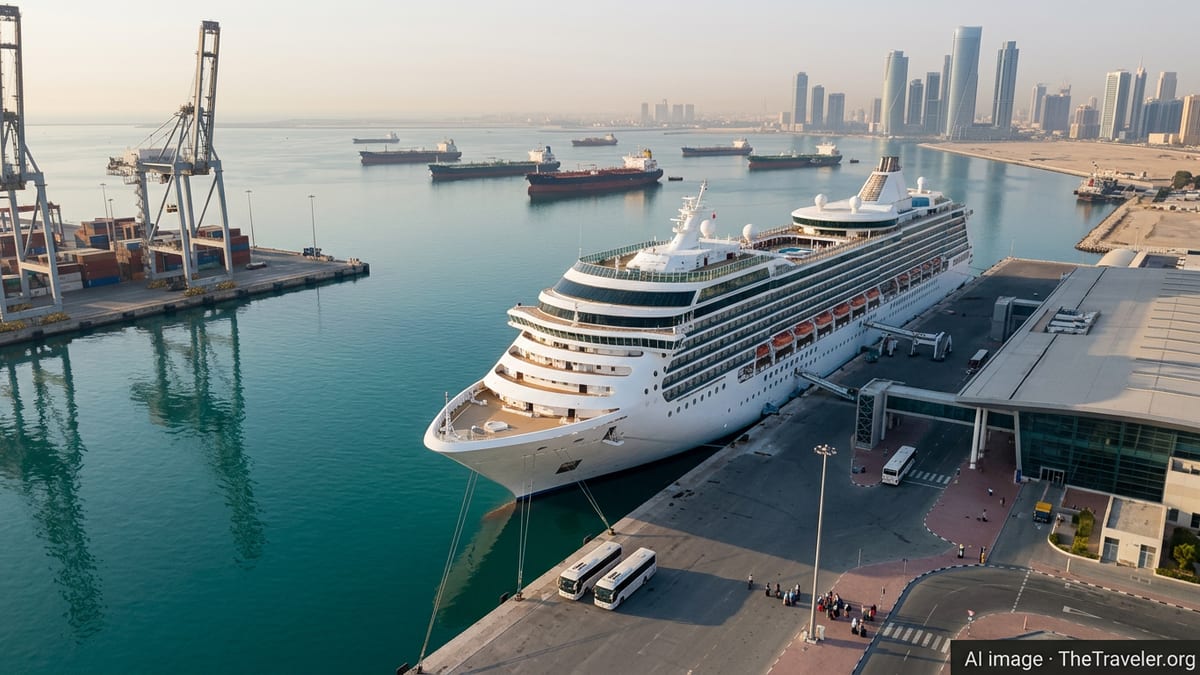
Cruise Ships Caught in the Middle of a Maritime Flashpoint
As naval vessels and missiles crowd the same sea lanes once marketed as glamorous winter cruise routes, at least half a dozen major ships have found themselves effectively trapped in the wider Gulf. Maritime security briefings describe a sharp reduction in commercial transit through the Strait of Hormuz since late February, with many operators choosing to anchor or hold position rather than risk transiting one of the world’s most volatile waterways.
Industry analysts estimate that around 15,000 cruise passengers have been affected on large vessels that were scheduled to reposition or sail round-trip itineraries from United Arab Emirates and Qatari ports. Instead of sailing to Muscat, Sir Bani Yas or further into the Arabian Gulf, several ships remain moored in Dubai, Abu Dhabi and Doha while their operators scramble to arrange emergency flights and alternative routes for guests.
The Saudi-backed brand AROYA Cruises confirmed this weekend that its 3,362-guest flagship will stay berthed in Dubai “until further notice,” cancelling the remainder of its season across the Arabian Gulf. In parallel, German operator TUI Cruises has its Mein Schiff vessels held in Abu Dhabi and Doha, after suspending scheduled calls to Oman and other regional ports. Lines are emphasizing that all guests have disembarked safely, but the ships themselves remain stranded assets in a rapidly militarized maritime theater.
Lines Cancel Gulf Seasons as Risk Levels Spike
The cruise sector’s retreat from the Gulf has unfolded at speed. Within days of joint U.S. and Israeli strikes on Iran triggering a broader regional crisis in late February, maritime risk agencies raised threat levels for the Arabian Gulf, Strait of Hormuz and Gulf of Oman, advising commercial operators to delay or avoid transits. War risk insurance premiums surged, adding a financial deterrent to what was already a serious safety concern.
Major brands quickly followed. TUI halted Arabian Gulf operations for two ships, scrapping a series of seven-night itineraries built around calls to Dubai, Abu Dhabi, Qatar and Oman. MSC Cruises cancelled remaining March departures from Dubai on one of its newest megaships, chartering multiple large-capacity flights to repatriate thousands of guests who suddenly found their holiday turning into a logistics operation.
Smaller regional players have also pulled back. Celestyal Cruises and other operators with niche Gulf and Red Sea programs have either cancelled or radically adjusted sailings, with some itineraries truncated into “cruise to nowhere” hotel-ship experiences while airspace closures and port advisories are assessed. The combined effect is a de facto shutdown of the Gulf’s nascent winter cruise season, only a few years after regional governments poured resources into attracting ships and building new terminals.
Airspace Closures Compound a Tourism Crisis
What began at sea has quickly become a wider travel shock. Aviation authorities in several Gulf states, including the United Arab Emirates, Qatar, Bahrain and Kuwait, moved in early March to temporarily close or restrict parts of their airspace. Carriers rerouted long-haul services away from the region, while local airlines cancelled large numbers of flights over a matter of hours.
Travel data providers now estimate that tens of thousands of passengers have been stranded or rebooked worldwide as airlines navigate the rapidly shifting patchwork of no-fly zones and overflight restrictions. Industry executives liken the scope of disruption to the early days of the pandemic, though this time the trigger is a kinetic military conflict rather than a public health emergency.
For cruise passengers stuck in the Gulf, these airspace closures have turned straightforward repatriation plans into complex global puzzles. Operators have had to route charter flights via alternative hubs, sometimes adding many hours to journeys and creating bottlenecks at European and Asian airports suddenly handling displaced Gulf traffic. Travel advisors report frantic calls from clients still unsure when or how they will return home, even after disembarking safely from their ships.
Gulf Destinations Face Sudden Reversal in Visitor Flows
The timing of the crisis is particularly painful for Gulf destinations that have spent the past decade recasting themselves as tourism and cruise gateways linking Europe and Asia. Dubai, Doha and Abu Dhabi have all invested heavily in cruise terminals, marketing partnerships and visa-on-arrival schemes designed to woo first-time visitors stepping off ships for desert safaris and skyline tours.
Those efforts had begun to pay off, with pre-crisis seasons seeing steady growth in ship calls and passenger volumes. Now, waterfront districts built to welcome turnarounds and day visitors are confronting empty quays and shuttered tour operations. Hoteliers in cruise-adjacent neighborhoods report a wave of cancellations from guests who had planned pre- or post-cruise stays, while local guides and small excursion operators see forward bookings fall away within days.
Economists warn that the impact will extend beyond headline visitor numbers. Many Gulf cities have positioned tourism as a diversification hedge against volatile energy markets, and cruise traffic was a high-profile pillar of that strategy. The sudden withdrawal of ships and the broader perception of the region as a conflict zone threaten to chill demand well into next season, even if military tensions ease in the coming weeks.
Uncertain Outlook as Security Advisories Mount
With naval deployments increasing and fresh missile and drone incidents reported in both the Strait of Hormuz and the Red Sea corridor, security analysts say conditions remain too unstable for a meaningful resumption of normal cruise operations. Several major container lines have already paused or rerouted traffic through affected chokepoints, signaling that risk assessments for large passenger ships, which are harder to harden and evacuate, are likely to remain conservative.
Travel companies are now reworking deployment plans for the remainder of 2026, considering longer-term redeployments to the Mediterranean, Northern Europe and Asia-Pacific in place of winter Gulf seasons. Some have begun offering rebooking incentives and future cruise credits to encourage customers rattled by images of warships and burning tankers to keep deposits within the ecosystem rather than abandoning cruise holidays altogether.
For Gulf governments, the priority remains de-escalation and the reopening of critical sea lanes and airspace. Yet even in a best-case scenario where conflict subsides quickly, tourism strategists acknowledge that restoring confidence will take far longer. The memory of stranded ships at anchor off Dubai and empty terminals along the Gulf coast may linger in travelers’ minds, reshaping perceptions of the region’s reliability as a leisure destination for years to come.