

More news on this day
Tourism across the Gulf and wider Middle East has been thrust into emergency standstill after coordinated United States and Israeli strikes on Iran prompted Qatar, Saudi Arabia, the United Arab Emirates, Oman, Israel and other states to close or severely restrict their airspace, shutting key hubs in Dubai, Muscat, Jeddah and Doha and unleashing a wave of booking cancellations worldwide.
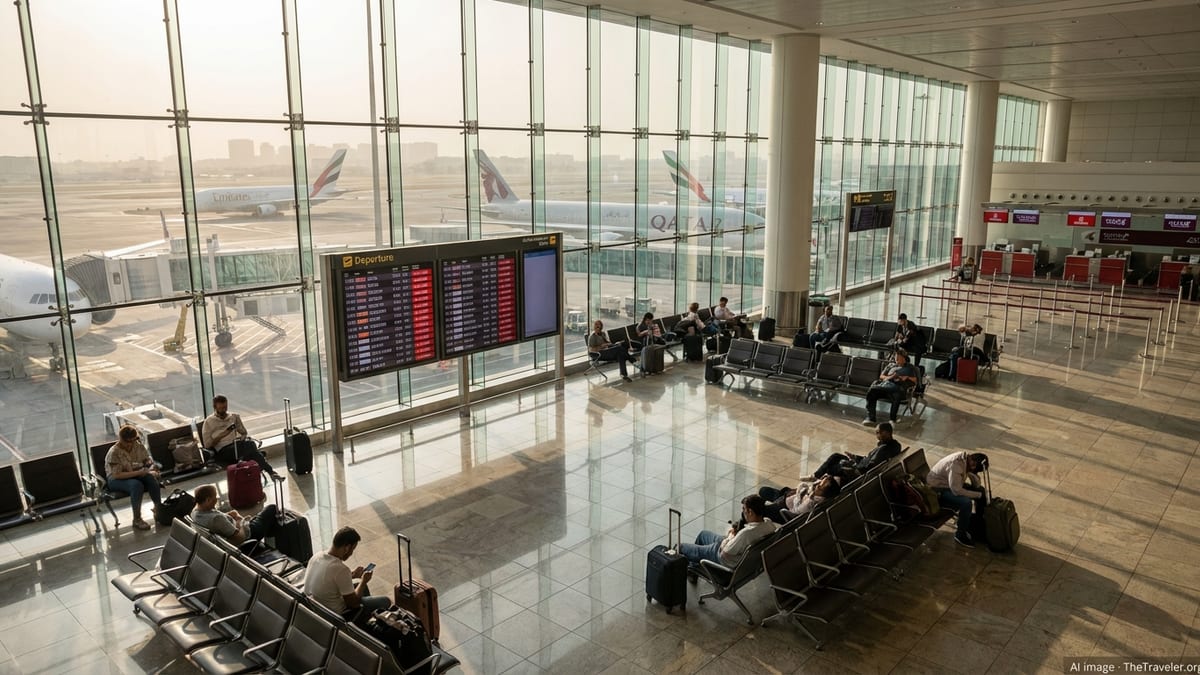
Coordinated Strikes Trigger Unprecedented Airspace Freeze
The latest escalation began on February 28, when US and Israeli forces launched extensive strikes on targets in Iran, drawing rapid retaliation from Tehran and igniting security fears across already sensitive Gulf aviation corridors. Within hours, aviation authorities in Qatar, the UAE, Saudi Arabia, Oman, Israel and several neighboring states moved to halt or heavily curtail civilian flights, citing the risk posed by missile interceptions and potential further attacks.
Qatar’s Civil Aviation Authority announced a temporary suspension of air navigation, effectively closing the country’s airspace and forcing national carrier Qatar Airways to ground or divert services to Doha. In parallel, authorities in the UAE imposed a partial airspace shutdown that quickly translated into a full suspension of operations at Dubai International Airport and the city’s second hub, Al Maktoum International.
Regional media and data from aviation analytics firms indicate that same-day cancellations surged across the Gulf, with skies over Iran, Iraq, Kuwait, Israel, Bahrain and much of the Arabian Peninsula abruptly emptied of commercial traffic. Analysts say the coordinated nature of the closures has created one of the most far-reaching interruptions to global aviation since the pandemic, with the strategic hub network from Dubai to Doha and Jeddah effectively offline.
Israel, which was both a launch point and a target in the exchange of strikes, closed its own airspace and halted operations at key gateways. Together, the overlapping measures amount to a tourism freeze stretching from the Eastern Mediterranean to the Arabian Sea, hitting not just point-to-point routes but the long-haul connections that rely on Gulf stopovers.
Major Hubs Dubai, Doha, Muscat, Jeddah Brought to a Standstill
Dubai International, the world’s busiest airport for international passengers, has borne the brunt of the current shutdown. Operating more than 1,000 flights a day in normal times, the hub saw traffic grind to a halt after a combination of precautionary airspace closures and reported damage linked to Iranian retaliatory fire. Home carrier Emirates confirmed a temporary halt to all operations in and out of Dubai, with low-cost affiliate flydubai also suspending services.
In Qatar, the closure of airspace and the suspension of flights to and from Doha have abruptly stalled one of the region’s most aggressively expanding tourism and transit markets. Doha’s Hamad International Airport, positioned as a premium gateway between Europe, Asia and Africa, has experienced mass delays, diversions and outright cancellations, stranding transit passengers and disrupting onward itineraries stretching as far as Australia and North America.
Oman’s capital Muscat, a rising leisure destination that has invested heavily in positioning itself as a quieter alternative to Dubai, has also been hit by airspace restrictions and cancellations. While some closures in Oman remain time-limited and partial, flight-tracking data shows a sharp drop in movements to and from Muscat International Airport, with multiple foreign airlines suspending operations for at least 24 to 48 hours pending security reassessments.
Saudi Arabia’s Red Sea gateway Jeddah, critical for religious tourism linked to Umrah and the upcoming Hajj season, has seen flights delayed indefinitely or cancelled outright as air corridors across the Gulf narrow. Travel operators in Asia and Africa report groups of pilgrims stranded or forced into long overland detours to reach alternative departure points, underscoring how the crisis is spreading beyond conventional holiday and business travel into religious tourism flows.
Global Carriers Cancel, Reroute and Brace for Financial Hit
The closures have triggered a cascade of responses from global airlines, many of which rely on Gulf airspace and hub airports as linchpins of their long-haul networks. Major Middle Eastern carriers such as Emirates, Qatar Airways and Etihad have suspended large portions of their schedules, activating emergency rebooking policies and urging passengers to avoid travelling to airports until further notice.
European, Asian and North American airlines have followed suit, either cancelling flights into the region or plotting lengthy detours around closed airspace. Aviation data from firms tracking real-time movements indicates that nearly a quarter of scheduled arrivals into key Middle Eastern destinations on February 28 were cancelled, with the total number of affected flights exceeding 1,800 once departures are included. That disruption has already extended into March 1, with hundreds more cancellations logged.
For airlines, the financial implications are twofold: immediate revenue loss from grounded flights and longer-term cost pressures if conflict-related airspace restrictions persist. Rerouting widebody aircraft around closed corridors adds hours of flight time on some Europe–Asia and Africa–Asia routes, inflating fuel bills and squeezing margins in an industry still recovering from the combined shocks of the pandemic and previous regional crises.
Insurers and travel risk consultants are closely watching the situation, warning that prolonged instability could trigger higher war-risk premiums for overflight and potential claims from tour operators and travel companies facing contractual obligations they can no longer meet. Several major carriers have already issued advisories suggesting that disruption could last several days, if not longer, depending on the trajectory of military operations and diplomatic efforts to de-escalate.
Tourism Losses Mount as Bookings Collapse Across the Region
The immediate tourism fallout has been swift. Hotels in Dubai, Doha, Muscat and Jeddah report an abrupt spike in cancellations, with high-value corporate events, luxury leisure stays and group tours either postponed indefinitely or moved to alternative destinations. Travel agents in Europe and Asia say outbound bookings to the wider Gulf have effectively frozen since news of the strikes and closures broke.
Industry analysts estimate that tens of thousands of visitors who were due to arrive in the coming week alone will now stay away, depriving local economies of peak-season spending on accommodation, dining, shopping and excursions. The impact is particularly acute in markets such as the UAE and Qatar, which have poured billions into positioning themselves as year-round tourism hubs, and in Oman, where tourism is a pillar of a broader diversification drive.
Beyond cancelled holidays and business trips, the crisis is also hitting conferences, sporting events and cultural festivals that depend on the region’s air connectivity. Organisers report facing difficult decisions about whether to proceed, scale down or relocate events in the face of travel bans, insurance uncertainties and the possibility of further military escalation.
Travel economists warn that even a short-lived shutdown can have outsized ripple effects, depressing demand for months as risk-averse travelers redirect plans to destinations perceived as safer or more stable. For inbound markets such as India, China, the United Kingdom and continental Europe, there are early signs of a pivot to Mediterranean and Southeast Asian alternatives, at least in the near term.
Travelers Stranded and Searching for Alternatives
On the ground, the human dimension of the aviation freeze is playing out in crowded terminals and improvised waiting areas. Thousands of travelers are stranded across Dubai, Doha, Muscat, Jeddah and other affected hubs, many of them transit passengers whose flights were diverted mid-journey or cancelled after arrival. Airports have scrambled to provide hotel accommodation, meal vouchers and basic assistance, but capacity is stretched and information remains patchy.
Umrah pilgrims and family travelers have been particularly hard-hit, with some groups stuck in Saudi Arabia’s western cities and others unable to begin journeys to the holy sites as charter and scheduled services are pulled from timetables. Travel agencies in Malaysia, India and Indonesia report that clients are seeking urgent clarification on whether their religious trips can proceed, while airlines advise against non-essential travel until airspace conditions stabilize.
For those attempting to leave the region, rerouting options are limited. With Israel, Qatar, Bahrain, Kuwait and the UAE all either fully or partially closed to civil aviation, airlines are funnelling the few available flights through secondary airports in countries such as Egypt and Turkey where possible. These routes are quickly filling, pushing ticket prices higher and leaving many travelers facing multi-stop journeys that take far longer than originally planned.
Travel experts recommend that affected passengers remain in close contact with their airlines or booking agents, monitor official announcements from aviation authorities and avoid heading to airports without confirmed rebookings. While some carriers have relaxed change fees and are offering full refunds, the sheer volume of disrupted itineraries means resolution is likely to take several days at minimum, even in the best-case de-escalation scenario.