

More news on this day
Thousands of passengers across key Gulf hubs including Riyadh, Kuwait City, Manama and Dubai are facing renewed travel chaos as regional carriers Saudia, Gulf Air, Air Arabia and Kuwait Airways cancel and curtail flights in response to ongoing airspace disruptions linked to the recent Gulf security crisis.
Get the latest news straight to your inbox!
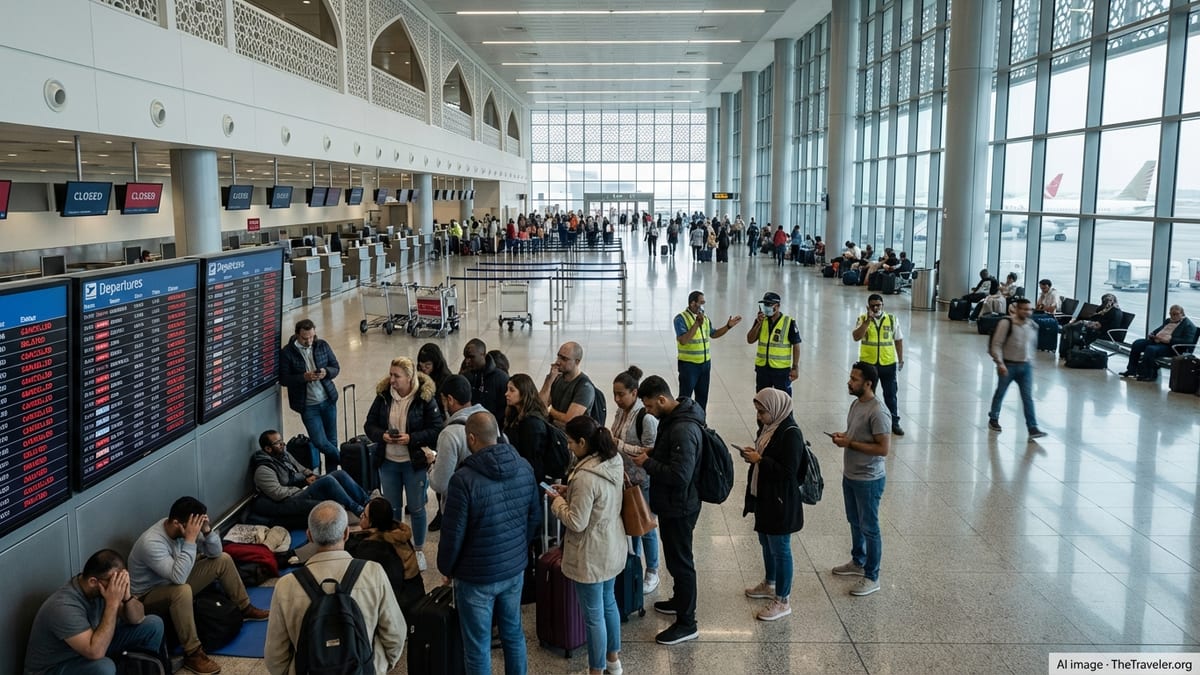
Patchy Resumptions Meet New Cancellations Across the Gulf
The latest wave of disruption comes even as some Gulf airlines tentatively restore parts of their networks. Publicly available information shows that Saudia and Air Arabia have restarted limited services to the United Arab Emirates from April 11, reconnecting Jeddah with Dubai and Abu Dhabi on a reduced schedule while urging passengers to reconfirm bookings before heading to the airport. Despite these moves, operations remain far below pre-crisis levels, and last-minute changes continue to strand travelers at terminals across the region.
In Riyadh, passengers have reported long queues at airline desks as carriers juggle aircraft and crew around evolving overflight permissions. Industry advisories indicate that Saudi airspace is technically open but constrained by restrictions on Gulf-facing corridors, forcing airlines to thin schedules or route flights along longer, fuel-intensive paths. Saudia’s resumed links to the UAE therefore coexist with ongoing cancellations to other nearby cities, leaving many itineraries partially intact but operationally fragile.
Dubai, typically the region’s most resilient hub, remains under pressure from partial airspace closures over Iran and Iraq, which have forced rerouting and schedule cuts for a wide range of carriers. Network updates from major airlines over recent days describe widespread retimings and capacity reductions to dozens of destinations touching Dubai. While some flights are operating, the combination of reduced frequencies and altered timings has left many passengers arriving to discover that onward connections to Riyadh, Manama or Kuwait City are no longer available.
Travel analysts note that this fragmented restart is creating a patchwork of options, where a route may appear bookable yet be vulnerable to late operational changes. For affected passengers, this often translates into unplanned overnight stays, reissued tickets and extended waits for alternative flights that may themselves be subject to review.
Kuwait City Hardest Hit as Airport Closure Drags On
Kuwait International Airport remains one of the most severely affected facilities in the region. According to recent media coverage, the airport was closed following Iranian drone and missile activity that damaged aviation and energy infrastructure in and around Kuwait City. As of April 11, the closure remains in place, and no regular commercial departures or arrivals are operating.
This prolonged shutdown has had an outsized impact on Kuwait Airways and fellow Kuwaiti carrier Jazeera Airways, which have been forced to cancel large portions of their schedules and reroute essential traffic through neighboring hubs. Earlier in March, reports from South Asia highlighted that Kuwait Airways and Air Arabia were among several Gulf-focused airlines canceling multiple Middle East services in a short period, underscoring how the knock-on effects of the Kuwait closure ripple far beyond the country’s borders.
Passengers originally booked to or from Kuwait City are being re-accommodated on flights via alternative gateways such as Dammam, Bahrain and Dubai where possible, often with ground transport arranged for the final leg. However, capacity on these substitute routes is limited, and demand is high as residents, workers and transit passengers all compete for a shrinking number of available seats.
For travelers physically present in Kuwait City, the situation is particularly challenging. With commercial air traffic halted, options are largely restricted to waiting for the airport to reopen or attempting to travel by land or sea to neighboring countries that still have limited flight operations. Public advisories consistently encourage passengers to monitor airline channels and airport bulletins closely, as any decision to reopen could trigger a rapid but uneven restoration of service.
Manama and Bahrain Routes Squeezed by Shifting Hub Strategy
The disruptions are also being felt acutely in Manama, where Bahrain’s role as a regional aviation hub has been undermined by airspace restrictions and the need to temporarily divert traffic. Travel industry updates over the past month show that Bahrain’s airspace was initially closed, with national carrier Gulf Air transferring some operations to King Fahd International Airport in Dammam, across the causeway in Saudi Arabia.
Even as more recent coverage suggests that Bahrain’s skies have partially reopened, schedules remain trimmed and subject to change. Gulf Air has been rebuilding its network carefully, adding back services to key cities such as Riyadh and Dubai while maintaining replacement links that route passengers through Saudi territory. As a result, travelers heading to or from Manama may find themselves flying into Dammam and completing the journey by road, adding hours to what would normally be a short hop.
The shifting hub strategy has generated confusion among passengers holding tickets that list Bahrain as either the origin or destination. Some are discovering that their flights now depart from or arrive at Dammam instead, necessitating new ground transport arrangements and, in some cases, new visas. Travel agents in the region report that even experienced frequent flyers are struggling to keep track of which sectors will actually operate on the day, especially when itineraries involve multiple carriers and connection points.
For Manama itself, the loss of direct air connectivity is also beginning to show up in the business travel and tourism sectors, with conferences postponed and short-break leisure trips reduced. While the expectation is that Gulf Air will eventually restore a more typical schedule once regional security conditions stabilize, there is little clarity on how quickly this can occur.
Dubai’s Hub Role Under Strain as Capacity Tightens
Dubai remains operational but constrained, a situation that has major implications for passengers relying on the city as a connecting hub between Asia, Europe and Africa. Recent airline bulletins describe widespread route adjustments from carriers based at Dubai International Airport, citing ongoing partial closures of nearby airspace that require longer routings and limit the number of daily rotations per aircraft. The cumulative effect is fewer flights, fuller cabins and less flexibility to reaccommodate disrupted travelers.
Air Arabia, which has its primary base in Sharjah and significant operations into Dubai’s catchment area, has been particularly affected. Reports from the past six weeks show the low cost carrier repeatedly mentioned in lists of airlines canceling or consolidating services from South Asia and the wider Middle East as airspace restrictions took hold. Although today’s partial restart to the UAE marks a positive step, the airline’s regional network remains in flux.
Passengers currently stranded in Dubai face a mix of outright cancellations and rolling delays as airlines wait for updated overflight clearances or suitable aircraft. With nearby hubs such as Kuwait City offline and Manama constrained, rerouting options are more limited than in previous disruption events. Some carriers are offering waivers on change fees or allowing refunds, but the availability of alternative flights often depends on the traveler’s willingness to accept significant detours or longer total journey times.
Travel risk consultancies tracking the region continue to characterize the Gulf airspace situation as volatile, noting that schedule changes can be announced with only a few hours’ notice. For travelers caught in the middle of this, the practical advice remains to maintain close contact with airlines, avoid proceeding to the airport without a confirmed rebooking, and be prepared for multi-day delays.
Riyadh Feels the Ripple Effects of Regional Tension
While Riyadh’s King Khalid International Airport has not experienced the kind of prolonged closure seen in Kuwait City, the Saudi capital has nonetheless been swept up in the broader pattern of disruption. Security reports detailing recent Iranian missile and drone activity across several Gulf states reference attempted strikes on facilities near Riyadh and other Saudi targets, incidents that contributed to short-term stoppages of flight operations earlier in the crisis.
Advisories to corporate travelers indicate that Saudi airports remain open but face intermittent pause periods and route restrictions that complicate scheduling. Cargo-focused updates published in recent days mention cancellations of certain services to and from Riyadh, Kuwait, Dubai, Abu Dhabi, Doha and Bahrain, hinting at widespread challenges in balancing safety, capacity and commercial demand.
For passengers connecting through Riyadh on Saudia or other carriers, these conditions translate into a less predictable travel experience. A flight from Riyadh to Manama or Dubai that appears on schedule one day may be retimed or removed the next, as airlines reallocate aircraft to prioritize essential long haul sectors or newly reopened corridors such as Jeddah to the UAE.
Despite the uncertainty, there are signs of gradual normalization compared with the most intense phase of disruption in late February and early March, when regional studies estimated that thousands of flights across the Middle East were canceled in a matter of days. However, with Kuwait City’s airport still shut and sensitive airspace zones remaining off limits, travelers moving between Riyadh, Manama, Dubai and other key Gulf cities should plan for continued volatility in the weeks ahead.