

More news on this day
Gulf-based travelers are confronting another week of upheaval as conflict-driven airspace restrictions across the Middle East continue to snarl flight schedules, strand passengers at key hubs and force lengthy detours on long-haul routes.
Get the latest news straight to your inbox!
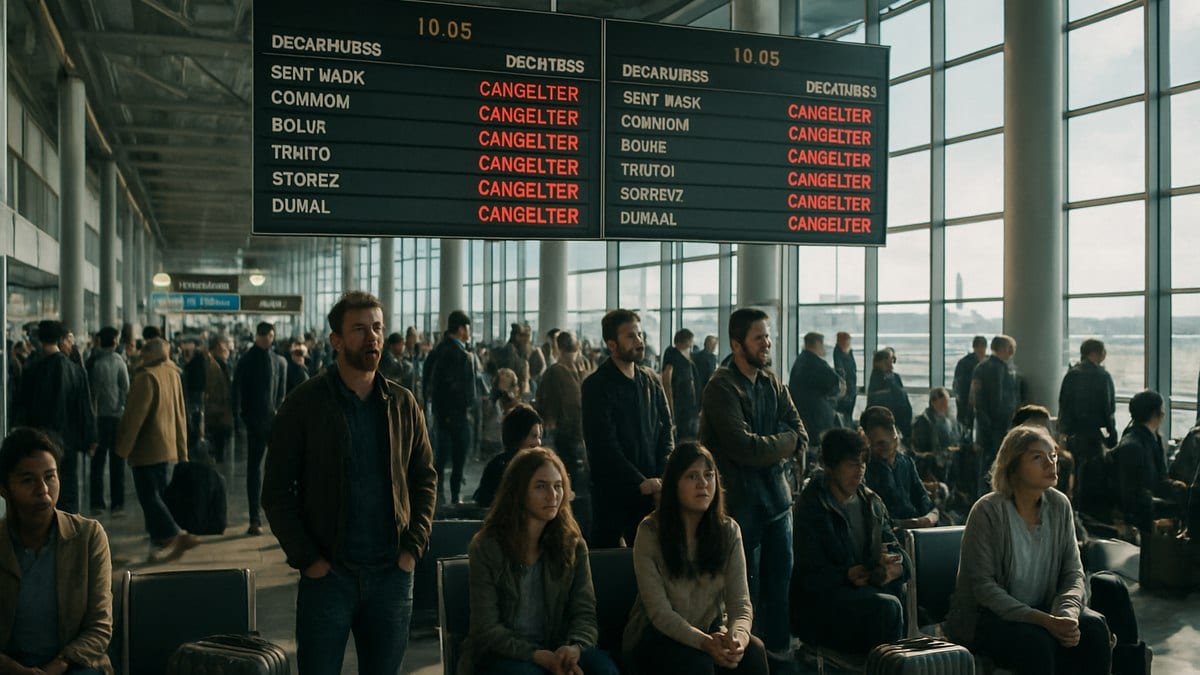
Rolling Restrictions Keep Gulf Hubs Under Strain
Airspace disruptions that began after regional hostilities escalated on February 28 continue to ripple through major Gulf hubs, according to publicly available operational updates and aviation advisories. Widespread closures and restrictions across Iran, Iraq, the Gulf and parts of the eastern Mediterranean have constrained the dense web of routes that normally funnel through Dubai, Doha and Abu Dhabi.
Information compiled by industry trackers and travel advisories indicates that tens of thousands of passengers have faced cancellations, extended layovers or last-minute rebookings in recent weeks. Data cited by airline and passenger-rights platforms suggests that more than 13,000 to 14,000 flights involving Middle Eastern airspace were cancelled in the first half of March alone, many of them serving or transiting Gulf gateways.
While some Gulf states have gradually reopened limited corridors, regional notices to airmen describe a patchwork of restrictions from Bahrain and Qatar to the United Arab Emirates and Saudi Arabia. European regulators have kept conflict-zone warnings in place for large sections of the Middle East and Persian Gulf airspace, advising operators to avoid affected flight information regions or to use extreme caution.
The result for Gulf travelers is an environment where published timetables often bear little resemblance to day-of-operation reality. Carriers are still adjusting networks week by week, and passengers are being urged in multiple public advisories to check flight status repeatedly in the hours before departure.
Flight Cancellations, Diversions and Lengthy Detours
Operational bulletins and airport updates show that airlines have responded by grounding scores of services and radically redrawing flight paths. Several Gulf-based carriers temporarily suspended or sharply reduced flights from Dubai, Abu Dhabi, Doha and Bahrain in early March, while international airlines scaled back connections into the region or rerouted around restricted zones.
With the traditional high-altitude corridors over Iran and Iraq heavily constrained, many long-haul operators are now pushing Europe–Asia traffic along narrower alternatives. Industry analyses describe aircraft being shifted to northern tracks via the Caucasus or southerly routings via Egypt, the Red Sea and the Arabian Sea, adding two to five hours to some journeys. For passengers accustomed to fast one-stop connections through Gulf hubs, these extended flight times are compounding already long travel days.
The knock-on effect is particularly acute for travelers on complex itineraries, such as those linking South and Southeast Asia with Europe, North America or Africa via the Gulf. Cargo-focused advisories note that airlines are prioritizing certain flows and rescue-style flights, leaving many leisure and some business travelers facing multi-day delays, unexpected overnight stays and, in some cases, being re-routed through entirely different continents to reach their destinations.
Airports across the region have reported periods of intense congestion followed by quieter intervals as wave after wave of cancellations and resumptions reshapes terminal activity. Travelers passing through Dubai, Doha and other hubs have described, in public forums and social media posts, scenes of crowded transfer desks, long queues for rebooking and hotel vouchers and limited clarity about when normal schedules might resume.
Patchwork of Airspace and Safety Advisories
The continuing instability is being reinforced by a complex layer of safety notices from regulators and aviation security bodies. The European Union Aviation Safety Agency has revised and extended its conflict-zone bulletin for the Middle East and Persian Gulf, pointing to ongoing risks in the airspace of Iran, Iraq, Israel and multiple Gulf states and recommending that operators avoid affected regions or adhere to strict altitude and routing guidance.
United States aviation advisories covering parts of the Persian Gulf and Gulf of Oman, originally issued in earlier tension cycles, remain in effect, reminding operators of the security environment over and near several Gulf flight information regions. Specialized aviation risk consultancies that track notices to airmen and conflict-zone guidance report that, since late February, at least a dozen Middle Eastern flight information regions have been subject to full or partial restrictions at various times.
Travel management companies and corporate travel risk bulletins circulating in early and mid-March highlight that the situation is fluid, with short-notice changes to restrictions and occasional temporary reopenings of specific corridors. Several advisories emphasize that even when national airspace is formally open, overflight options may be limited by carrier-specific risk policies, insurance conditions or military activity in adjacent zones.
For Gulf travelers, this regulatory backdrop translates into ongoing uncertainty. Flights that appear bookable weeks in advance can later be retimed, rerouted or removed as airlines update risk assessments. The absence of a clear timeline for a comprehensive easing of restrictions is prompting many passengers, especially those on discretionary trips, to postpone or reroute travel away from affected hubs.
Rising Costs and Limited Alternatives for Passengers
Fare data compiled by travel-industry analysts indicates that airspace disruptions since late February have pushed up prices on many remaining routes that bypass the Gulf. With Russian airspace still off limits to many Western carriers and Middle Eastern corridors constrained, airlines have less flexibility in scheduling aircraft and must burn more fuel on longer detours, costs that are increasingly reflected in ticket prices.
Reports from passenger-rights groups and online fare trackers suggest that average prices on some Europe–Asia itineraries have climbed by more than 20 percent compared with pre-crisis levels, particularly on routes where travelers are forced to connect through less direct hubs. As inventories tighten, economy seats on alternative routings via southern Europe, Central Asia or Africa are selling out faster, leaving late-booking travelers with premium fares or multi-stop journeys.
At the same time, compensation and refund rules vary significantly by origin, carrier and jurisdiction. Consumer advocates note that passengers departing from European airports retain certain protections under regional regulations, while those starting their journeys in Gulf states often rely on airline goodwill policies or specific travel waivers issued in response to the crisis. Publicly available guidance from several carriers urges affected customers to opt for rebooking or travel credits as airlines seek to manage cash flow and capacity constraints.
For residents of Gulf countries, reduced connectivity is also complicating routine travel for work, education and family visits. Some travelers are shifting to regional low-cost carriers or land and sea routes where possible, but capacity on these alternatives is limited. Overall, the disruption is highlighting how dependent many Gulf-based passengers have become on the high-frequency, global networks of a handful of major hub airlines.
Uncertain Outlook as Conflict and Logistics Crisis Deepen
Logistics and supply chain briefings issued in March and early April describe the current airspace turmoil as part of a wider regional transport crisis that includes shipping disruptions around the Strait of Hormuz and shifting oil export routes. Freight specialists warn that any further escalation, or a prolonged closure of key corridors, could deepen the squeeze on both passenger and cargo capacity through the Gulf.
Aviation risk monitors note that limited reopening of certain Gulf airspaces and tightly controlled corridors has allowed some carriers to resume partial operations. However, many international airlines continue to treat the region as high risk, maintaining diversions or suspensions on routes that previously relied heavily on Gulf hubs.
For now, publicly available assessments from regulators, airlines and travel advisories suggest that travelers should expect continued volatility in schedules across the Gulf in the coming weeks. Industry observers point out that even a rapid de-escalation of regional tensions would likely be followed by a gradual, rather than immediate, normalization of routes as airlines rebuild timetables, reposition aircraft and work through large backlogs of rebookings.
Until that happens, passengers heading to, from or via Gulf hubs face an air travel landscape defined by uncertainty. Flexible planning, close monitoring of airline communications and a willingness to accept longer or less direct routings remain essential for anyone trying to navigate the region’s skies.