

More news on this day
Guwahati’s Lokpriya Gopinath Bordoloi International Airport is raising the bar for air travel in Northeast India, unveiling a flagship business lounge within its new nature-themed terminal that blends regional artistry with high-tech comforts and hotel-style service.
A Luxury Milestone Inside India’s First Nature-Themed Terminal
The debut of the new business lounge comes just weeks after the opening of Guwahati’s striking, bamboo-inspired terminal, already hailed as India’s first fully nature-themed airport facility and the largest in the Northeast by passenger capacity. Tucked behind discreet glass facades overlooking the apron, the lounge is designed as a calm retreat for premium and frequent flyers moving through one of the country’s fastest-growing aviation hubs.
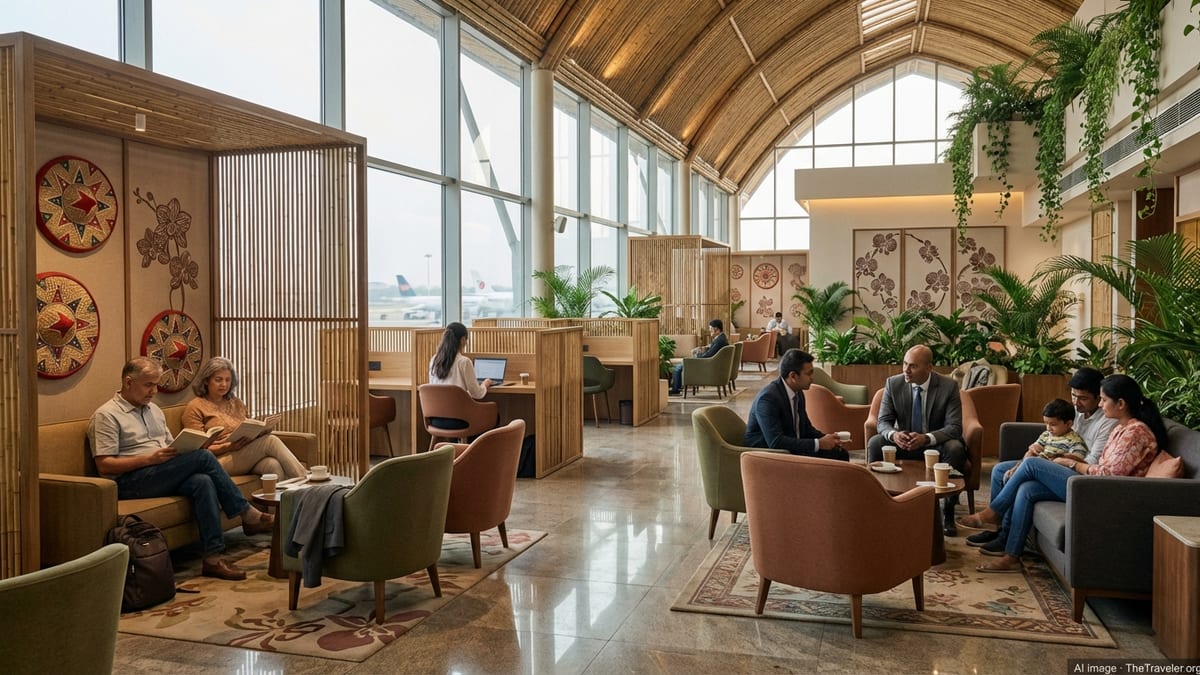
Soft natural light filters through the terminal’s signature bamboo vault into the lounge, where Assamese craft motifs, handwoven textiles and orchid-inspired design details echo the building’s “Bamboo Orchids” architectural narrative. Seating zones are arranged to preserve quiet sightlines across the airfield, giving travelers a sense of spaciousness rarely associated with busy regional gateways.
Airport officials and the private operator say the lounge represents a conscious shift: positioning Guwahati not only as a transit point to the Northeast, but as a destination airport whose premium offering can hold its own against major metros. With the new terminal built to eventually handle more than 13 million passengers a year, the lounge is expected to become a key differentiator in attracting both business travelers and long-haul international connections.
Design That Marries Assamese Identity with Global Comforts
The lounge interior leans heavily on local materials and craft traditions, avoiding the generic look that often defines airport premium spaces. Slatted bamboo screens, inspired by vernacular Assamese architecture, divide quiet work pods from social seating areas, while japi hat patterns appear subtly in wall panels and carpets. Large-format artworks reference the wildlife and riverine landscapes of Assam, from Kaziranga’s rhinos to the Brahmaputra’s shifting sands.
In contrast to the high-volume bustle of the main departure concourse, acoustics have been carefully tuned. Upholstered furnishings, soft wall claddings and strategically placed planters help absorb noise, allowing conversations and conference calls to unfold at a comfortable murmur. Warm, indirect lighting replaces the harsh overhead glare typical of many terminals, creating a lounge ambience closer to a contemporary business hotel lobby.
The food and beverage program also leans into regional identity. Alongside international staples and made-to-order espresso, passengers can sample Assamese teas, light bites featuring local rice varieties and seasonal produce, and a rotating selection of northeast-inspired hot dishes tailored for short dwell times. For early-morning departures and late-night red-eyes, a quieter pantry area offers grab-and-go options for travelers in a hurry.
Work, Wellness and Privacy at the Heart of the Experience
Recognizing that Guwahati is emerging as a springboard for corporate travel across Northeast India and into Southeast Asia, the new lounge places strong emphasis on productivity and privacy. High-backed solo pods with integrated power, wireless charging and task lighting allow travelers to set up mini workstations, while glass-fronted meeting rooms can be reserved for last-minute briefings or virtual negotiations.
High-speed, enterprise-grade Wi-Fi blankets the space, and printing and scanning services are available on request, echoing the full-service business centers once found only in upscale urban hotels. The goal, according to airport executives, is to make a three-hour layover feel like an opportunity rather than an inconvenience for visiting executives and remote workers.
Wellness has been built into the layout as deliberately as productivity. Shower suites with spa-style amenities, a quiet room with recliners for power naps, and a dedicated relaxation zone set away from food and work areas acknowledge the realities of long multi-sector journeys through the region. Subtle biophilic touches, including indoor greenery that mirrors the terminal’s Sky Forest feature, help reduce travel fatigue and visually link the lounge to its overarching nature theme.
Tech-Enabled, Seamless Access for a New Generation of Flyers
The lounge also aligns with the airport’s broader digital-first strategy. Access can be authenticated via boarding passes, frequent flyer memberships or digital lounge subscription platforms, with agents equipped to process walk-in upgrades during peak holiday and festival seasons. Integration with DigiYatra facial recognition gates and automated security channels in the new terminal is designed to shorten the time from curb to lounge, especially for passengers on tight connections.
Inside, wayfinding is intentionally subtle. Digital screens displaying live flight information and gate changes are embedded in architectural elements rather than mounted overhead, preventing visual clutter while still keeping passengers informed. Smart occupancy sensors help staff manage crowding, signaling when to open additional seating zones or adjust cleaning schedules in real time.
For airlines, the lounge’s modular design offers flexibility. Carriers can brand select zones or host co-branded service desks during future waves of international expansion, while the core infrastructure remains under unified management. This approach is seen as essential preparation as Guwahati pushes for more non-stop links to Southeast Asia and secondary Indian cities.
New Benchmark for Premium Travel in the Northeast
The business lounge is being framed by regional tourism and trade stakeholders as more than a comfort upgrade. With Lokpriya Gopinath Bordoloi International Airport targeting double-digit passenger growth and positioning itself as a cargo and connectivity hub, a world-class premium facility is expected to help attract higher-yield traffic, business delegations and international events.
Travel analysts say the move mirrors a broader shift in India’s aviation landscape, in which airports outside the traditional metro network are rapidly scaling up their infrastructure and service standards. For the Northeast, where improved air links are vital to integrating remote districts and boosting cross-border commerce, Guwahati’s latest investment signals a clear ambition to compete on experience as well as capacity.
For passengers stepping into the new lounge, the impact is immediate. The combination of regional design cues, understated luxury and quietly efficient technology offers a distinctly Assamese welcome to travelers heading deeper into the hills and valleys of the Northeast or onward to international destinations. In the process, Guwahati’s airport is recasting itself from a functional stopover into a flagship gateway that aspires to redefine how India’s emerging regions host the world.