

More news on this day
Great Western Railway’s latest recognition at the Rail Business Awards signals a step change in how UK train operators approach safety, innovation and day-to-day passenger experience, with new technology trials and operational reforms beginning to reshape what rail travel feels like for customers across the network.
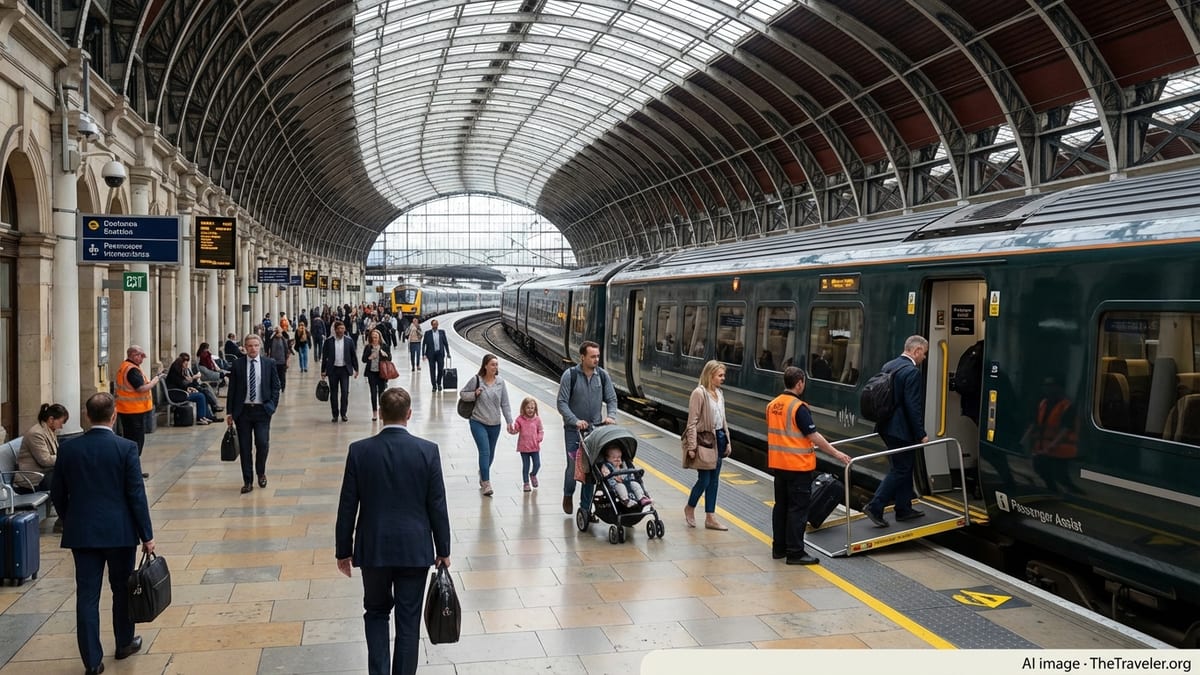
Rail Business Awards Put Safety and Innovation in the Spotlight
The Rail Business Awards have become one of the industry’s key barometers of which operators are genuinely raising standards for passengers, particularly around safety, reliability and customer care. In recent cycles, the judges have increasingly focused on how companies embed safety into every aspect of operations, from control rooms and driver training to the design of rolling stock and stations.
Great Western Railway’s strong showing in this awards environment reflects a wider shift in the UK rail sector. Safety is no longer treated as a standalone compliance exercise but as a core measure of performance alongside punctuality and revenue. Entries in categories such as Network Resilience and Maintenance Excellence, Innovation of the Year and Infrastructure Project & Station Excellence now routinely highlight how new technology, data and design thinking can cut risk and prevent incidents before they occur.
For passengers, the headline is simple: the projects that impress awards judges tend to be the same initiatives that quietly make journeys more predictable, platforms less crowded and information clearer during disruption. GWR’s recent work, often recognised or highly commended in national awards schemes, underlines how investments in behind-the-scenes systems translate into fewer cancellations, safer stations and better support when things go wrong.
The latest recognition also comes at a time when regulators and government are pressing operators to demonstrate that innovation brings measurable safety benefits. From asset monitoring to accessibility and social value, GWR is positioning its award-nominated projects as proof that new technology can not only modernise the railway but make it safer and more inclusive for the millions of people who rely on it each year.
How GWR Is Rewriting the Safety Playbook
GWR’s safety strategy increasingly blends traditional rail discipline with data-led decision making. Rather than relying solely on periodic inspections and manual reporting, the company has been investing in systems that give managers real-time visibility over assets, performance and risk. This shift is central to many of the initiatives that are now appearing on awards shortlists and in judges’ feedback.
One example is GWR’s focus on operational resilience, developed in partnership with rolling stock manufacturer Hitachi. Adjustments to maintenance patterns, fleet monitoring and depot planning have helped reduce cancellations and shorten recovery times after incidents. For passengers, this manifests as fewer last-minute train withdrawals and less time spent stranded when technical issues occur. For awards judges, it demonstrates a systematic approach to risk that improves safety by stabilising the timetable and reducing overcrowding caused by disrupted services.
The operator has also been recognised for its contribution to network safety through collaborative projects with infrastructure managers. Joint entries in customer service and environmental categories have highlighted how timetable planning, station management and track access are being coordinated more closely to minimise conflicts on busy routes, cut near-miss events and keep work sites separated from passenger movements. These may sound like internal processes, but they directly influence how safe platforms feel during peak periods and how quickly incidents are resolved.
Crucially, GWR’s safety work does not stop at the operational boundary. Through social value and community initiatives, the company has been measuring the wider safety impact of its activities, including crime prevention, support for vulnerable passengers and staff training on safeguarding. This broader view aligns closely with how modern award schemes define safety: not only the absence of accidents, but a proactive culture of care that extends into stations and surrounding communities.
Battery Trains and New Tech: Innovation You Can Actually Feel
Among the innovations drawing industry attention is GWR’s trial of the UK’s first fast-charge pure battery train for branch lines. The concept aims to deliver the benefits of electrification without large-scale overhead wiring, using high-capacity batteries that can be rapidly charged at key points on the route. This technology is entering awards conversations not only because it cuts emissions, but because it offers specific safety advantages compared with diesel traction.
Battery units can improve acceleration and braking precision, particularly on short rural branches where line speeds, gradients and stopping patterns vary. Better control translates into more consistent stopping accuracy at platforms and smoother handling in poor weather. Maintenance regimes also change when moving away from complex diesel engines, reducing fire risks associated with fuel systems and cutting exposure to exhaust fumes for staff and passengers.
Fast-charge infrastructure brings its own safety challenges, from electrical protection to staff training, and award juries have been examining how GWR and its partners manage these risks. The trial has showcased new maintenance procedures, isolation protocols and remote monitoring systems that track the health of both trains and charging equipment. In practice, this means potential faults can be detected and rectified long before they become a hazard or cause a high-profile failure affecting an entire line.
Innovation is also visible in the tools GWR uses to run its business. The company recently modernised its project and portfolio management environment, moving from a fragmented legacy platform to an integrated system that links planning, reporting and risk management. While that might sound like an internal IT upgrade, it has real implications for passengers. Better governance means safety-critical projects are prioritised and tracked more effectively, delays to infrastructure fixes are more visible, and decision makers have clearer data on which investments deliver the greatest risk reduction per pound spent.
Accessibility, Inclusion and the Safety of Every Passenger
One of the clearest messages from recent awards seasons is that passenger safety cannot be separated from accessibility and inclusion. GWR has been singled out for initiatives that not only improve the travel experience for disabled and neurodivergent customers, but also reduce the likelihood that anyone is left without support in stressful or unfamiliar situations.
A notable example is GWR’s work on passenger information and confidence-building resources for families. The company has produced what is described as UK rail’s first SEND-friendly children’s travel book, designed to help children with special educational needs and disabilities understand what to expect on a train journey. By demystifying the experience with clear visuals and simple explanations, the material aims to reduce anxiety on platforms and trains, which in turn supports safer behaviour around doors, edges and crowds.
Operationally, GWR manages more Passenger Assist requests than any other UK operator, according to recent awards submissions. This service, which allows customers to pre-book assistance such as boarding help, ramps or staff guidance through stations, is increasingly central to how awards panels gauge an operator’s commitment to safe, inclusive travel. High volumes of assist requests are only a positive indicator if they are consistently met on time and to a high standard, which requires trained staff, robust rostering and real-time communication tools.
Accessibility also intersects with safety in design decisions around stations and rolling stock. Layouts that work for wheelchair users, passengers with limited mobility and those travelling with luggage are generally safer for everyone, reducing trip hazards and congestion at pinch points. GWR’s involvement in upgraded stations, and its work with partners on wayfinding, lighting and waiting areas, has contributed to nominations in infrastructure and customer service categories that explicitly reference safety improvements alongside comfort and convenience.
Network Resilience, Maintenance and the Hidden Work Behind a Smooth Journey
Many of the safety gains now being celebrated at the Rail Business Awards are rooted in maintenance and asset management. GWR’s route is a complex mix of high-speed main line, regional corridors and branch lines, and keeping that system running safely requires a relentless focus on inspection, preventative maintenance and rapid response when faults occur.
In recent years, award submissions have highlighted how operators and infrastructure partners use data platforms and predictive analytics to identify issues before they become disruptive or dangerous. For GWR, this has meant adopting more sophisticated tools for tracking the condition of track, signalling equipment and rolling stock components, combined with structured processes for turning that data into actionable maintenance plans.
Judges in categories such as Network Resilience and Maintenance Excellence look closely at outcomes: reductions in service-affecting incidents, improvements in right-time performance and evidence that staff can intervene earlier and more safely. GWR’s improved performance metrics, supported by revised maintenance strategies with key suppliers, have been cited as indicators that the operator is building a more robust railway that copes better with equipment failures, extreme weather and surges in demand.
From a passenger’s perspective, these behind-the-scenes changes can feel subtle: fewer announcements about signal failures, shorter delays when infrastructure problems arise, and a general sense that the timetable is more trustworthy. Yet the safety implications are significant. A resilient network is less likely to see overcrowding triggered by cascading cancellations, and maintenance teams working with better data can spend less time exposed to live tracks and complex worksites.
Social Value, Environment and the Wider Safety Picture
Safety in modern rail operations extends beyond the prevention of collisions and falls. It encompasses environmental performance, community wellbeing and the long-term resilience of the regions served by the railway. GWR has tried to quantify this broader impact through detailed social value assessments, which have increasingly featured in industry award entries and commentary.
Using tools developed by the Rail Safety and Standards Board, the operator has measured the operational, environmental and economic value generated by its activities over set reporting periods. The figures run into hundreds of millions of pounds when factors such as emissions reductions, employment, connectivity and health benefits are taken into account. For awards juries, this kind of analysis demonstrates that safety-conscious investment can deliver wider returns for society, not just for the operator’s balance sheet.
Environmental initiatives play a prominent role in this story. GWR’s projects aimed at litter reduction, coastal and riverside clean-up, and partnerships with local community groups have been recognised in national rail awards. These programmes help protect infrastructure from damage caused by waste and flooding, improve visibility and personal security around stations, and foster a sense of shared ownership that can deter vandalism and antisocial behaviour.
By framing these environmental and community programmes as part of a cohesive social value strategy, GWR has aligned itself with the direction of travel in award criteria, where safety, sustainability and social impact are assessed together. For passengers, the effect is tangible in cleaner, better-lit environments, more engaged station teams and visible support for local projects that make travelling by train feel like a positive contribution rather than a necessary compromise.
What GWR’s New Standards Mean for Your Next Journey
For regular travellers, the question is not how many trophies an operator collects, but whether those accolades translate into safer, smoother and less stressful journeys. The initiatives that have brought GWR recognition at the Rail Business Awards and other national schemes already show up in the day-to-day experience of using its services.
On the safety side, improvements in fleet reliability, infrastructure coordination and real-time monitoring mean fewer sudden cancellations, less time stuck between stations and more consistent platform operations. That stability reduces crowding, particularly at major hubs, and lowers the chance of risky behaviour as passengers scramble for space on alternative services. Trial technologies such as battery trains promise quieter, cleaner and more predictable rides on local branches, with safety built into both the hardware and the supporting procedures.
From an accessibility perspective, the expansion of Passenger Assist and the introduction of tailored information for children and neurodivergent travellers make it easier for more people to use the railway with confidence. That confidence is itself a safety factor, encouraging passengers to seek help early, follow guidance and remain calm during disruption. Staff training and digital tools developed to support these services also equip frontline teams to respond faster and more accurately when emergencies occur.
The broader social value agenda underpins these changes. Investments justified through social impact assessments are less likely to be cut when budgets tighten, helping to protect the station staffing levels, community partnerships and environmental projects that make rail travel feel safer and more welcoming. As GWR continues to align its operations with the standards celebrated at the Rail Business Awards, passengers can expect a railway where innovation is judged not by novelty, but by its ability to keep people safe, informed and moving.