

More news on this day
Qatar Airways is set to further cement Doha’s status as a global super-connector in 2026, adding the Saudi city of Hail to its map while increasing capacity on key routes to Lagos, Jeddah, Riyadh and Shanghai.
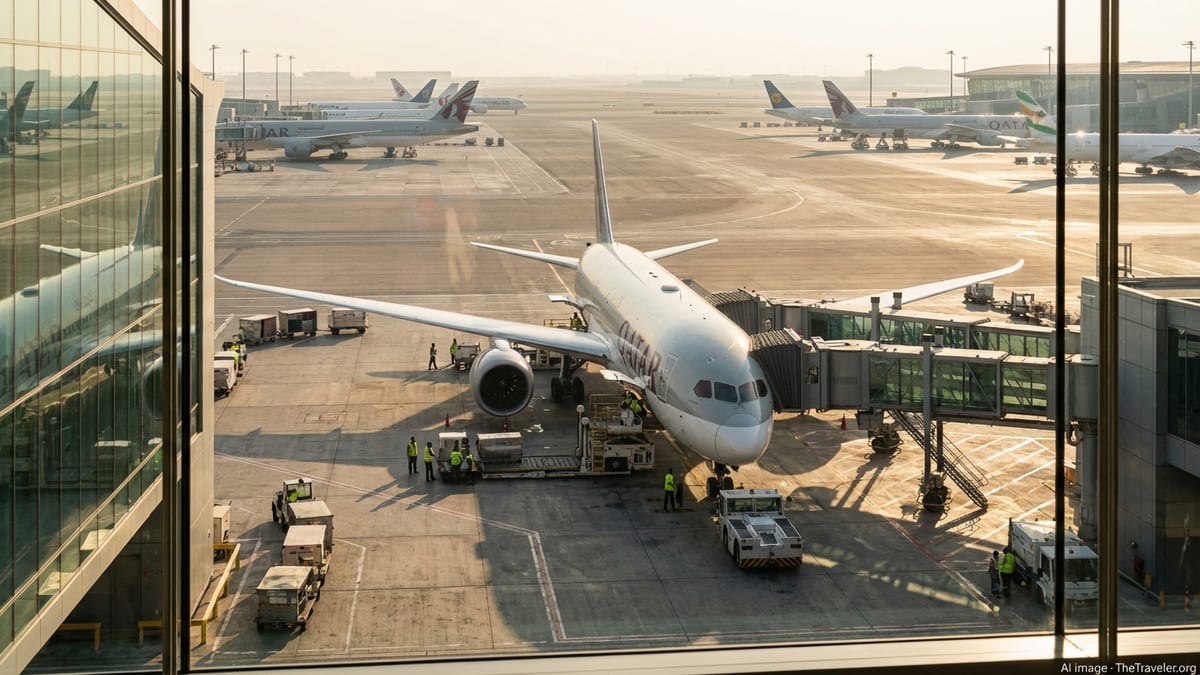
Hail Becomes Qatar Airways’ Newest Saudi Destination
From January 5, 2026, Qatar Airways will launch three weekly flights between Doha and Hail, bringing the northern Saudi city directly into the carrier’s global network. The new service positions Hail as an emerging node in Qatar Airways’ fast-expanding Saudi footprint, reflecting both rising demand within the kingdom and the airline’s long-term commitment to the market.
The Hail flights will operate on Mondays, Thursdays and Saturdays, timed to connect efficiently over Doha with onward services to Europe, Asia, Africa and the Americas. For residents and businesses in Hail, the new route reduces the need to route via Riyadh or Jeddah to reach long-haul destinations, cutting journey times and simplifying itineraries.
For Saudi Arabia, the route helps distribute international traffic beyond the country’s traditional gateways, matching the wider national strategy to diversify tourism flows and promote secondary cities. For Qatar Airways, Hail adds yet another spoke to a Saudi network that will span 13 destinations and more than 150 weekly flights in 2026.
More Lift for Jeddah and Riyadh as Demand Surges
Alongside the Hail launch, Qatar Airways is preparing to boost capacity into Saudi Arabia’s two largest markets, Jeddah and Riyadh, responding to sustained demand from business, leisure and religious travelers. From early 2026, frequencies on both city pairs are set to rise from six to seven daily flights, effectively creating near-hourly options during peak times out of Doha’s Hamad International Airport.
For Jeddah, the extra daily frequency will be particularly significant for Umrah and year-round religious traffic, as well as for travelers connecting via Doha to Asia and Europe. The expanded schedule gives pilgrims and tour operators more flexibility, especially around key periods such as Ramadan and school holidays when capacity has historically been tight.
Riyadh, meanwhile, benefits from added capacity at a time when the Saudi capital is positioning itself as a regional financial and events powerhouse. More flights mean more choice of departure times and better connectivity across Qatar Airways’ long-haul network, including premium-heavy services to North America, Western Europe and East Asia that are heavily used by corporate travelers based in Riyadh.
Lagos Moves to Double Daily as West Africa Grows
On the African side of Qatar Airways’ network, Lagos is emerging as a major beneficiary of the airline’s 2026 capacity strategy. Between mid-December 2025 and March 28, 2026, Lagos will be served with 14 weekly flights, transforming the route into a seasonal double daily operation and providing a substantial boost in available seats.
Lagos, Nigeria’s commercial capital and one of Africa’s largest cities, has long been a strong performer in terms of both point-to-point and connecting traffic. The additional daily frequency widens options for the Nigerian diaspora, for travelers from West Africa connecting to Asia and the Middle East, and for corporate passengers moving between Lagos and financial centers such as London, Hong Kong and Singapore.
The higher frequency also improves schedule resilience. With more daily departures in each direction, Qatar Airways can offer tighter connections in Doha while still maintaining buffer options for passengers in the event of disruptions. For trade flows between West Africa and the rest of the world, the expanded capacity is also expected to benefit belly cargo, particularly high-value and time-sensitive shipments.
Shanghai Capacity Ramps Up for 2026 Travel Peaks
In East Asia, Qatar Airways is targeting Shanghai as a key growth engine for the northern winter 2025–26 season and into 2026. The carrier is scheduled to increase flights between Doha and Shanghai Pudong from seven to 10 per week starting January 1, 2026, with the extra services running through March 28, 2026.
The added frequencies are timed around the Lunar New Year peak, one of the busiest travel periods of the year for Chinese outbound and inbound traffic. By layering additional flights on top of its daily service, Qatar Airways can offer more convenient connection windows over Doha to destinations popular with Chinese travelers, including African safari gateways, Mediterranean cities and resort islands in the Indian Ocean.
Operationally, the airline is planning to use widebody aircraft such as the Airbus A350-900 on the Shanghai route, supporting both passenger and cargo demand. The incremental capacity deepens Qatar Airways’ foothold in the highly competitive China–Middle East and China–Europe markets, where schedule breadth and connection quality are significant differentiators.
How Hail Complements the Carrier’s Saudi Strategy
Bringing Hail into the Qatar Airways network is about more than simply adding another point on the map. The city’s inclusion complements a broader Saudi strategy to grow tourism and business ties in regions beyond the major coastal and capital hubs. As infrastructure investment spreads across the kingdom, secondary cities like Hail are seeking direct international connectivity to support their development plans.
For Qatar Airways, operating to Hail strengthens its coverage of Saudi Arabia’s geographic and demographic landscape. With services already reaching major centers such as Riyadh, Jeddah and Dammam, as well as newer tourism-focused destinations, the Hail route enables the airline to offer a more comprehensive proposition to travelers across the country.
In practical terms, Hail-origin passengers will be able to connect via Doha to more than 170 destinations across six continents. This global reach can be particularly attractive for small and medium-sized enterprises based in northern Saudi Arabia, as well as for students, medical travelers and visiting friends-and-relatives traffic seeking one-stop access to Europe, Asia and North America.
Doha’s Hub Role Strengthened by Multi-Region Growth
The combined effect of new flights to Hail and additional capacity to Lagos, Jeddah, Riyadh and Shanghai is to further consolidate Doha’s position as a central hub in global aviation. With each added frequency, the number of possible city-pair connections through Hamad International Airport increases, enhancing the value of Qatar Airways’ network for both leisure and corporate travelers.
Adding services in multiple regions simultaneously also allows the airline to balance demand patterns and seasonality. West Africa’s growing traffic, China’s Lunar New Year surge and the year-round strength of the Saudi market can complement one another, helping to optimize aircraft utilization and maintain high load factors across the network.
For Doha itself, the growth supports broader economic ambitions. More transit and destination traffic through the city contributes to hotel occupancy, tourism spending and the development of aviation-linked services. At the same time, Hamad International Airport continues to expand its capacity and amenities, positioning itself as a passenger-friendly alternative to more congested hubs elsewhere.
Competitive Implications Across the Gulf and Beyond
Qatar Airways’ 2026 network moves will be closely watched by regional competitors in the Gulf and by global carriers seeking to capture long-haul connecting flows. The step-up in capacity to Lagos and Shanghai, in particular, reinforces Qatar Airways’ strategy of serving as a bridge between fast-growing markets in Africa and Asia and premium-demand centers in Europe and North America.
In Saudi Arabia, more flights to Jeddah and Riyadh plus the launch of Hail intensify competition with both national and foreign carriers serving the kingdom. As Saudi Arabia prepares to introduce additional airlines and expand airport capacity, the presence of a major international hub carrier with deep experience in connecting traffic may influence pricing, schedules and service standards across the market.
Elsewhere, airlines that share overlapping networks with Qatar Airways, including carriers in Europe, Asia and Africa, may respond by adjusting schedules, deploying larger aircraft or forging deeper partnerships. For travelers, the outcome is likely to be more choice, potentially sharper fares on competitive city pairs and broader options for one-stop travel between secondary markets.
What Travelers Can Expect in 2026
For passengers planning trips in 2026, the latest Qatar Airways network updates translate into more routing flexibility, especially for journeys touching Saudi Arabia, West Africa and China. Travelers from Lagos, Hail, Jeddah, Riyadh and Shanghai will see additional flight times on offer to Doha, opening up a wider array of same-day connections onward to destinations worldwide.
Frequent flyers can expect these schedule changes to be reflected in booking systems progressively as the start dates approach, with travel agents and corporate travel managers likely to highlight new options for both economy and premium cabins. The expanded network also provides more opportunities to accrue and redeem loyalty points on popular routes, particularly during peak seasons when seats have historically been scarce.
While some Gulf airlines are trimming or reshaping parts of their 2026 schedules, Qatar Airways’ decision to press ahead with targeted growth into Hail, Lagos, Jeddah, Riyadh and Shanghai underscores its confidence in long-term demand across these corridors. For TheTraveler.org’s readers, that means more ways to stitch together complex itineraries and to explore emerging destinations connected through Doha’s increasingly busy hub.