

More news on this day
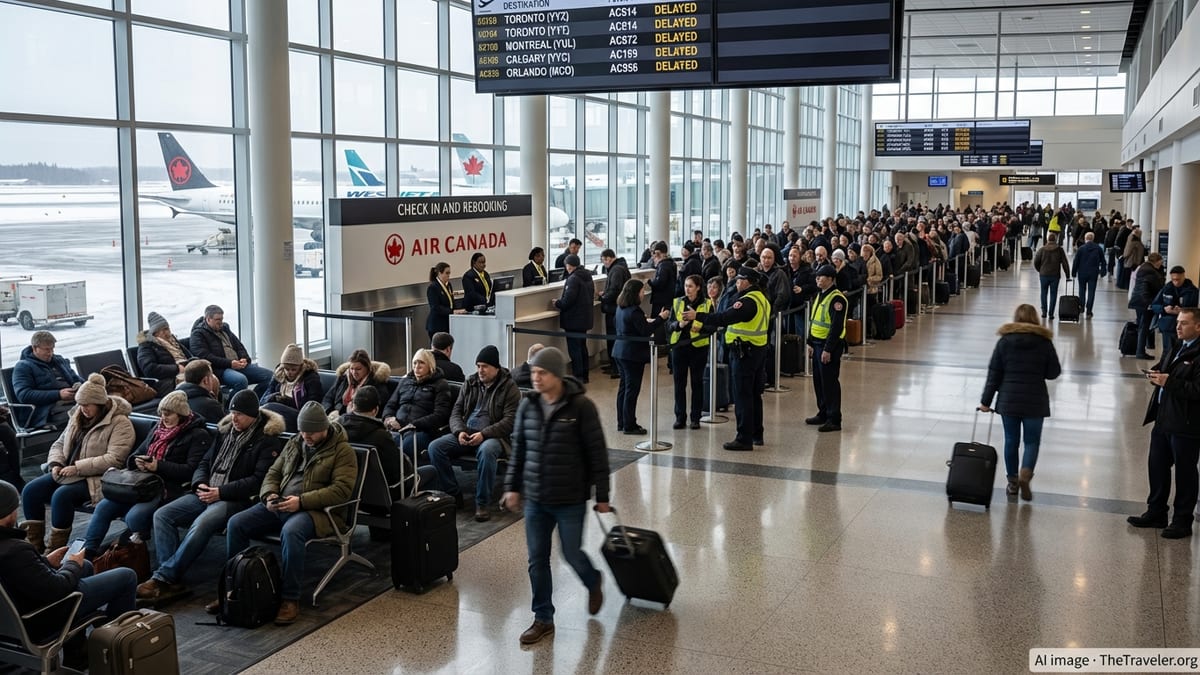
Travellers passing through Halifax Stanfield International Airport are facing mounting frustration today as 27 flights are reported delayed, disrupting operations for Air Canada, PAL Airlines and other carriers on heavily used routes linking Nova Scotia with Toronto, Montreal, Calgary and Orlando.
Weather and Network Strains Converge on Halifax
The disruption at Halifax Stanfield comes amid a period of wider instability across Canada’s air network, where winter weather, tight schedules and residual staffing pressures have combined to expose weak points in airline operations. Halifax, a critical hub for Atlantic Canada, has seen its schedule repeatedly tested by storms and operational constraints since late January, and today’s wave of 27 delayed flights underscores how quickly conditions can unravel.
While Halifax itself has not been under a full shutdown on February 18, it remains highly sensitive to conditions at other major Canadian airports. Recent heavy snowfall and strong winds in Calgary, for example, triggered dozens of cancellations and cascading delays that rippled into the national network and affected connections through Halifax. Weather systems moving across central Canada have also slowed traffic into Toronto and Montreal, leading to late arrivals and knock-on schedule changes on eastbound services.
Airport officials and airline representatives stress that safety remains their foremost priority, particularly during winter operations when runway conditions, de-icing demands and visibility can change rapidly. However, many passengers at Halifax Stanfield say that while they understand the safety rationale, they are increasingly frustrated by limited real-time information and the difficulty of rebooking flights when so many services are affected at once.
Halifax Stanfield, which typically handles a more modest volume of daily flights compared with Toronto Pearson or Montreal Trudeau, is particularly vulnerable when multiple aircraft rotate through the airport on tight turnarounds. When a single inbound service arrives late from Toronto, Montreal or Calgary, that delay can cascade through several departures, amplifying the disruption even without a major local weather event.
Key Routes to Toronto, Montreal, Calgary and Orlando Affected
The latest delays have hit some of Halifax’s most important domestic and transborder routes, including flights to Toronto Pearson and Montreal Trudeau that act as vital connectors for passengers continuing on to Western Canada, the United States and international destinations. Air Canada’s frequent Halifax to Toronto services are a lifeline for business travellers and leisure passengers alike, and any disruption quickly leaves customers competing for the same limited seats on subsequent departures.
Montreal-bound passengers have experienced similar difficulties, with delays on eastbound and westbound segments causing missed connections onto transatlantic and U.S. flights. Travellers who planned to connect in Montreal to destinations such as Paris, London or New York have found themselves re-routed through alternative hubs or forced to stay overnight when inbound Halifax flights arrived too late for onward departures.
Further west, operations in Calgary have been under pressure from a recent snowstorm and associated low visibility, which reduced runway capacity and led to a series of cancellations and delays there. Because Calgary is a key gateway for traffic heading to and from Atlantic Canada, disruptions on that side of the country have directly contributed to late inbound aircraft and schedule reshuffles for Halifax passengers travelling to Alberta and beyond.
Southbound traffic has not been spared. Flights from Halifax to popular sun destinations such as Orlando have also experienced knock-on delays when aircraft and crews were held up on earlier domestic sectors. For many families travelling for school breaks or long-planned vacations, these setbacks have meant lost days at their destinations and unexpected costs for hotel stays, meals and ground transportation while they wait for revised departure times.
Air Canada and PAL Airlines at the Center of the Disruption
As the dominant carrier at Halifax Stanfield, Air Canada has borne the brunt of the disruption, with multiple delayed flights on its Halifax services network. The airline’s extensive schedule across Toronto, Montreal, Calgary and U.S. gateways means that even small operational hiccups can snowball into larger issues when winter weather and airport congestion are added to the equation. Passengers have reported delays ranging from minor schedule slips to multi-hour waits that throw entire itineraries into doubt.
PAL Airlines, which operates a mix of its own services and flights on behalf of Air Canada, has also been challenged by recent operational strains. The regional carrier plays a critical role in linking Halifax to communities in Newfoundland and Labrador and other parts of Atlantic Canada. When PAL-operated services arrive late or require additional time on the ground, the impact is felt by passengers counting on tight connections in Halifax to reach larger hubs or vacation destinations.
Recent months have highlighted just how interconnected these operations are. Even when flights depart safely and eventually reach Halifax, earlier incidents and operational problems can leave schedules highly compressed, reducing the margin for handling weather delays, runway maintenance or extended de-icing procedures. Travellers on PAL-operated segments have at times arrived in Halifax only to discover that their connecting flights on Air Canada or other carriers had already left, forcing them into long lines at customer service counters as they seek rebooking options.
Other carriers with smaller but still important footprints at Halifax, including WestJet and Porter, have not been immune either. As they share ground handling resources, gates and runway capacity, any large cluster of delays for one airline can slow boarding and turnaround times for others. For passengers, the distinction between carriers matters less than the cumulative reality: crowded departure lounges, full rebooked flights and uncertain arrival times.
Passengers Confront Long Waits and Limited Options
For travellers on the ground, the numbers behind the disruption translate into long hours of waiting in terminal seating areas, watching departure boards shift from “On Time” to “Delayed,” sometimes multiple times in a single afternoon. Families with young children, elderly passengers and those with tight medical or work commitments are among the most affected, as even seemingly modest delays can create serious logistical challenges.
Many passengers report difficulties in obtaining clear, consistent information about the reasons for delays and the realistic prospects for departure. Airport screens and public address announcements typically provide only brief updates, leaving customers to seek more detailed explanations from airline staff or call centers. When weather and network congestion combine, staff members themselves may not have precise answers, since departure times depend on changing runway conditions and the arrival of inbound aircraft.
The strain is particularly evident for those with non-flexible travel plans such as cruises, business meetings or time-sensitive family events. A late Halifax departure to Toronto or Montreal can mean a missed connection onto a once-daily international flight, leading to a cascade of rebookings and added costs. Travellers have described scrambling to rearrange hotel reservations, car rentals and event tickets while standing in rebooking queues and keeping an eye on shifting departure times.
Accessibility concerns also emerge during prolonged disruption. Passengers who rely on mobility aids or who have limited stamina may struggle with repeated gate changes or long walks through the terminal to access alternative flights. In some cases, assistance teams become stretched thin as multiple delayed flights board at once, increasing wait times for wheelchair support or guided transfer services between gates.
Halifax’s Strategic Role in Atlantic Canada’s Air Network
Halifax Stanfield International Airport holds an outsized importance relative to its flight volume, serving as the primary gateway between Atlantic Canada and the rest of the country, the United States and select overseas destinations. For communities in Nova Scotia, New Brunswick, Prince Edward Island and parts of Newfoundland and Labrador, Halifax is often the necessary first stop before passengers can connect to larger global hubs.
This strategic role means that disruptions at Halifax do not only affect local origin and destination passengers. They also impact a wide network of travellers who start their journeys in smaller regional airports and depend on smooth connections through Halifax to reach Toronto, Montreal, Calgary or sun destinations such as Orlando. When 27 flights in and out of Halifax are delayed in a single day, those effects can be felt from small coastal communities to major city centers across Canada and beyond.
The airport’s winter operating environment adds another layer of complexity. Snow, freezing rain and strong coastal winds regularly demand extra time for runway clearing, aircraft de-icing and safety checks. While Halifax Stanfield’s operations teams are accustomed to these challenges, the growing intensity and variability of winter storms in recent years have occasionally overwhelmed built-in schedule buffers, leading to temporary closures and ground stops that push delays further into the day.
Moreover, Halifax’s connectivity is heavily dependent on a limited set of high-frequency domestic links. When a single Toronto or Montreal rotation is significantly delayed or canceled, it is not always possible to accommodate all affected passengers on the next available flight, particularly during peak travel periods. As a result, travellers can find themselves facing overnight stays or multi-stop routings that add complexity and stress to their journeys.
Industry-Wide Pressures: Staffing, Schedules and Winter Operations
Beyond the immediate weather and operational factors, today’s delays at Halifax reflect broader challenges facing airlines and airports across Canada. Carriers are still working to fully stabilize staffing levels among flight crews, ground handlers and maintenance personnel after several turbulent years. Even minor staffing shortfalls can become critical during winter, when operations demand more de-icing, additional checks and contingency planning.
At the same time, airlines have sought to maximize aircraft utilization and revenue by running tighter schedules, leaving less slack in the system to absorb unforeseen setbacks. When aircraft and crews are scheduled to operate multiple legs per day across distant airports such as Calgary, Toronto, Montreal and Halifax, a delay on the first leg can reverberate through the entire rotation. In winter, when weather-related disruptions are common, such tightly wound schedules can quickly lead to systemic delays like those seen at Halifax.
Air traffic control capacity and airport infrastructure also play a role. Congestion at major hubs can force arriving flights into holding patterns or push back departure slots, with knock-on consequences for smaller airports down the line. As traffic volumes recover and in some cases surpass pre-pandemic levels, Canada’s air navigation and airport systems are being tested during peak travel days, especially when adverse weather coincides with busy schedules.
Industry observers note that while airlines and airports have introduced new technology to inform customers of schedule changes and rebooking options, these tools sometimes struggle during large-scale disruption. High volumes of simultaneous changes can temporarily overwhelm apps and websites, leading to outdated information or error messages just when passengers most need clarity about their options.
What Travellers Can Do When Delays Mount
As delays continue at Halifax Stanfield and across Canada’s air network, travel experts recommend that passengers build extra time into their itineraries, particularly when connecting through multiple hubs during the winter months. A layover that might feel generous in summer can prove barely adequate when de-icing, runway restrictions and congested airspace are part of the equation.
Passengers are also encouraged to monitor their flight status closely through airline channels before leaving for the airport, and to sign up for text or email alerts that provide early notice of schedule changes. In many cases, airlines will allow customers to rebook to earlier or later flights at no additional charge when significant weather or operational disruptions are expected, potentially avoiding the worst of the congestion at peak times.
Travel insurance, while not a cure-all, can help offset the costs of meals, accommodation and alternative transport when long delays or missed connections occur. Policies vary widely, so travellers are advised to review coverage details carefully, paying particular attention to provisions for weather-related disruption and schedule changes initiated by airlines or airports.
For those already at Halifax Stanfield and facing extended waits, airport staff urge patience and emphasize that customer service counters, information desks and airline agents are working under heavy pressure to assist as many passengers as possible. While the current tally of 27 delayed flights represents a significant operational challenge, officials say they are focused on moving aircraft and passengers safely while restoring the schedule as quickly as conditions and resources allow.