

More news on this day
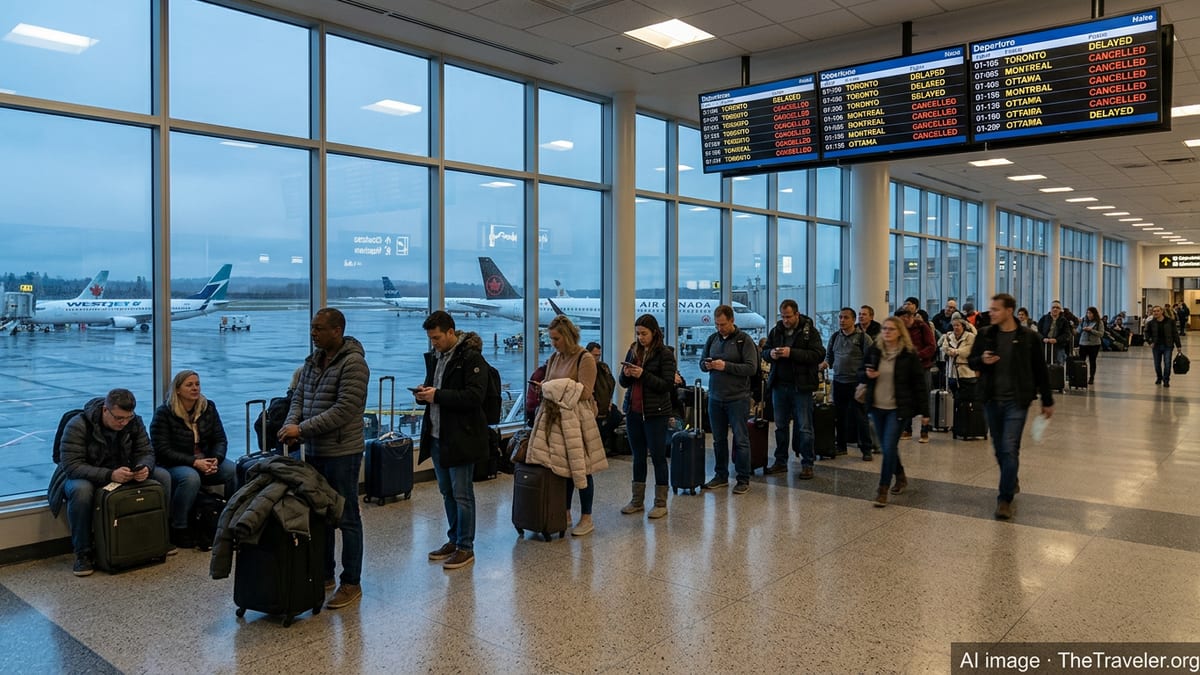
Travelers moving through Halifax Stanfield International Airport faced mounting frustration today as four flights were cancelled and 37 delayed, with disruptions rippling across key routes linking Halifax to Toronto, Montreal and Ottawa on major Canadian carriers WestJet, PAL Airlines, Porter and Air Canada.
Ripple Effects Across Canada’s East Coast Corridors
The latest disruptions at Halifax Stanfield add fresh pressure to some of Canada’s busiest domestic corridors, affecting both business and leisure travelers at the tail end of the winter travel season. With four flights cancelled outright and dozens more operating behind schedule, passengers found themselves coping with missed connections, compressed layovers and last minute itinerary changes on routes that connect Atlantic Canada with central hubs.
The impact was felt most acutely on services linking Halifax with Toronto, Montreal and Ottawa, routes that serve as crucial gateways to the rest of Canada, the United States and overseas destinations. Travelers reported extended waits at gates, frequent boarding time changes on departure screens and a shortage of available same day alternatives as seats quickly filled on remaining departures.
Air Canada and WestJet, which operate extensive networks through Toronto and Montreal, were among the carriers affected, alongside PAL Airlines, a key regional operator in Atlantic Canada, and Porter Airlines, which has steadily expanded its footprint in Halifax in recent years. Together, their schedule adjustments reduced options for onward connections and created bottlenecks across multiple airports.
Although the total number of cancellations at Halifax remained limited compared with major hubs, the concentration of 37 delays on a relatively compact schedule created outsized disruption. Even short delays on morning departures cascaded into longer knock on effects later in the day, as aircraft and crew cycled through the system.
WestJet, PAL, Porter and Air Canada Grapple With Operational Strain
The four carriers at the center of the Halifax disruption are each contending with different pressures, but the end result for passengers was similar: later departures, missed connections and uncertainty at the gate. WestJet and Air Canada shoulder the largest volumes on Halifax routes to Toronto and Montreal, meaning any schedule adjustment can quickly be felt across the network as aircraft rotations and crew assignments are shuffled.
PAL Airlines, which now operates many regional services in Atlantic Canada, including some Air Canada Express branded flights, faced added scrutiny from travelers relying on shorter hops to and from Halifax to connect with transcontinental or international departures. When those regional links run late or are cancelled, travelers can lose once a day long haul options that are difficult to rebook on short notice.
Porter Airlines, which positions itself as a higher comfort alternative on key business routes, has been growing its presence in Halifax with flights into Toronto and Ottawa. That expansion leaves the airline more exposed when operational challenges arise, especially during late winter when weather and air traffic control constraints can trigger holding patterns and ground delays throughout the day.
Across all four carriers, limited spare capacity on popular city pairs meant rebooking passengers became increasingly difficult as the disruption wore on. Travelers reported being offered departures many hours later or, in some cases, itineraries that would not see them reach their destination until the following day, a frustrating prospect for those on tight schedules.
Halifax, Toronto, Montreal and Ottawa Routes Under Pressure
The arteries connecting Halifax with Toronto, Montreal and Ottawa are among the most strategically important in the country, feeding thousands of passengers each day into larger networks. When irregular operations strike, those same corridors become pressure points, with knock on effects spilling into secondary routes and regional communities that depend on reliable links to central Canada.
At Toronto Pearson and Montreal Trudeau, delays on inbound flights from Halifax threatened onward connections to western Canada, the United States and Europe. Passengers arriving late from Halifax faced tight connection windows, with some racing between terminals only to find boarding gates already closed or replacement flights operating at or near capacity.
Ottawa also felt the strain, particularly on evening schedules when options to rebook on later departures are most limited. For travelers shuttling between federal government business in Ottawa and corporate or academic commitments in Halifax, even moderate delays can compress already short work trips and add unexpected overnight stays.
The pattern of four cancellations and 37 delays at Halifax in a single day illustrates how even modest irregularities at a mid sized airport can have outsized national implications. When a single cancelled leg on a Halifax to Toronto or Halifax to Montreal route strands passengers, the reverberations can be felt across multiple time zones and partner airlines as itineraries are rebuilt.
Passengers Confront Long Lines, Uncertain Timelines
Inside Halifax Stanfield, the day’s statistics translated into very tangible challenges for travelers. Lines quickly lengthened at airline service counters as passengers sought rebooking options, meal vouchers and hotel arrangements where overnight stays became unavoidable. At security and boarding gates, the normal flow of passengers gave way to clusters of people checking mobile apps and departure boards for constantly shifting departure times.
Families traveling with children, seniors and those connecting from smaller Atlantic communities were among the most affected, particularly when their trips involved multiple legs or time sensitive commitments such as medical appointments, cruises or international departures. Several travelers reported that small initial delays of 30 to 45 minutes eventually stretched into multi hour waits as aircraft and crew availability tightened.
While airline staff in Halifax, Toronto, Montreal and Ottawa worked to rebook travelers and coordinate with operations teams, capacity constraints limited the number of solutions they could offer. With many flights already near full at this time of year, securing seats for entire families or groups on the same replacement service often proved challenging, forcing some to consider alternative routings or travel dates.
For those already onboard delayed aircraft, extended gate holds and slow moving departure queues added to the sense of uncertainty. Pilots frequently cited a combination of operational issues, congestion at connecting hubs and the knock on impact of earlier delays in the day, underscoring the complexity of keeping tightly timed schedules on track.
Know Your Rights and Plan for Continued Volatility
The latest wave of disruptions at Halifax is a reminder to travelers of the importance of understanding their rights under Canada’s air passenger protection rules and building flexibility into itineraries during the volatile late winter period. Under current regulations, passengers on affected flights may be entitled to assistance such as rebooking, refunds, meals or accommodation, depending on the cause and length of the disruption and the size of the carrier.
Travel advocates urge passengers to keep documentation such as boarding passes, booking confirmations and written explanations of delays or cancellations, which can be essential if they later seek compensation or reimbursement. Maintaining direct communication with the airline through its app, website or call center can also help secure earlier rebooking options when space becomes available.
Given the pattern of recent disruptions across Canadian airports, travelers booking routes between Halifax, Toronto, Montreal and Ottawa in the coming days are being encouraged to allow generous connection times, especially when linking to once daily international services or critical appointments. Opting for earlier departures where possible, and considering travel insurance that covers schedule changes and missed connections, may provide additional protection.
For now, Halifax Stanfield remains open and operational, but the four cancellations and 37 delays recorded today highlight ongoing fragility in the regional and national air travel system. With airlines still juggling tight schedules, strong demand and lingering winter weather risks, passengers using Canada’s east coast gateways should be prepared for further bouts of turbulence in the days ahead.