

More news on this day
Dozens of delays and cancellations involving Air Canada, WestJet and Porter Airlines at Halifax Stanfield International Airport are stranding travellers in major Canadian and U.S. cities, disrupting connections through one of Atlantic Canada’s key air gateways.
Get the latest news straight to your inbox!
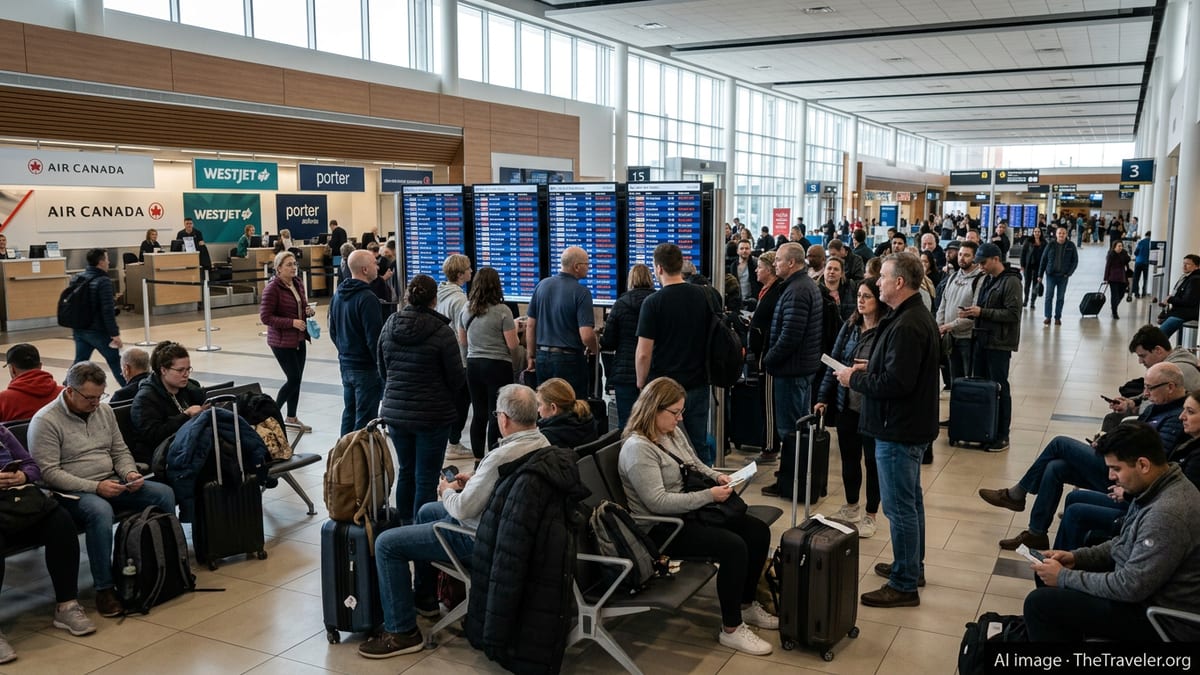
Significant Disruptions at Halifax Stanfield
Publicly available flight status data on March 14 indicates at least 41 delayed departures and arrivals and 10 outright cancellations at Halifax Stanfield International Airport, affecting services operated by Air Canada, WestJet and Porter Airlines. The disruptions are concentrated across the morning and afternoon schedule, creating a knock-on effect that is reverberating through domestic and transborder networks.
Halifax Stanfield is a critical connecting point for Atlantic Canada, linking regional travellers to larger hubs in central and western Canada as well as select destinations in the United States. Even a relatively small number of cancellations in Halifax can rapidly cascade into major schedule issues elsewhere as aircraft and crew fail to arrive where they are needed, leading to further delays later in the day.
The current wave of operational issues follows a challenging winter for Canadian aviation, with recent storms and congestion at major hubs contributing to repeated timetable disruptions. While the specific blend of causes for today’s Halifax impacts varies by carrier and route, the result for travellers is consistent: long lines, missed connections and extended waits for rebooking options.
Ripple Effects in Toronto, Montreal, Vancouver and Calgary
Because many Halifax routes are timed to feed into large hub airports, the delays and cancellations are being felt most acutely in Toronto, Montreal, Vancouver and Calgary. Flights that would normally carry Halifax passengers onward to these cities are either departing late, departing with empty seats that were meant for connecting passengers, or not operating at all when upstream services are cancelled.
In Toronto and Montreal, these disruptions are most visible on dense domestic corridors where Air Canada and Porter concentrate their Halifax traffic. Reports from airport-status tracking services show clusters of late arrivals from Halifax feeding into already busy afternoon banks of departures, compounding pressure on gate availability, de-icing capacity where applicable, and crew scheduling.
In western Canada, the impact is particularly noticeable in Calgary and Vancouver, which serve as WestJet’s primary hub and a key coastal gateway respectively. Delayed or cancelled Halifax services reduce aircraft availability for subsequent long-haul segments, forcing schedule adjustments that can reach far beyond Atlantic Canada. Travellers expecting same-day connections from Halifax through Calgary or Vancouver to other domestic or U.S. destinations are facing rebookings onto later flights or alternative routings.
Secondary U.S. destinations are also affected as transborder flights that rely on Halifax-originating passengers see inconsistent loads and timing. Where connections are broken by late inbound aircraft, some travellers are being forced into overnight stays or lengthy layovers while airlines work within a constrained network to find replacement options.
Air Canada, WestJet and Porter Under Pressure
The three carriers most directly affected at Halifax Stanfield are also the dominant players in Canada’s domestic air market, which amplifies the overall impact of today’s events. Publicly accessible schedules show Air Canada operating the largest share of Halifax flights, with WestJet and Porter providing key alternatives on high-demand links to Toronto, Montreal and other cities.
When irregular operations occur at a mid-sized hub such as Halifax, airlines face difficult trade-offs. To stabilize operations, carriers often prioritize core trunk routes and higher-demand city pairs, which can mean deeper cuts or longer delays on secondary services. Observers following today’s disruptions note that some cancellations appear targeted at flights with alternate routing options, allowing airlines to consolidate passengers while preserving limited aircraft and crew resources.
Recent history highlights how sensitive airline networks have become to compounding pressures, from winter weather systems to air traffic control constraints. Industry commentary this season has pointed to tighter crew availability, high aircraft utilization and strong demand as factors that reduce operational buffers. When an airport like Halifax encounters a morning of disruptions, the diminished margin for recovery makes it harder for carriers to return to their published timetables later in the same day.
For travellers, the complexity behind the scenes is often less important than clear, timely information. Airline mobile apps and airport display boards are showing rolling updates as departure times are adjusted, gates reassigned and replacement aircraft positioned to cover disrupted segments.
Stranded Passengers and Changing Travel Plans
The most visible consequence of the Halifax disruptions is a growing number of travellers stranded not only in Nova Scotia, but also in Toronto, Montreal, Vancouver, Calgary and several U.S. cities that serve as onward connection points. Missed connections can leave passengers separated from checked baggage, forced to re-clear security, or waiting hours in customer-service queues to secure new itineraries.
Many itineraries touching Halifax rely on tight domestic and transborder connections, particularly on morning and early afternoon departures. When an initial leg is delayed beyond a certain threshold, same-day onward options can evaporate quickly, especially during busier travel periods. As a result, some travellers are accepting rerouting through alternative hubs or even overnight stopovers in order to reach their final destinations.
Travel insurance providers and consumer advocacy groups often encourage passengers affected by irregular operations to keep records of delay times, boarding passes and any out-of-pocket expenses. While the precise level of compensation or care available varies by circumstance and regulation, documentation typically plays a key role when travellers later seek reimbursements for accommodation, meals or disrupted plans.
At the terminal level, the cumulative effect of dozens of delayed services can be seen in longer security lines, crowded gate areas and high demand for airport amenities. Food outlets, lounges and nearby hotels around Halifax Stanfield and major hubs such as Toronto and Montreal are experiencing heavier-than-usual traffic as disrupted passengers wait out extended connection times.
What Travellers Can Do as Disruptions Continue
With recovery from today’s schedule disruptions expected to take time, publicly available travel guidance suggests several practical steps for passengers whose journeys pass through Halifax or the affected hub cities. Checking flight status frequently on airline websites or apps, confirming gate information, and signing up for flight alerts can provide early warning of changes and open up more options for rebooking.
Travellers with flexible itineraries sometimes choose to accept voluntary rebookings to later flights or different routings when disruption signs first appear, which can reduce the risk of becoming stranded partway through a multi-leg journey. In some cases, adjusting a departure to an earlier or later time, or connecting through an alternate hub, can bypass the worst of a localized disruption at a specific airport.
For those who are already stuck in Toronto, Montreal, Vancouver, Calgary or U.S. cities because a Halifax leg has been delayed or cancelled, keeping all receipts for meals, transport and accommodation is advisable in case reimbursement is available under airline policies or travel insurance. Many standard policies include provisions for trip interruption and delay, although coverage details and claim requirements vary.
As Air Canada, WestJet and Porter work to reposition aircraft and crews, the effects of today’s Halifax issues may linger into subsequent days’ schedules. Travellers with upcoming trips involving Halifax Stanfield or connections through Canada’s major hubs are being advised by widely circulated travel advisories to monitor conditions closely and build additional time into their plans where possible.