

Hamburg is Germany’s self-styled Gateway to the World, a historic port city where red-brick warehouses meet cutting-edge architecture, and where the salt tang of the Elbe mixes with the buzz of a major cultural hub.
For travelers, it offers a distinctive blend of maritime heritage, thriving music and art scenes, expansive green spaces, and a relaxed, water-focused lifestyle that feels very different from Berlin or Munich.
This guide explores what to expect, from the character of Hamburg’s neighborhoods to key sights, seasonal festivals, food culture, and practical tips to help you make the most of your visit.
Getting to Know Hamburg’s Character
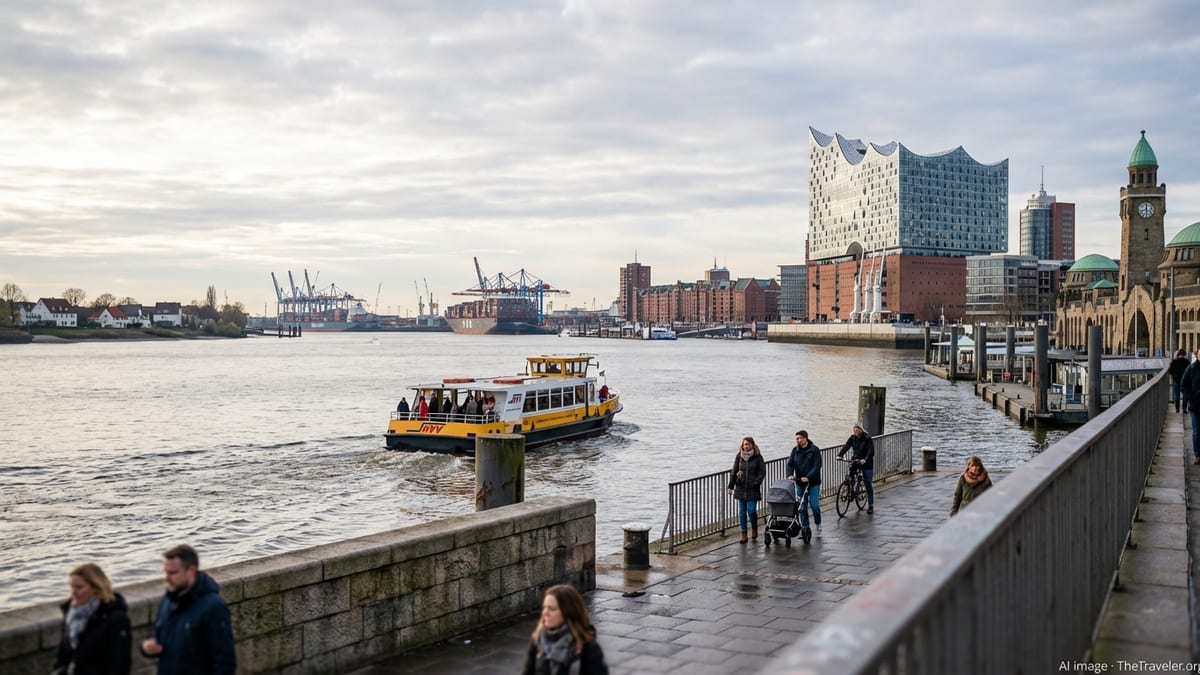
Hamburg’s identity is inseparable from its port. For centuries, ships from around the world have docked along the Elbe, shaping a cosmopolitan city that feels outward-looking and quietly confident rather than showy. The port is still Europe’s third-largest, and the working harbor remains a living backdrop to everyday life. Expect to see container ships sliding past riverside promenades, ferries crisscrossing the water, and an industrial skyline that suddenly gives way to sleek glass towers and historic church spires.
Despite its maritime muscle, Hamburg rarely feels overwhelming. The historic Altstadt and compact city center are walkable, and the atmosphere leans more towards understated elegance than high drama. Broad boulevards, lakeside promenades, leafy residential streets, and canals give the city a sense of space. At the same time, neighborhoods like St. Pauli and Sternschanze introduce a grittier, bohemian edge, with street art, indie bars, and concert venues that echo Hamburg’s legacy as the city where The Beatles sharpened their sound.
Visitors are often surprised by how green Hamburg is. The large inner-city lakes of the Alster, the landscaped parklands of Planten un Blomen, and countless canals and waterways encourage residents outdoors in all seasons. Hamburg’s climate is Atlantic, which means relatively mild winters, temperate summers, and frequent clouds, wind, or drizzle. Pack layers and a waterproof jacket rather than planning around stable sunshine. On the upside, dramatic skies and shifting light intensify the city’s maritime atmosphere, especially at the harbor and along the Elbe beaches.
Essential Neighborhoods and Sights
Most first-time visitors start in Hamburg’s Altstadt, the old town clustered around the neo-Renaissance Rathaus, or City Hall. The Rathausplatz is a natural orientation point, and from here it is a short walk to the Binnenalster, the inner lake framed by elegant arcades and department stores. The lake’s fountains and promenades set a sophisticated tone, while boat trips on the Alster reveal tree-lined banks and handsome villas that feel far removed from the bustle of a major port.
To the south, the UNESCO-listed Speicherstadt and neighboring Kontorhaus District showcase Hamburg’s historic trading power. The Speicherstadt is the world’s largest contiguous warehouse complex, its red-brick facades and iron bridges reflected in narrow canals. Redeveloped over the past decade, it now houses attractions such as Miniatur Wunderland, a vast model railway and miniature world that has become one of Germany’s most visited indoor sights, making timed reservations advisable. Adjacent HafenCity is Europe’s largest inner-city urban development project, a showcase of contemporary architecture culminating in the Elbphilharmonie concert hall, whose glass waves rise above a historic brick warehouse base.
For a stronger taste of Hamburg’s bohemian and maritime life, head to St. Pauli and the Landungsbrücken piers. The piers are the starting point for harbor cruises, offering up-close views of shipyards, container terminals, and the Elbe’s wide expanse. St. Pauli extends inland from here, anchored by the Reeperbahn entertainment district, once infamous for red-light establishments and sailor bars. Today it mixes live music clubs, theaters, bars, and nightlife venues with quirky shops and an increasingly creative scene. Nearby, the Karoviertel and Sternschanze districts have become hipster strongholds, full of cafés, craft beer bars, small galleries, and boutiques that reward slow wandering.
Maritime Heritage and Life on the Water
The port is not just scenery in Hamburg. It is a cultural and emotional touchstone that comes alive particularly around special events. Each May, the city hosts the Hafengeburtstag, or Hamburg Port Anniversary, a sprawling maritime festival that typically draws more than a million visitors. Tall ships, naval vessels, cruise ships, and historic sailing ships converge along the Elbe, while stages host concerts and food stalls line the waterfront. Day and night, the river becomes a grand theater of parades, fireworks, and harbor traditions.
On a more everyday level, water is an integral part of getting around. Public ferries operated as part of the city’s transit network link the Landungsbrücken with stops along the Elbe, including Finkenwerder and the popular riverside quarter of Övelgönne. These ferries can be used with a standard public transport ticket, effectively doubling as budget harbor cruises. From Övelgönne, a walking path along the Elbe leads past sandy urban beaches and historic captain’s houses, a favorite local escape on warmer days and a contemplative walk in cooler weather.
Museums further illuminate Hamburg’s maritime story. The International Maritime Museum in the historic Kaispeicher B warehouse explores seafaring history across multiple floors of models, artifacts, and interactive exhibits. The nearby U-434 submarine, a Russian Tango-class boat moored along the harbor, offers a more claustrophobic glimpse into Cold War naval life. Together with the working docks and the constant movement of ships, these experiences deepen an understanding of how seafaring has shaped Hamburg’s economy and worldview.
Culture, Music, and Nightlife
Hamburg’s cultural life stretches well beyond its port. The city is home to a rich theater scene, major art collections, and a music ecosystem that ranges from classical to cutting-edge electronic. The Elbphilharmonie has become the city’s most recognizable cultural symbol. Inside, its acoustically acclaimed Grand Hall hosts orchestras and soloists from around the world, while smaller spaces feature jazz, world music, and experimental performances. Even without a concert ticket, visitors can ride the long escalator to the public plaza for sweeping views over the river, harbor, and city rooftops, especially atmospheric at sunset.
Elsewhere, the Laeiszhalle concert hall and venues such as Kampnagel and the Thalia Theater underline Hamburg’s reputation for performing arts. The city’s annual International Music Festival typically runs across May and early June, curating programs around a thematic focus and drawing in top orchestras and soloists. Pop and rock fans may time a visit for large-scale shows in city arenas or for one of the many open-air events and festivals that animate parks and waterfront spaces from spring to early autumn.
Nightlife remains anchored in and around St. Pauli. The Reeperbahn continues to evolve, now hosting a respected music and digital culture festival each September alongside the usual bars and clubs. Live music venues range from small underground spaces to established stages where local and touring bands perform. Locals often start their evenings in Sternschanze’s bars and restaurants before drifting downhill toward St. Pauli or lingering in neighborhood spots that feel less touristy. As always in busy nightlife districts, a degree of street smarts is sensible, but Hamburg’s overall nightlife environment is generally manageable and welcoming.
Events and Festivals Through the Year
Hamburg’s event calendar has become a major draw in its own right, and planning around it can significantly shape your visit. In spring, the city hosts a trio of DOM fairs on the Heiligengeistfeld in St. Pauli. The Spring DOM typically runs from late March to late April, with roller coasters, traditional food stalls, beer tents, and family attractions. Summer DOM follows in late July and August, while Winter DOM in November and early December wraps the fairground in festive lights and seasonal treats. Each DOM transforms the field into a vibrant funfair that draws both locals and visitors.
May is often among the busiest months. Alongside the DOM and Hafengeburtstag, Hamburg’s International Music Festival brings a wide array of classical and cross-genre concerts to the Elbphilharmonie and other venues. Major sports events such as the Hamburg Marathon usually take place around late April, when thousands of runners trace a route past many of the city’s most scenic highlights, including sections along the Elbe and around the Alster lakes. During these weekends, hotel demand spikes and certain streets are closed, so advance bookings and checking route information are advisable.
Later in the year, Hamburg’s maritime side steps back into the spotlight when the Hamburg Cruise Days return, usually in a late-summer or early-autumn slot every two years. The event lines the harbor with cruise ships and stages, culminating in evening parades and coordinated light and fireworks displays that turn the Elbe into a theatrical backdrop. Music-lovers also look to recurring festivals like Jazz Open Hamburg, a free open-air event held annually in Planten un Blomen that marks late summer with two days of concerts in a parkland setting. In December, Christmas markets dot the city, from the grand historic market in front of the Rathaus to smaller neighborhood markets with their own flair.
Food, Drink, and Café Culture
Hamburg’s cuisine reflects its maritime heritage and northern climate. Traditional dishes lean toward hearty and comforting, with fish playing a starring role. Along the harbor and in the historic fish markets, you will encounter Fischbrötchen, simple yet satisfying bread rolls filled with fresh or pickled herring, fried fish, or smoked salmon. These are a local staple, especially on weekend mornings or as a quick snack between sightseeing stops. The Sunday morning fish market in St. Pauli, which operates in the early hours and blends commerce, live music, and revelry, is a classic setting to try them.
Beyond fish, local specialties include Labskaus, a sailor’s dish of corned beef, potatoes, and beetroot often served with pickled gherkins, herring, and a fried egg, and Aalsuppe, a sweet-sour soup that sometimes does and sometimes does not contain eel, depending on tradition. International influence is strong too, with Turkish, Middle Eastern, and Asian cuisines well represented, especially in districts such as Sternschanze, St. Georg, and around the central station. The city’s sizeable Portuguese community has left its mark on the so-called Portuguese Quarter near the harbor, where seafood restaurants and pastelarias line the streets.
Café culture is an integral part of daily life. Hamburg has a long history in the coffee trade, and today independent roasteries and specialty cafés dot the city. In and around the Speicherstadt, you will find historic coffee and spice warehouses turned into tasting spaces, while residential neighborhoods boast a mix of minimalist cafés and cozy spots serving rich cakes and regional pastries. Craft beer and small-batch distilleries are on the rise as well, with taprooms and microbreweries offering local takes on classic German styles alongside more experimental brews.
Practicalities: Transport, Safety, and Budget
Hamburg’s public transport network is well organized and straightforward to navigate. The city is served by a system of U-Bahn (subway), S-Bahn (suburban rail), buses, and ferries integrated under a single ticketing system. For visitors, day tickets and multi-day passes can be cost-effective, especially if you plan to use ferries along the Elbe in addition to trains and buses. The central station, Hauptbahnhof, acts as the main rail hub, with frequent long-distance connections to Berlin, Copenhagen, and other European cities, and local lines spreading across the metropolitan area.
The city center and many key neighborhoods are walkable or easily explored by bicycle. Hamburg has invested in cycling infrastructure, and bike-share schemes and rental shops provide short-term options. The generally flat terrain makes cycling an appealing choice, especially along the Alster lakes, the Elbe waterfront, and through parks like Stadtpark and Planten un Blomen. As always in a busy city, keep an eye on dedicated bike lanes and follow the local rules, including lights after dark.
In terms of safety, Hamburg is considered one of Germany’s safer large cities, particularly in residential and central commercial areas. Tourist-heavy districts like the Reeperbahn can attract petty crime and occasional rowdiness, especially around weekends and major events, so normal urban precautions are wise. Avoid flashing valuables, stay aware on crowded trains late at night, and use licensed taxis, rideshares, or public transport for longer journeys after dark.
Costs are broadly in line with other major German cities. Accommodation ranges from hostels and budget hotels around the Hauptbahnhof to upscale waterfront properties in HafenCity and along the Alster. Restaurant prices vary widely, but it is possible to eat reasonably well on a mid-range budget by favoring neighborhood bistros, ethnic eateries, and market stalls. Many museums offer discounted or combined tickets, and parks, lakeside promenades, and certain viewpoints are free. Harbor ferries used with a regular transit ticket provide excellent value for sightseeing.
When to Go and How Long to Stay
The best time to visit Hamburg depends on your priorities. Late spring and early summer offer the most comfortable combination of temperatures and daylight hours, alongside many of the city’s marquee events. May often stands out, with the Port Anniversary, the International Music Festival, and the Spring or early Summer DOM providing a packed calendar. Skies are still changeable, but long evenings lend themselves to harbor walks, al fresco dining, and open-air concerts in parks and squares.
Summer, from June through August, brings warmer temperatures and a fuller program of open-air events, but occasional heatwaves can be punctuated by brisk, windy days that remind you of Hamburg’s maritime setting. The city is lively but does not see the same levels of tourist saturation as some southern European destinations, though weekends during DOM, large festivals, and cruise events can feel particularly busy along the waterfront and around St. Pauli.
Autumn offers a more subdued but atmospheric side of Hamburg, with trees turning in parks and along canals, and a calendar that still includes cultural festivals and concert series. Winter can be cold, damp, and windy, yet the season has its own charms. Christmas markets bring light and warmth to the city center, the Winter DOM adds a festive funfair dimension, and indoor attractions such as museums, theaters, and concert halls come into their own. For a first visit that balances sightseeing and seasonal experiences, a stay of three to four days is usually sufficient to explore the main highlights, with longer stays rewarding deeper neighborhood exploration and day trips to the North Sea or nearby towns.
The Takeaway
Hamburg offers a distinctive take on German urban life. This is a city defined by water, trade, and cultural openness, where monumental red-brick warehouses share the skyline with avant-garde concert halls and historic church towers. Travelers can expect a blend of maritime heritage, modern architecture, robust cultural programming, and neighborhood diversity that shifts in character from one U-Bahn stop to the next. Days might start with coffee in the shadow of the Elbphilharmonie, continue with a ferry ride past container ships and riverside villas, and end in a club or concert hall where international artists share the stage with local talent.
For those willing to embrace its changeable weather and industrial edges, Hamburg reveals layers of charm and authenticity. It is at once a working port and a playground of festivals, a serious business hub and a haven for subcultures and creative communities. Whether you are drawn by harbor spectacles, music and nightlife, green spaces and waterways, or simply the pleasure of wandering through a city in flux, Hamburg rewards curiosity with experiences that feel firmly rooted in place yet open to the wider world.
FAQ
Q1: How many days do I need to see Hamburg properly?
Most travelers find that three to four full days provide enough time to explore the Altstadt, Speicherstadt, HafenCity, the harbor, and key neighborhoods like St. Pauli and Sternschanze, while also allowing for a harbor cruise, museum visits, and some unstructured wandering.
Q2: Is Hamburg a good destination for families?
Yes, Hamburg is very family-friendly, with attractions such as Miniatur Wunderland, the Hagenbeck Zoo, the DOM funfairs, boat trips on the Alster and Elbe, and large parks offering playgrounds and open spaces that appeal to children of different ages.
Q3: What is the best way to experience the harbor without booking an expensive tour?
The most budget-friendly option is to use the public ferries that operate on the Elbe as part of the regular transit network; with a standard ticket, you can ride routes from the Landungsbrücken to various piers and enjoy views similar to those on commercial harbor tours.
Q4: Is Hamburg safe for solo travelers at night?
Hamburg is generally safe for solo travelers, including at night, especially in well-lit central areas, but it is sensible to avoid poorly lit backstreets, stay aware in crowded nightlife zones like the Reeperbahn, and use public transport or licensed taxis for longer journeys after dark.
Q5: Do I need to speak German to get around Hamburg?
While learning basic German phrases is helpful and appreciated, many people in Hamburg, especially in tourism, hospitality, and younger generations, speak good English, and signage on public transport and in major attractions often includes English translations.
Q6: What should I pack for a trip to Hamburg?
Regardless of season, pack layers, a waterproof jacket, and comfortable walking shoes; Hamburg’s maritime climate can bring wind and showers even in summer, while evenings on the waterfront often feel cooler than inland areas.
Q7: Is Hamburg expensive compared to other European cities?
Hamburg is comparable in cost to other major German cities, generally less expensive than cities like London or Paris but pricier than many smaller European destinations, with accommodation and dining offering a wide range from budget to high-end options.
Q8: Which area is best to stay in for first-time visitors?
For convenience and easy access to major sights, the areas around the Altstadt, the Binnenalster, or HafenCity work well; travelers interested in nightlife and a more bohemian atmosphere might prefer St. Pauli or Sternschanze, while those seeking quieter residential surroundings could look to neighborhoods near the Alster lakes.
Q9: What is Hamburg’s weather like throughout the year?
Hamburg has a temperate maritime climate with mild, often damp winters, cool to warm summers, and frequent cloud cover and wind; temperatures rarely become extreme, but sudden changes are common, so flexible clothing is key in any season.
Q10: Are there easy day trips from Hamburg?
Yes, Hamburg’s rail connections make it a practical base for day trips to the North Sea coast, the historic town of Lübeck, nearby seaside resorts, and smaller cities in northern Germany, all reachable within a couple of hours by train.