

More news on this day
Hannover Airport in northern Germany is preparing for one of its busiest Easter holiday seasons yet, with projections pointing to around 750,000 passengers and a strengthened network of sun-bound routes to Mediterranean destinations.
Get the latest news straight to your inbox!
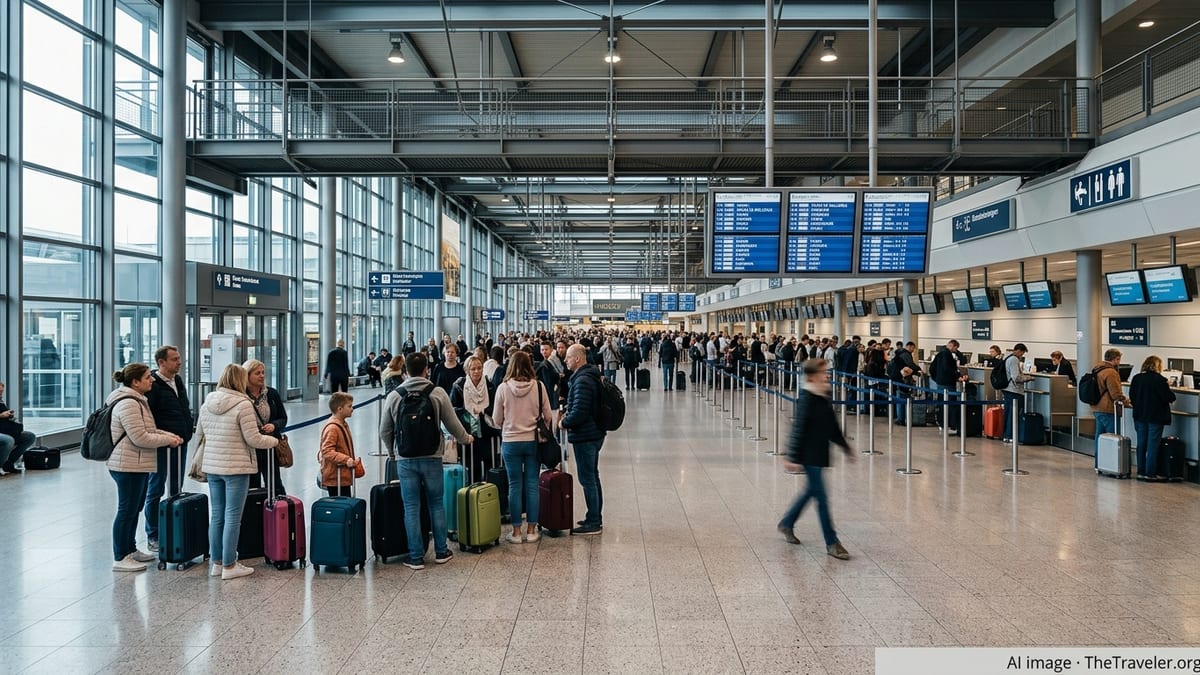
Strong Holiday Demand Lifts Traffic at Hannover
Publicly available traffic statistics indicate that Hannover Airport has been steadily rebuilding and expanding its passenger base, handling more than five million travelers in 2024 and 2025. Against this backdrop, the airport is gearing up for a particularly strong Easter period in 2026, with an estimated 750,000 passengers expected over the broader spring holiday window.
The projected Easter volumes place the airport among Germany’s more heavily used regional hubs during peak holiday travel, reflecting its role as a key gateway for Lower Saxony and neighboring states. The forecast aligns with broader German aviation trends, where leisure routes to warm-weather destinations continue to drive growth in short and medium-haul traffic.
Hannover’s traffic profile remains dominated by holiday and visiting-friends-and-relatives travel, and Easter has become a crucial period for airlines testing new routes ahead of the full summer timetable. Industry coverage of past seasons shows that German airports increasingly concentrate capacity into school holidays, intensifying pressure on terminal operations and infrastructure over a relatively short period.
For travelers, the surge in demand is translating into a wider choice of departures, especially early in the morning and late in the evening, when carriers are trying to maximize aircraft utilization. The overall pattern suggests that Easter 2026 will feel very close to high summer conditions in terms of crowd levels and flight frequency.
New Mediterranean Routes Highlight Summer-Oriented Strategy
According to current airport fee documents and route incentive programs effective from January 2026, Hannover is prioritizing the expansion of continental and leisure connections, including extensive links to Mediterranean markets. While the published lists emphasize Northern and Western European cities as strategic targets, the incentives also apply to regular routes to Spain, one of the most popular Mediterranean countries for German holidaymakers.
Spain’s inclusion in the special funding framework is particularly significant for routes to the Balearic and Canary Islands, which remain perennial favorites for spring and Easter breaks. Publicly available materials on flight programs at other German airports suggest that destinations such as Palma de Mallorca, the Costa del Sol and various Canary Island airports continue to rank among the top-selling packages for the 2026 season, and Hannover is positioning itself to capture a larger share of that traffic.
Beyond Spain, tour operator schedules and airline booking platforms indicate a wider Mediterranean focus from Hannover, with increased capacity toward classic sunshine destinations in Greece, Turkey and along the Italian coast. Many of these routes operate as seasonal or high-frequency services around Easter before ramping up further into the main summer holiday period.
By backing new and expanded routes with per-passenger incentives, the airport operator is seeking to encourage airlines to take calculated risks on additional frequencies and destinations. This approach is designed to align route development with the region’s travel demand while strengthening Hannover’s competitiveness against nearby hubs.
Operational Readiness for Peak Holiday Crowds
To manage the expected 750,000 Easter passengers, operational preparations at Hannover are centered on optimizing terminal flows, security screening and ground handling. Publicly available airport documents show that Hannover has a theoretical capacity in the range of 10 million passengers per year, meaning that the infrastructure is built to absorb busy peaks, but only if processes run smoothly and staffing levels match demand.
Past holiday seasons at German airports have highlighted the importance of early check-in windows, flexible security staffing and clear wayfinding to prevent queues from spilling into landside areas. Travel industry coverage suggests that Hannover, like other regional hubs, is increasingly relying on a combination of online check-in, automated bag drops where available and closer coordination with airlines and service providers to maintain punctuality during compressed peak periods.
Ground transport is another focus, as the airport’s role as a regional hub means that many travelers will arrive by car or regional rail. Public information indicates that Hannover is connected to the city by S-Bahn services and road links, and peak holiday traffic typically requires careful traffic management at curbside, in parking facilities and on access roads.
For passengers, this operational fine-tuning will be most visible in recommended earlier arrival times, expanded service hours in shops and restaurants, and a more pronounced presence of staff in public areas to guide flows. The Easter peak is also an opportunity for the airport to test operational concepts ahead of the traditionally even busier summer school holidays.
Incentive Programs Drive Route Expansion
Detailed airport fee regulations published for 2026 show that Hannover is using a structured incentive program to attract and sustain new routes. Airlines launching new continental services from the airport can qualify for multi-year per-passenger support, which is scaled over the first three years of operation. A supplementary program, branded as a special funding initiative, lists specific cities and all regular routes to Spain as priority targets.
The financial framework is designed to lower the initial risk for carriers when opening new markets from Hannover. By tying incentives to actual departing passenger numbers, the program links support directly to route performance, encouraging airlines to build sustainable demand rather than relying solely on short-term promotions.
Such incentive schemes have become a standard tool at many European regional airports, particularly for routes to leisure destinations. Industry observers note that when combined with strong package-tour demand, they can accelerate the establishment of new links to the Mediterranean, contributing to both passenger growth and a more diverse route map.
For Hannover, the timing of the updated incentives for 2026 aligns with the ramp-up of Easter and summer travel, making this holiday season a key proving ground for newly launched routes and frequency increases. Successful performance over the Easter period often influences airline decisions on whether to extend seasonal routes or convert them into longer operating seasons.
Environmental Measures Amid Rapid Growth
As Hannover Airport prepares for the Easter surge and continued route expansion, environmental considerations remain in focus. A recently published environmental declaration for 2025 and 2026 outlines projects aimed at protecting biodiversity around the airport, such as the creation of amphibian habitats, wildflower meadows and measures to combat invasive plant species.
The same documentation highlights efforts in resource efficiency, including refurbishment of electric ground handling equipment and the broader roll-out of digital processes to reduce paper usage. These steps are part of a longer-term strategy to balance rising passenger numbers with climate and environmental commitments that are increasingly important in German and European aviation policy.
While the immediate spotlight for travelers is on new Mediterranean routes and the convenience of a strong Easter flight schedule, the underlying infrastructure and sustainability initiatives are shaping how Hannover can accommodate growth in the years ahead. The combination of targeted route incentives, operational planning and environmental projects indicates that the airport is approaching the 2026 holiday season with both commercial ambitions and long-term resilience in mind.