

More news on this day
Hanoi’s rapidly evolving metro network is moving decisively into a smart-ticketing era, with biometric access, virtual passes and tap-to-ride payments beginning to transform how residents and visitors travel across Vietnam’s capital.
Get the latest news straight to your inbox!
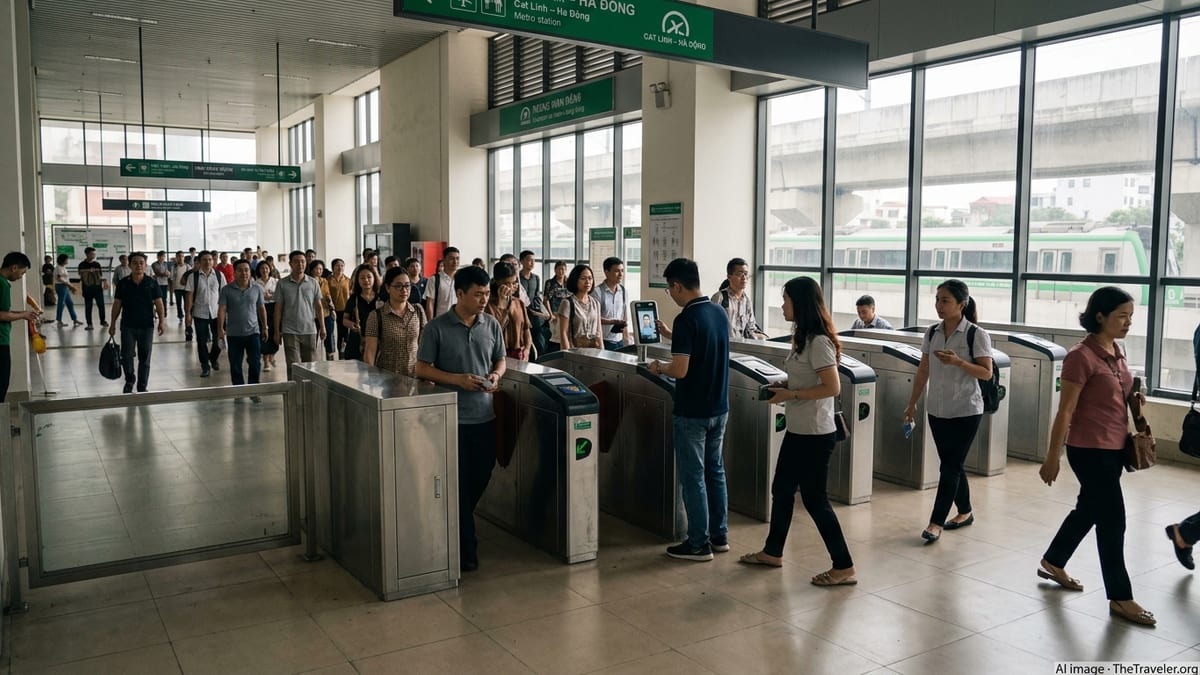
A Fully Digital Ticketing System Takes Shape
Publicly available information shows that Hanoi’s Cat Linh – Ha Dong line, known as Metro Line 2A, has become a showcase for Vietnam’s new generation of smart public transport. Since December 2025, the line has been equipped with a fully automated fare collection system that integrates digital identity, biometric recognition and cashless payments across all stations, replacing most paper-based ticketing on the route.
Reports from Vietnamese media describe the system as a “digital transport passport” for passengers, allowing riders to authenticate themselves and pay fares through electronic IDs, biometric data or contactless bank cards instead of traditional tokens. Turnstiles are fitted with scanners capable of reading QR codes, NFC-enabled cards and national digital ID credentials, all linked to a central back-office platform that records each journey in real time.
The shift reflects a wider strategy by Hanoi’s authorities to embed smart-transport infrastructure into the city’s urban planning. According to published coverage, Line 2A is being treated as a live testing ground for technologies that may later extend to other metro lines, bus routes and park-and-ride hubs, creating a unified, citywide ticketing and data ecosystem.
Planning documents and local reports also indicate that a second phase will gradually connect the automated system on Line 2A with the Nhon – Hanoi Station route, known as Line 3.1. The goal is to allow passengers to move between the two lines using a single smart profile and payment method, with all journey and revenue information captured electronically.
Biometrics, Digital IDs and Tap-to-Ride Convenience
Under the new framework, passengers on the Cat Linh – Ha Dong line can use several options to access trains. Media coverage notes that riders may authenticate through Vietnam’s national digital ID platform, tap citizen ID cards embedded with electronic chips, or rely on biometric recognition at upgraded gates. In practice, this means that frequent commuters can register once and then pass through ticket barriers using their face or an ID-linked card, without buying a paper ticket for each trip.
For occasional travelers, the system accommodates a range of cashless methods. Reports indicate that QR code tickets, contactless bank cards from major schemes and domestic payment networks, as well as mobile wallets, can all be used to tap in and out. The fare is calculated automatically based on the distance traveled and debited directly from the chosen account, reducing the need to queue at machines or counters.
The move to virtual and smart cards began earlier with the rollout of non-physical monthly and multi-month passes. These e-tickets are purchased online and stored digitally rather than issued as plastic cards, while still granting holders the same discounted access to Line 2A and the under-development Line 3.1. Public information shows that the metro operator has been guiding passengers through registration and use of these products, aiming to migrate a significant share of regular riders away from physical media.
International payment firms have also been active in Vietnam’s transit sector, with contactless “tap-to-ride” solutions introduced on Ho Chi Minh City’s Metro Line 1 and now on Hanoi’s Line 2A. These partnerships broaden the range of accepted cards and provide the back-end processing needed to handle large volumes of low-value transactions securely and quickly.
Ridership Growth and Tighter Revenue Control
Beyond convenience, the smart ticketing program is designed to lift ridership and improve the financial performance of Hanoi’s metro. By simplifying access and introducing more flexible products such as stored-value media and virtual passes, the system reduces friction for first-time and occasional users, particularly tourists and suburban commuters who may previously have opted for motorbikes or ride-hailing services.
Local press coverage indicates that, since opening in 2021, the Cat Linh – Ha Dong line has seen ridership grow as service reliability improves and surrounding districts continue to urbanize. The introduction of automated fare collection, digital IDs and open-loop payments is expected to reinforce this trend by speeding up station throughput and cutting waiting times during peak periods.
Revenue management is another central objective. With journeys now recorded electronically at entry and exit gates, the metro operator can track passenger flows and fare payments in real time, limiting opportunities for ticket leakage and fraud. Electronic audit trails allow finance teams to reconcile revenue more accurately, while aggregated data supports decisions on pricing, service frequency and long-term investment.
Analysts following the sector note that such systems are increasingly seen as prerequisites for financially sustainable urban rail operations, especially in emerging markets where farebox income remains vital. By embracing a modern, data-rich ticketing platform, Hanoi’s metro aims to move closer to that model and reduce its reliance on direct subsidies over the medium term.
What Passengers Need to Know Before Riding
For passengers, the changes on Hanoi’s metro network primarily affect how tickets are purchased and validated. Riders on Line 2A can expect to encounter upgraded gates that accept digital IDs, biometric verification, QR codes and contactless cards in place of, or alongside, older paper tickets. New passengers are encouraged, through public information campaigns, to create a digital profile or obtain a compatible card before travel to take full advantage of the streamlined entry process.
Regular commuters using monthly or multi-month passes may find that their existing cards are being converted to virtual formats or to new-generation NFC media. Information released by the operator explains that balances and remaining validity are transferred to the new system, so passengers keep their entitlements while gaining more flexible access options, including the ability to top up or manage accounts online.
Occasional users and visitors can typically choose between purchasing QR-based single-journey tickets, using contactless bank cards where supported, or adopting local e-wallet solutions that integrate directly with metro gates. While cash remains available for some transactions at staffed counters, the trajectory is clearly toward a predominantly cashless system, with digital ownership of tickets encouraged wherever possible.
Public guidance also stresses the importance of keeping digital IDs, cards and devices secure, as these now function as both identity credentials and fare media. At the same time, metro authorities highlight the presence of security and encryption measures designed to protect personal information and transaction data within the automated fare collection network.
A Blueprint for Vietnam’s Smart Mobility Future
Observers of Vietnam’s transport sector view Hanoi’s smart ticketing rollout as a significant step toward a broader smart mobility ecosystem. The integration of biometric identification, digital IDs and open-loop payments aligns with national plans to digitize public services, build more sustainable cities and reduce congestion and emissions from private vehicles.
Plans reported by Vietnamese outlets suggest that, once trials on Line 2A and Line 3.1 are complete, authorities aim to link metro ticketing with buses, national railway stations and urban parking facilities, creating a multimodal network in which a single digital identity and payment method can be used end to end. This approach mirrors developments in other Asian and European capitals, where citywide mobility platforms are becoming standard.
For Hanoi, the timing is critical. The city’s population and vehicle ownership continue to rise, and without significant shifts in travel behavior, congestion and air quality are expected to worsen. By making metro journeys easier to plan, pay for and complete through smart technology, officials hope to attract more riders out of private cars and motorbikes and onto high-capacity rail.
As the system matures, passengers can expect incremental refinements rather than abrupt changes: more gates enabled for biometric use, expanded support for international cards and e-wallets, and deeper integration with journey-planning apps. For now, the Cat Linh – Ha Dong line offers a preview of how everyday travel in Vietnam’s capital may look in the coming years, as smart ticketing becomes a central feature of urban life.