

More news on this day
Spring travelers moving through Las Vegas’ Harry Reid International Airport in early April 2026 encountered a fresh wave of disruption, with publicly available flight-tracking data indicating roughly 208 delays and 12 cancellations concentrated on April 4, affecting domestic and transborder routes across the United States and Canada.
Get the latest news straight to your inbox!
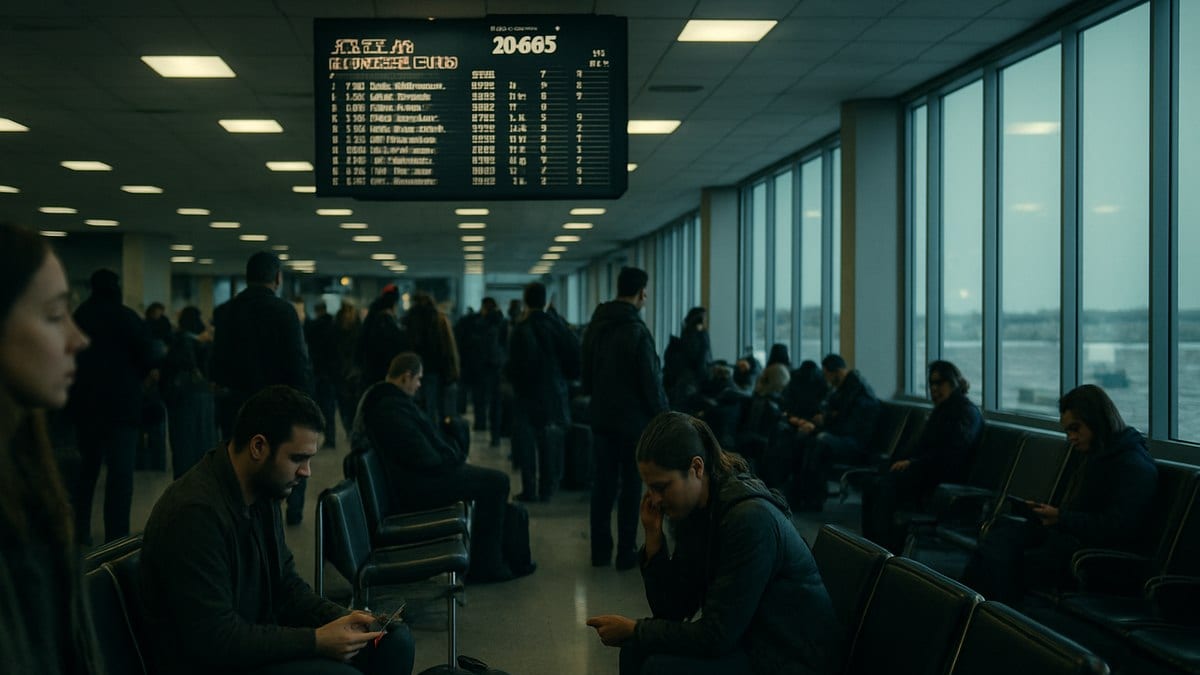
Las Vegas Hub Adds to a New Round of U.S. Disruptions
Flight-status dashboards tracking Harry Reid International’s operations on April 4 show that the vast majority of the 208 delayed departures and arrivals were tied to busy domestic routes, with additional impact on services linking Las Vegas to Canadian gateways. Reports indicate that a mix of short holdups and more extended waits combined to slow the flow of aircraft through the airport, creating crowding at some gates as schedules slipped behind.
Several large North American airlines appear among the most affected, including major U.S. carriers and Canadian operators that use Las Vegas as a key leisure and convention market. While the overall cancellation count remained comparatively modest at 12 flights, the high number of delays resulted in missed connections for some passengers and forced aircraft to operate well outside their planned time slots.
The timing of the disruption coincides with a broader pattern of early-spring irregular operations across the national network. Other major U.S. hubs have also logged elevated delay totals in recent days, reinforcing Harry Reid Airport’s position within a wider system that is still sensitive to weather, congestion and staffing constraints as 2026 travel demand remains strong.
Despite the elevated delay tally, monitoring services describing airport conditions in Las Vegas on April 4 reported normal security wait times and generally calm terminal operations. That split picture, with flight schedules under pressure even as checkpoints function smoothly, highlights how issues far from the desert hub can still reverberate across its departures board.
Weather and Network Strain Weigh on Flight Schedules
Published coverage of U.S. air travel performance in early April points to unstable weather over several major hubs as a primary driver of nationwide delays. Ground delay programs and arrival metering at airports in other regions have reduced available capacity at key points in the day, leading to knock-on effects for aircraft and crews scheduled to pass through Las Vegas later in their rotations.
Airlines typically build some slack into their systems, but when thunderstorms, low visibility or strong winds affect multiple cities at once, that buffer can quickly vanish. Aircraft scheduled to depart for Las Vegas may leave their origin late, arrive after their planned time, and then turn around behind schedule, creating ripple effects that show up as delays at Harry Reid Airport even when local skies remain clear.
Analysts tracking national performance note that the early April disruption wave has coincided with passenger volumes that are at or above pre-pandemic levels at many large hubs. With planes flying full and limited spare capacity available, even modest schedule shocks can cascade, shifting a day from mostly on time to heavily delayed within a few hours.
These broader patterns are reflected in Harry Reid’s April 4 numbers. The relatively low number of cancellations suggests that airlines were largely able to operate their planned schedules, but the high delay count indicates that they did so at a slower cadence than timetables anticipated, leaving travelers to navigate crowded gate areas and reworked connections.
Impact on Carriers Serving U.S. and Canada
Flight-tracking snapshots for April 4 show that carriers with extensive domestic networks, as well as those linking Las Vegas to Canadian cities, were prominently represented among the disrupted operations. Services operated by large U.S. airlines on trunk routes to California, the Pacific Northwest and the Midwest experienced particularly frequent lateness, reflecting how weather and congestion at distant hubs can easily spill into Las Vegas schedules.
Canadian services were not spared. Cross-border flights connecting Las Vegas with cities such as Vancouver, Calgary or Toronto rely heavily on tight rotations and shared aircraft within airline fleets. When a plane arriving from another U.S. hub reaches Harry Reid behind schedule, the subsequent northbound departure may also push back late, even if conditions along the route are otherwise favorable.
Low-cost and leisure-focused airlines, which concentrate heavily on weekend and holiday peaks, faced an additional layer of pressure from strong passenger loads at the start of April’s busy travel period. For these carriers, the priority often becomes operating the full schedule, even if that means accepting later departures, as canceling a flight can leave an entire planeload of vacationers with limited alternative options.
The imbalance between relatively few cancellations and many delayed operations indicates that airlines serving Harry Reid on April 4 were largely committed to keeping routes active, prioritizing completion of flights over strict on-time performance. For travelers, that often translates into arriving later than expected rather than not flying at all.
Passenger Experience: Crowded Gates but Manageable Security
For travelers inside the terminal, the April 4 disruptions produced a mixed experience. Real-time reporting on security conditions described short checkpoint lines and relatively smooth screening, suggesting that passengers who arrived with standard lead times generally reached their gates without difficulty, even as departure boards steadily filled with yellow and red delay markers.
In the gate areas, conditions were more strained. When successive flights in the same zone run behind schedule, passengers for multiple departures can end up sharing limited seating and queuing space. As delays stretched on April 4, gate change announcements and rolling departure times required passengers to pay close attention to screens and mobile notifications.
For those making connections through Las Vegas, even a modest delay on an inbound flight could prove disruptive. Tight layovers that might be manageable on an ordinary day suddenly became risky, and some travelers were rebooked onto later departures after missing their planned connections by minutes.
At the same time, the largely routine conditions at security and around ticketing counters on April 4 underscored that the day’s problems were rooted less in terminal infrastructure and more in the broader dynamics of the flight network. Those dynamics left many passengers waiting longer at the gate rather than in line at checkpoints.
Guidance for Travelers Navigating Spring 2026 Flying
Recent travel advisories and airport guidance materials for spring 2026 emphasize preparation and flexibility as key tools for managing days like April 4 at Harry Reid. Passengers are encouraged to review flight status repeatedly in the hours before leaving for the airport and to enable airline notifications, since schedule changes can occur with little warning as carriers adjust to evolving conditions across their networks.
Travel tips published in connection with Las Vegas operations urge passengers to allow extra time during peak spring travel periods, particularly around weekends, major events and school holidays. Even when local operations appear normal, disruptions at other hubs can send late-arriving aircraft into Harry Reid, altering departure times with minimal local warning.
Industry observers also recommend that travelers build wider connection windows into itineraries passing through Las Vegas and other busy hubs during this period of heightened volatility. A layover that might be comfortable during a quiet month can become tight when national delay levels are elevated and aircraft rotations are running late.
As early April 2026 continues, Harry Reid International Airport remains a critical node in a national network that is again testing its resilience against spring weather and heavy demand. The 208 delays and 12 cancellations logged around April 4 illustrate how even a single day of disruption can ripple outward, reinforcing the value of advance planning and real-time information for anyone flying through Las Vegas.