

More news on this day
Spring break travelers heading through Las Vegas are confronting fresh uncertainty as a new delay-management proposal at Harry Reid International Airport collides with federal funding disputes and nearby road work, raising the risk of longer lines and missed connections during one of the busiest travel periods of 2026.
Get the latest news straight to your inbox!
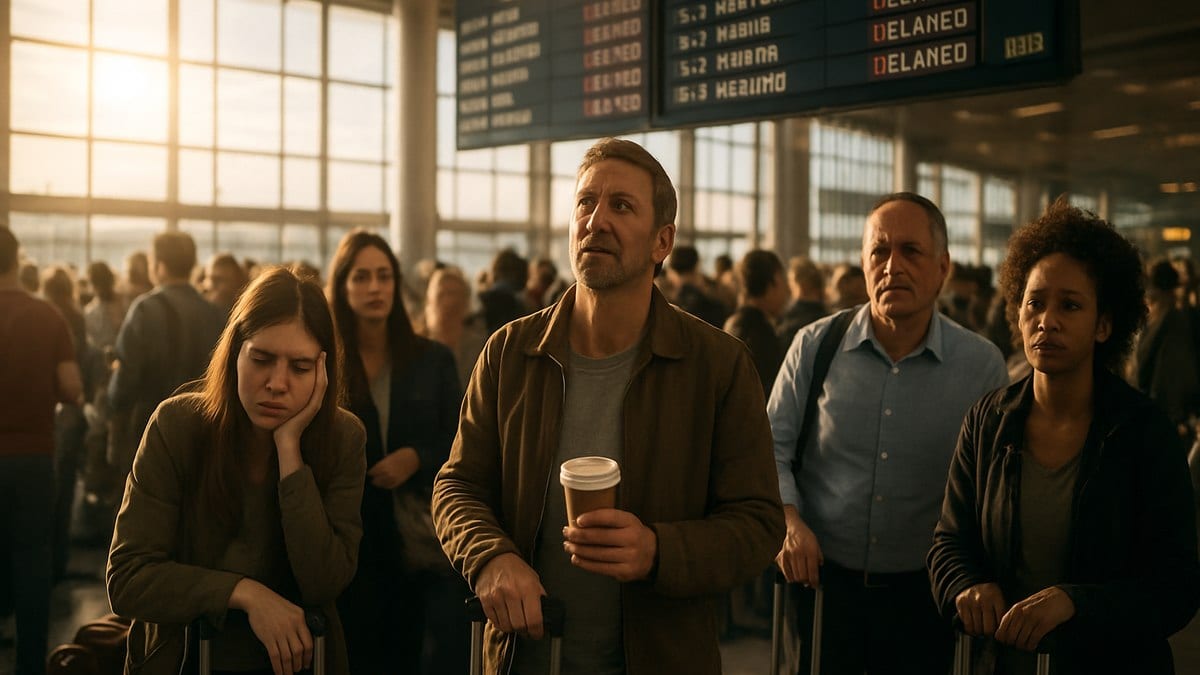
A Proposal Aimed at Delays Lands in a Season of Strain
The latest operational proposal at Harry Reid International Airport focuses on how flight delays are sequenced and managed during peak congestion, with particular attention on early-morning and late-afternoon departure banks. Publicly available planning documents and recent performance data indicate that the airport has been coping with rising passenger volumes and construction-related capacity constraints that are scheduled to run into summer 2026.
Industry analyses of security and departure performance in early 2026 show that Harry Reid routinely experiences its longest queues between 6 and 9 in the morning and again from roughly 4 to 7 in the evening, when departure waves stack up against limited runway and gate availability. With average delays creeping into the mid-teens of minutes on some key routes in February and March, airport planners have been under pressure to keep knock-on disruptions from spreading across the network.
The new proposal, according to aviation-focused reporting and planning summaries, would formalize a more aggressive use of ground delay programs and departure metering when bottlenecks build at security checkpoints or at the airfield. Supporters present it as a way to keep operations predictable. For travelers, however, the language around “planned delay windows” and “controlled queuing” has sparked concern that the solution may feel like an institutionalized slowdown just as spring break peaks.
Local commentary in Las Vegas and national travel coverage suggest that the timing of this proposal has amplified anxiety. After a winter and early spring dominated by headlines about federal shutdowns, temporary airspace closures in other regions, and budget debates affecting aviation security, many travelers are reading any change in airport operations as a potential new source of disruption.
Federal Budget Fights and Homeland Security Uncertainty
The delay proposal at Harry Reid is unfolding against a volatile federal backdrop. A series of federal government shutdowns in early 2026, including one that specifically affected the Department of Homeland Security, prompted widespread warnings about the potential for longer screening times and reduced staffing at Transportation Security Administration checkpoints nationwide. Coverage from national outlets in March detailed wait times stretching to several hours at some major hubs as staff worked without pay or under constrained schedules.
While published reports indicate that Harry Reid has generally avoided the worst of those spikes, the broader climate has made travelers acutely sensitive to any mention of “delay programs” or operational changes tied to security and airfield flow. Social media posts and community forums in Las Vegas through March and early April reflect a mix of reassurance about relatively normal lines on some days and frustration about sporadic backups on others, often attributed to the ripple effects of federal funding uncertainty.
At the same time, discussions in Washington over future homeland security budgets and aviation security funding have fueled questions about how resilient airports such as Harry Reid will be if another protracted political standoff emerges later in the year. Public comments from aviation labor groups and security experts, highlighted in regional news coverage, warn that leaner budgets could slow equipment upgrades and leave screening operations more vulnerable to surges in traffic.
For spring 2026 travelers, that context matters. Many are finalizing plans made months ago, only to see headlines about security funding fights and new delay-management frameworks at one of the nation’s busiest leisure gateways. Even if immediate operational changes remain modest, the perception of risk is influencing how and when people choose to fly.
Road Work, Capacity Constraints, and On-the-Ground Bottlenecks
Compounding the concern around the delay proposal are new lane reductions and highway closures near Harry Reid that local outlets in Las Vegas began flagging in mid-April. Transportation alerts describe rolling work zones and safety barricades around key access routes to the airport, advising drivers to budget extra time to reach the terminals over the coming weeks.
Construction-related constraints are not new for Harry Reid. Federal aviation construction reports list ongoing projects in and around the airfield area through mid-2026, affecting overnight aircraft parking and some aspects of ground handling. While those projects are designed to increase long-term capacity and improve resilience, they can temporarily reduce flexibility when weather, demand surges, or security disruptions push the system toward its limits.
For visitors arriving by rideshare, taxi, or rental car, the combination of lane closures and heavier spring traffic can turn the final stretch to the terminal into an additional source of uncertainty. Travel-planning tools that track security wait times and curb-to-gate estimates for Harry Reid already bake in 10 to 20 minutes for airport access during typical conditions. With construction compressing lanes and funneling vehicles through narrowed corridors, those estimates may tilt higher, particularly at popular departure times.
Any decrease in punctual passenger arrivals at security checkpoints could in turn interact with the airport’s new delay-management framework. If large numbers of passengers reach screening later than expected, attempts to smooth departure flows via planned delay windows may collide with real-world spikes in demand at certain hours, leaving airlines and travelers with fewer easy fixes.
Spring Break Crowds and the Risk to Vacation Itineraries
Spring 2026 is shaping up as another heavy travel season for Las Vegas, with major conventions, concert residencies, and sports events drawing visitors alongside traditional spring break tourism. Data from airline performance trackers for February and March show robust schedules into and out of Harry Reid, with some popular flights operating near or at capacity during peak weekends.
Academic research published in early 2026 on the behavior of security-related delays within the national aviation network notes that, in the post-pandemic era, congestion at a few high-volume nodes can now translate more directly into wider delay probabilities. In practice, this means that if a busy gateway such as Las Vegas begins to experience extended security or departure bottlenecks, the effects can propagate onto connecting banks across multiple airlines, raising the stakes for travelers on tight itineraries.
For families heading to Las Vegas for a combined resort stay and onward connection, or for international visitors using Harry Reid as a stopover, this spring’s environment may feel particularly precarious. A late departure tied to a metered delay program can cut margin from short connections, while any added time at security may consume the buffer travelers thought they had. Reports from frequent flyers in recent weeks describe adjusting their plans by scheduling earlier departures or building in longer connect times through other hubs.
Travel advisers and consumer advocates quoted in recent coverage emphasize that even if most flights still operate close to schedule, the variability around peak periods is increasing. That variability, layered on top of a formal delay-management proposal whose real-world impact is not yet fully clear, has become a significant factor in how people perceive the reliability of spring 2026 travel through Las Vegas.
What Travelers Can Expect Heading Into Early Summer
Looking ahead to late spring and early summer, publicly available forecasts from aviation planners and regional transportation agencies suggest that pressure on Harry Reid is unlikely to ease quickly. Construction timelines extend into July 2026, federal budget negotiations over security funding remain unsettled, and the airport continues to serve as a key gateway for major events scheduled on the Las Vegas calendar.
In practical terms, travelers should be prepared for a season in which planning margins matter more than in previous years. Data from multiple third-party tools that monitor Harry Reid wait times indicate that early mornings and late afternoons are consistently the riskiest periods for congestion. When those peaks coincide with lane reductions, a fresh round of federal uncertainty, or unexpected weather, the delay-management proposal now on the table could be tested under real stress.
Industry observers note that the proposal’s success or failure will be judged less by abstract on-time percentages than by the experience of passengers trying to make flights on crowded Fridays or holiday Mondays. If controlled queues and structured delay windows translate into more predictable, clearly communicated schedules, some of the initial anxiety may fade. If, instead, travelers continue to encounter surprise backups at security or the curb, the phrase “Harry Reid delay proposal” may become shorthand for a season of disrupted plans.
For now, the airport’s role at the center of one of America’s busiest leisure markets ensures that every small adjustment in operations is magnified. As spring 2026 unfolds, Las Vegas-bound travelers are watching closely to see whether the latest effort to tame delays will steady their journeys or add a new layer of uncertainty to already fragile itineraries.