

More news on this day
Spring break crowds colliding with staffing strains, severe weather and a federal funding standoff have turned Las Vegas’s Harry Reid International Airport into a flashpoint for wider turbulence across the U.S. airline network, with rolling delays and cancellations radiating nationwide through March and early April 2026.
Get the latest news straight to your inbox!
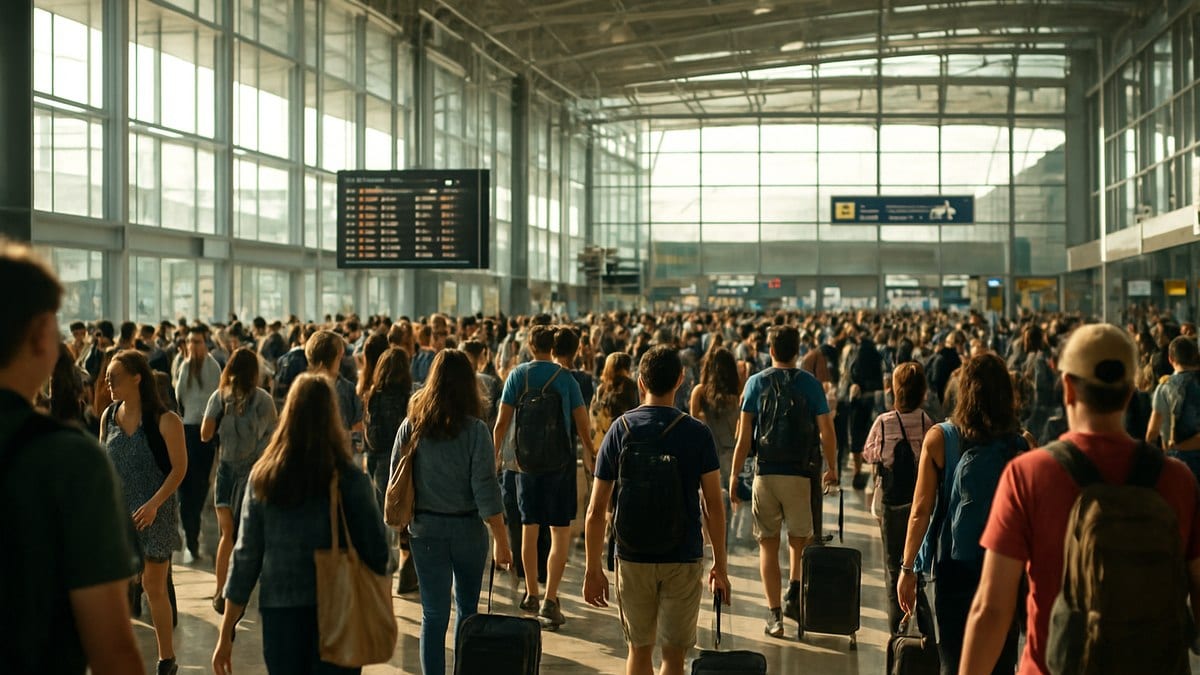
Harry Reid Becomes a Spring Break Pressure Valve
Las Vegas is a marquee spring break destination, and Harry Reid International Airport typically sees some of its heaviest passenger volumes in March. Recent passenger data shows the airport handling millions of travelers a month, underscoring its role as a major West Coast hub that links leisure routes across the country.
This year, that seasonal surge has collided with an unusually fragile operating environment. Reports from aviation trackers and travel outlets in mid-March pointed to a spike in disruptions as storms and staffing issues hit during peak getaway periods. Travel-focused coverage on March 13 described more than 6,000 flight disruptions nationwide on the first big Friday of spring break travel, with Las Vegas among the airports absorbing misrouted aircraft and crew from other regions.
By mid-March, Harry Reid was repeatedly appearing on daily lists of the most impacted U.S. airports. A travel industry report on March 15 highlighted more than 140 delays and a series of cancellations at Las Vegas alone, as carriers including Southwest, Delta, American and Spirit juggled tight schedules on already crowded routes.
Those flare-ups have continued into April. On April 6, industry coverage noted more than 90 delays and multiple cancellations at Harry Reid in a single day, affecting airlines such as Spirit, Frontier and JetBlue and routes connecting Las Vegas to Los Angeles, New York, Denver and other key markets.
Weather Shocks and Systemwide Strain
The troubles in Las Vegas are unfolding against a backdrop of broader volatility in the U.S. aviation system. A powerful mid-March blizzard and associated storm system disrupted air travel from March 13 to 17, with snow, ice and severe thunderstorms sweeping from the Midwest to the East Coast. Publicly available weather and aviation data show hundreds of cancellations at hubs such as Chicago, Minneapolis and Boston, with knock-on delays rippling through connecting airports.
Industry trackers reported that on March 15 alone nearly 700 flights were canceled and more than 4,000 delayed nationwide, with Minneapolis–Saint Paul identified as the worst-hit airport by cancellation volume. Las Vegas saw smaller absolute numbers but still registered dozens of delays and cancellations as aircraft and crews were displaced by weather elsewhere.
Even on days without headline-grabbing storms, spring break demand has kept pressure high. A separate analysis on March 27 logged more than 220 cancellations and over 4,000 delays across major U.S. airports, again including Harry Reid, which recorded scores of delayed departures and a handful of cancellations as busy leisure routes absorbed ongoing schedule adjustments.
These repeated shocks have left airline networks with little flexibility. Aircraft and crew typically rotate through multiple cities each day, and disruptions in storm-hit regions can strand resources far from Las Vegas while travelers continue to pour into Nevada for holidays and events.
TSA Staffing Shortages and Shutdown Fallout
Security bottlenecks have added another layer of complexity in Las Vegas. Travel industry reports indicate that Transportation Security Administration staffing challenges, intensified by a partial federal government shutdown that began in mid-February, have led to longer screening times at several major airports. Coverage specific to Harry Reid in March described “growing disruptions” tied to security staffing, with early-morning spikes in wait times reported by travelers during prime spring break weekends.
National news outlets have documented how the prolonged shutdown has strained security checkpoints across the U.S., with some airports experiencing unusually long lines as spring break travelers and college basketball fans headed to March tournament games. Those pressures are particularly acute at large leisure hubs such as Las Vegas, which rely heavily on predictable throughput at security lanes to keep tightly banked departure waves on schedule.
At Harry Reid, staffing-related friction is intersecting with already tight airline operations. Reports indicate that while some days see manageable lines, others quickly become overwhelmed when an early bank of flights runs late or when storm-driven disruptions elsewhere cause abrupt schedule reshuffles. This has made flight times less predictable for passengers, especially during early-morning and late-evening peaks.
According to published travel guidance, airlines and airport authorities are attempting to mitigate the impact through measures such as adjusted staffing patterns, temporary reallocation of screening resources and advance passenger notifications. However, those steps have not fully offset the cumulative effect of the shutdown, staffing gaps and elevated seasonal demand.
Network Knock-On Effects Across U.S. Carriers
The instability centered on Harry Reid is contributing to a broader pattern of volatility across U.S. airlines this spring. Industry dashboards tracking daily cancellations and delays show that disruptions in Las Vegas are part of a nationwide mosaic that includes storm-hit hubs in the Midwest, congested gateways on the East Coast and heavily trafficked leisure markets in Florida and the Southwest.
Coverage from aviation news outlets and legal-travel advisory sites throughout March highlighted days when carriers such as Southwest, American, United, Delta and Spirit collectively recorded several hundred cancellations and thousands of delays in a single 24-hour period. On those days, Las Vegas often appeared as one of a cluster of affected hubs, alongside airports such as Orlando, Atlanta, Chicago and New York’s LaGuardia.
Airlines have responded with contingency scheduling, trimming some frequencies on delay-prone routes and attempting to rebuild buffers into their timetables through mid-April. Publicly available guidance suggests that carriers are encouraging travelers to use mobile apps, accept proactive rebookings and travel with carry-on luggage when possible to speed reaccommodation during irregular operations.
Despite these efforts, the combination of elevated demand, weather volatility and staffing constraints continues to leave little margin for error. A relatively small disruption at Harry Reid, such as a burst of congestion at security or a brief ramp closure, can still cascade into missed connections and rolling delays across multiple time zones.
What the Spring Break Chaos Signals for Summer
For travelers, the spring break turbulence at Harry Reid and across the U.S. offers an early preview of potential challenges ahead of the peak summer season. Forecasts cited in national media suggest that U.S. airlines expect to carry roughly 2.8 million passengers per day between March and the end of April, and summer volumes are typically higher.
Consumer advocates and travel analysts are pointing to this spring’s disruptions as evidence that the system remains vulnerable to overlapping shocks. Weather extremes, labor constraints and political gridlock around federal aviation funding have all been present during the early 2026 travel season, and none appear likely to fade quickly.
For now, Las Vegas remains one of the most visible flashpoints, thanks to its concentration of leisure traffic and its role as a connecting point for low cost and network carriers alike. As airlines and airport operators work to stabilize operations, travelers passing through Harry Reid this spring are encountering the front line of a broader struggle to keep America’s crowded skies running on time.