

More news on this day
Across the eastern edge of the Arabian Peninsula, the rugged Hajar Mountains are emerging as a connected adventure corridor, linking Dubai’s highland escape of Hatta with new nature and culture‑driven destinations in Oman and Saudi Arabia that are reshaping travel plans for 2026 and beyond.
Get the latest news straight to your inbox!
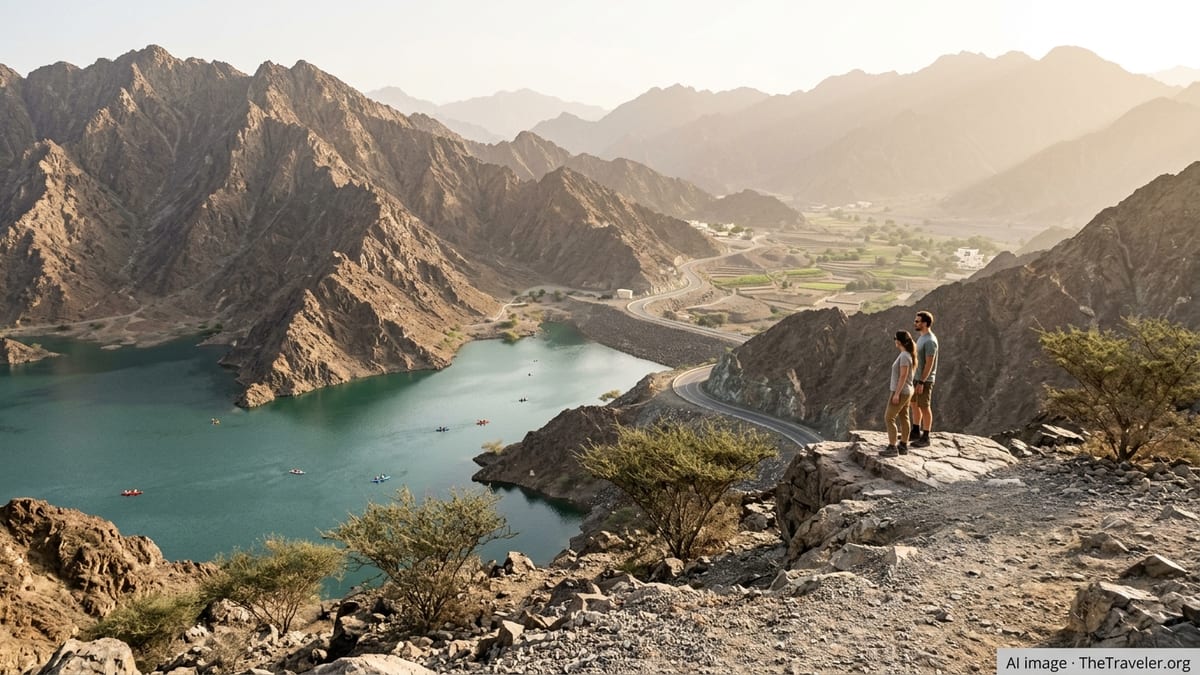
Hatta’s Tourism Push in the Heart of the Hajar Mountains
Once known mainly as a weekend escape for Dubai residents, Hatta is now at the center of one of the Gulf’s most ambitious mountain tourism drives. Publicly available information shows that Dubai authorities have identified the enclave as a strategic highland resort area, backing private investors with subsidies, infrastructure and a portfolio of hospitality and adventure concessions designed to be in place before the end of the decade.
Recent coverage describes Hatta as a testbed for “regenerative” and low‑impact tourism, balancing growth with protection of wadis, farms and mountain trails. Reports indicate that new eco‑lodges, glamping sites and boutique resorts are being added to existing camping grounds and caravan parks, with emphasis on small‑scale builds rather than large tower hotels. Planned properties under international lifestyle brands are expected to strengthen Hatta’s position as a year‑round destination, especially once cooler‑season demand surges between October and April.
On the ground, visitors already find a growing adventure infrastructure. The Hatta Sustainable Waterfalls project and an expanded network of hiking and mountain biking routes have been highlighted in regional travel industry briefings as key draws for active travelers. Kayaking on the Hatta Dam, guided e‑mountain bike tours and cultural stops in the restored Hatta Heritage Village are increasingly packaged together as one integrated “mountain playground” rather than standalone activities.
Travel advisories and online forums suggest that road access from Dubai to Hatta remains a straightforward two‑hour drive, with new signage and rest areas steadily improving the experience. For many visitors, the combination of cooler temperatures, mountain scenery and relatively easy access from Dubai’s beaches and city hotels is turning Hatta into the starting point of a broader Hajar Mountains itinerary.
Crossing From Hatta Into Oman’s High Villages and Wadis
For travelers looking to go beyond the UAE, the Hatta route has long been one of the most direct overland links into northern Oman. Recent trip reports indicate that the land border in the area is operating for regular travel, with motorists describing smooth crossings when documentation and vehicle papers are in order. While regulations can change, widely shared guidance stresses the importance of checking visa eligibility, vehicle ownership rules and insurance before setting out.
Once across the frontier, the Hajar Mountains reveal a dramatically different face. In Oman, the range broadens into high plateaus and deep canyons around hubs such as Nizwa, Jabal Akhdar and Jabal Shams. According to tourism statistics and industry reports, Oman has directed billions of dollars into mountain and eco‑tourism projects, including new wellness resorts on Al Jabal Al Akhdar and integrated developments that bundle hiking, cycling and heritage experiences.
Coverage in regional travel and business media points to domestic tourism and nature‑focused stays as major growth segments in Oman. The Al Hajar range has become central to this strategy, with village guesthouses, guided trekking routes and farm‑based stays being actively promoted alongside luxury tented camps and spa retreats. Travelers are encouraged to use Muscat or the border city of Sohar as gateways into the mountains, combining coastal stops with inland drives through traditional falaj irrigation systems and terraced orchards.
For visitors starting in Hatta, a typical cross‑border route may include a night in the enclave, a morning border crossing, then a journey into Oman’s interior via well‑maintained highways. Industry itineraries increasingly combine the craggy ridges near the border with high‑altitude viewpoints, canyon walks in Wadi Ghul and cultural visits to forts and souqs, creating a multi‑day Hajar circuit that feels far removed from the coastal skylines of the Gulf.
Saudi Arabia’s New Mountain and Desert Gateways
To the west, Saudi Arabia is developing its own network of highland and desert destinations that connect, conceptually if not yet by direct tourist routes, with the Hajar region’s adventure narrative. Vision 2030 has placed tourism at the center of economic diversification, and publicly available project portfolios highlight giga‑developments that range from Red Sea island resorts to mountain enclaves and entertainment cities on the outskirts of Riyadh.
Travel trade briefings describe Qiddiya City near Riyadh as a “play frontier” combining motorsport circuits, record‑setting roller coasters and large‑scale theme parks with outdoor activities in the surrounding escarpments. Further north and west, projects under banners such as NEOM and AMAALA Triple Bay are marketing cooler mountain microclimates, cliffside viewpoints and canyon trails as part of a broader shift toward outdoor and adventure travel in the kingdom.
Industry data compiled by hospitality analysts show that international hotel groups are rapidly expanding in Saudi Arabia, with more than one hundred properties trading or in the pipeline across multiple cities and nature destinations. New openings in heritage towns, coastal hubs and mountain areas are designed to host both domestic travelers and long‑haul visitors who combine pilgrimage, culture and nature in a single itinerary.
For travelers planning a multi‑country journey, these developments mean that routes linking the UAE, Oman and Saudi Arabia can increasingly be curated around mountain and desert experiences rather than only city breaks. While cross‑border self‑drive trips still require careful attention to visas, vehicle rules and security advisories, the concept of a “Gulf rim” overland journey that takes in the Hajar Mountains, Saudi highlands and Red Sea coast is moving from niche backpacker idea to mainstream tour offering.
Planning Your Hajar Corridor Adventure
With rapid change under way, prospective visitors are being urged by travel advisers and industry associations to focus on timing, climate and logistics. The October to April period is widely viewed as the most comfortable window for mountain travel, when daytime temperatures in Hatta and the Omani highlands are significantly cooler than on the Gulf coast. Summer travel is possible but tends to require more time in high‑altitude resorts and carefully planned early‑morning or evening activities.
Transport options are also evolving. Dubai remains the primary international gateway for Hatta, with rental cars and organized transfers the most common ways to reach the enclave. In Oman, Muscat and Salalah are the main entry points, connected by domestic flights and highways that link on to the Hajar interior. In Saudi Arabia, the major hubs of Riyadh, Jeddah and the Red Sea airports serve as starting points for journeys into Qiddiya, coastal projects and future mountain resorts.
Regulatory information for road trips continues to stress the importance of comprehensive insurance, valid driving licenses and, where relevant, permission letters for rental vehicles crossing borders. Travelers considering multi‑country itineraries are generally advised to work with operators experienced in Gulf self‑drive routes or to rely on regional flight connections between key cities and then arrange local transport in each country.
Despite the complexity, demand indicators suggest that interest in this emerging corridor is strong. Middle East tourism barometers cite rising hotel pipelines, growing domestic travel and a shift toward experience‑led, nature‑rich trips across the region. As investment accelerates along the mountain frontiers of the UAE, Oman and Saudi Arabia, the Hajar and its neighboring ranges are positioning themselves as one of the most compelling new adventure landscapes within easy reach of major global flight routes.