

Hawaii is often pictured as swaying palms and golden beaches, yet the islands are shaped far more profoundly by an Indigenous culture that has endured centuries of change. For travelers, understanding the history, values and contemporary realities of Native Hawaiians is essential to seeing beyond the postcard views. This guide explores how ancient traditions, language and land-based practices continue to inform island life today, and offers practical insight into how visitors can connect with Hawaii in a way that is informed, respectful and enriching for both guests and residents.
Origins of the Hawaiian Islands and People
Long before Hawaii became a coveted destination, the archipelago was one of the most isolated inhabited places on earth, home to skilled Polynesian voyagers who navigated thousands of miles across the Pacific using stars, swells and winds. These early settlers arrived in double-hulled canoes with plants, animals and knowledge systems that allowed them to thrive in a remote volcanic island chain. Over generations, they developed a distinct Hawaiian identity, or lahui, closely tied to the cycles of land and sea.
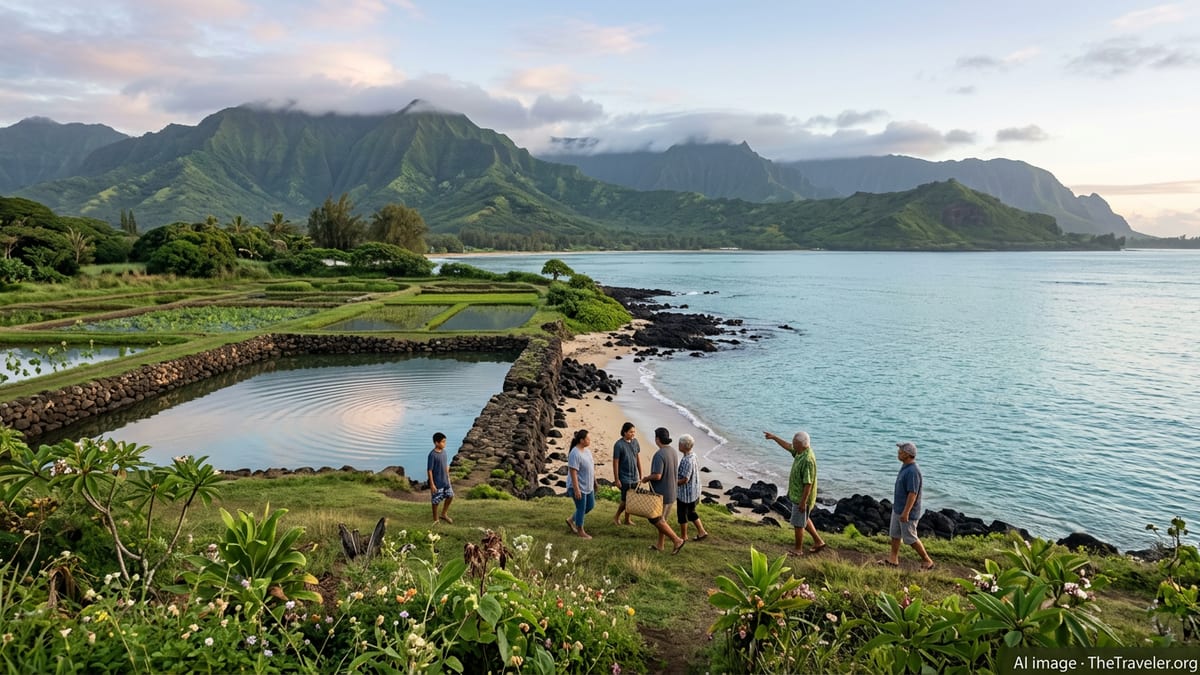
Traditional Hawaiian society was organized around ahupuaʻa, wedge-shaped land divisions that typically stretched from mountain ridge to reef. Within each ahupuaʻa, communities managed fresh water, forests, fields and fisheries as one interconnected system. This structure anchored a philosophy known as mālama ʻāina, caring for the land so it could continue to care for the people. Even today, many community-based organizations and cultural practitioners in Hawaii reference ahupuaʻa when restoring fishponds, replanting native forests and teaching youth how their ancestors lived in balance with the environment.
Religion and governance were deeply intertwined in early Hawaii. Chiefs, or aliʻi, were seen as having a sacred duty to protect the people and the land, while priests and experts in astronomy, agriculture and navigation supported decision-making through observation and ceremony. The annual Makahiki season, linked to the rising of the Pleiades and honoring the god Lono, marked months of peace, feasting and games. Modern cultural festivals often draw inspiration from Makahiki and other ancestral observances, reflecting a broader revival of interest in traditional practices across the islands.
When visitors learn that Hawaii’s Indigenous culture predates resorts by centuries and evolved in a setting of extreme isolation, it becomes easier to appreciate why many residents view the islands as a living, sacred homeland rather than simply a vacation playground. Recognizing this history is a first step toward traveling with humility and curiosity.
A Brief History: From Kingdom to Statehood
The story of Hawaiian culture cannot be separated from political change. In 1810, King Kamehameha I unified the islands into a single kingdom, establishing Hawaii as a sovereign nation engaged in diplomacy and trade around the world. Over the course of the nineteenth century, however, foreign business interests, missionary influence and shifting power dynamics eroded Hawaiian political autonomy. In 1893, American and European businessmen backed the overthrow of Queen Liliʻuokalani, a turning point that many Native Hawaiians view as an illegal deprivation of their nationhood.
After the overthrow, Hawaii was annexed by the United States and later became a U.S. territory, then the 50th state in 1959. These transitions brought large military installations, plantation economies and mass tourism, dramatically transforming land ownership and demographics. Native Hawaiians faced land dispossession, epidemics and restrictions on their language and cultural expressions. By the mid-twentieth century, Hawaiian was rarely heard in public spaces, and many traditional practices had been marginalized or romanticized for visitors.
Beginning in the 1970s, a period often called the Hawaiian Renaissance saw a powerful resurgence of language, hula, voyaging and political activism. Community leaders and cultural practitioners pushed for the protection of sacred sites, the establishment of Hawaiian immersion schools and greater recognition of Native Hawaiian rights. The modern movement continues to shape public debates around development, astronomy facilities, water use and tourism, reminding visitors that contemporary Hawaii is not just a backdrop but a place where Indigenous people are asserting their identity and priorities.
For travelers, even a basic awareness of this history provides context for why some residents express concern about overdevelopment or crowds at culturally significant locations. It also opens opportunities to learn from museums, cultural centers, guided tours and community events that present Hawaiian stories from local perspectives rather than solely through a tourist lens.
Core Values: Aloha, ʻOhana and Mālama ʻĀina
The word aloha is one of the most recognized Hawaiian terms in the world, yet its cultural meaning runs much deeper than a casual greeting. At its heart, aloha speaks to a way of relating that is grounded in love, respect and a recognition of shared life force. In practice, this can look like generosity toward guests, care within families and a commitment to harmony within the community. When locals speak of living aloha, they are referring to everyday choices that reflect kindness and responsibility, not just a friendly smile at the hotel front desk.
Closely linked is the concept of ʻohana, often translated as family but encompassing a broader web of relationships that includes close friends, neighbors and sometimes visitors who have formed lasting bonds. In many communities, ʻohana means sharing food, looking after elders and children, and stepping up when someone faces hardship. For travelers, understanding ʻohana can shift expectations: places that might look like mere attractions on a map are often woven into the life stories of families who have gathered there for generations.
Another foundational principle is mālama ʻāina, the obligation to care for the land and ocean. In traditional times, this was reflected in seasonal kapu, or restrictions, on fishing or harvesting certain resources to allow ecosystems to recover. Today, mālama ʻāina can be seen in efforts to restore loko iʻa, or fishponds, protect coral reefs and replant native species in forests and coastal areas. Many community-based organizations invite residents and visitors alike to participate in workdays that combine physical labor with the sharing of history and protocol.
Visitors who embrace aloha, ʻohana and mālama ʻāina in tangible ways are often welcomed more warmly. This might mean treading lightly on trails, asking permission before entering sensitive areas, supporting local businesses and engaging in conversations that show a genuine interest in the people who call Hawaii home. In this way, cultural values become not just topics to read about but guides for how to move through the islands.
Language, Hula and Living Traditions
ʻŌlelo Hawaiʻi, the Hawaiian language, is central to understanding the worldview of the islands. Once dominant across the archipelago, it was suppressed in schools and public life during the territorial period, leading to a dramatic decline in fluent speakers. In recent decades, immersion schools, university programs and community classes have fueled a strong revival. Today, you can hear Hawaiian in classrooms, on radio broadcasts and at public events, and some hotels and cultural centers are beginning to offer introductory lessons to help visitors learn simple phrases with correct pronunciation.
Place names are a meaningful entry point into the language. Names like Waikīkī, Hāna and Līhuʻe carry embedded stories about water flows, winds, chiefs and historical events. Taking time to read and say these names with care is more than a linguistic exercise; it is a way of acknowledging that every beach, valley and ridge has an identity older than its modern resort or highway. Many cultural practitioners encourage visitors to ask about place names and to listen when kupuna, or elders, share the moʻolelo, or stories, behind them.
Hula is another pillar of Hawaiian culture that has undergone both suppression and revival. Far more than entertainment for visitors, hula is a sophisticated art form that preserves history, genealogy and environmental knowledge through chant, movement and costume. The annual Merrie Monarch Festival on Hawaiʻi Island is widely regarded as the pinnacle of the hula world, showcasing both ancient hula kahiko and modern hula ʻauana. While many resort shows include elements of hula, travelers seeking a deeper understanding often look for community performances, hālau hula demonstrations or educational workshops that explain the meaning behind the choreography.
Other living traditions include oli, or chant, canoe voyaging, kapa cloth-making and lauhala weaving. Organizations dedicated to voyaging, for example, train new generations to navigate using stars and ocean patterns, continuing the legacy that first brought Polynesian explorers to these islands. Visitors who attend open houses, museum exhibits or cultural lectures may gain a sense of how these practices are not relics but evolving arts that connect past and present.
Food, Feasting and Island Daily Life
Food is one of the most accessible ways to experience Hawaii’s cultural layers. Traditional staples like kalo, or taro, ʻulu, or breadfruit, sweet potato and fresh fish formed the basis of early Hawaiian diets. Poi, made by mashing cooked taro, remains a beloved dish at gatherings, while laulau, pork or fish wrapped in taro leaves and steamed, and lomi salmon, a tomato and salted salmon salad, are common at celebrations. These foods are part of a broader relationship with the land, reflecting centuries of careful cultivation in loʻi kalo, terraced taro patches irrigated by streams.
Over time, waves of immigrants from China, Japan, Portugal, the Philippines, Korea and elsewhere introduced new flavors and techniques, giving rise to a truly local cuisine. Plate lunches, saimin noodles, manapua and malasadas all tell stories of cultural blending. Farmers markets and neighborhood eateries often showcase this diversity, offering everything from poke bowls and shave ice to locally grown fruit and vegetables. Travelers who seek out small, family-run spots and markets not only enjoy memorable meals but also support communities beyond the main resort corridors.
The lūʻau has become one of the most recognizable cultural experiences marketed to visitors. Historically, communal feasts had deep ceremonial and social significance, marking events such as births, victories or the lifting of certain religious restrictions. Modern commercial lūʻau vary widely. Some are large-scale productions focused on entertainment, while others are more intimate and place stronger emphasis on storytelling, protocol and local sourcing of ingredients. Choosing thoughtfully and listening to how hosts describe the meaning of the rituals, dances and dishes can help visitors distinguish between superficial spectacle and more grounded cultural sharing.
Everyday island life extends beyond cultural performances. For many residents, long commutes, high living costs and multiple jobs are part of reality, especially in heavily visited areas. At the same time, family gatherings at the beach, weekend paddling practice, school hula performances and church or community events provide continuity and connection. Travelers who notice these rhythms and approach them with respect are more likely to encounter Hawaii as a lived place rather than a scripted resort experience.
Land, Sacred Sites and Contemporary Issues
Across Hawaii, certain mountains, valleys, heiau, or temples, and coastal areas carry pronounced cultural and spiritual weight. Sites such as royal birthing stones, traditional fishponds and places associated with key historical events remain vital to Native Hawaiian identity. Ongoing efforts by organizations like the Office of Hawaiian Affairs and community groups focus on protecting these spaces from erosion, vandalism and incompatible development, while also improving educational signage and access that reflects Indigenous perspectives.
Debates around land use highlight the complex intersections of culture, science, economics and sovereignty. Protests related to telescope construction on Maunakea, for example, have drawn attention to the sacred significance of the mountain and broader questions about who gets to decide the future of Hawaiian lands. Similarly, community responses to resort expansion, short-term rentals and infrastructure projects often reference impacts on cultural practices, housing affordability and environmental health, not just visitor experience.
Tourism itself is a central topic in contemporary discussions. Many residents recognize that visitor spending supports jobs and businesses, yet surveys indicate persistent concerns about overcrowding, strains on natural resources and the uneven distribution of benefits. In response, state agencies, cultural organizations and community leaders have begun promoting concepts such as regenerative tourism and travel pono, encouraging visitors who are willing to slow down, learn and give back. Programs supported through initiatives like destination management plans and culture-focused grants aim to amplify Native Hawaiian voices in shaping what tourism looks like in the future.
For travelers, understanding these conversations does not require taking a stance on every issue, but it does call for attentiveness. Reading local news, visiting museums and listening when guides discuss current debates can deepen appreciation and reduce the risk of unintentionally contributing to tensions, whether through social media posts, off-trail hiking or choices about where to stay and spend.
How to Visit Hawaii with Cultural Respect
Visiting Hawaii respectfully begins long before boarding a plane. Learning basic Hawaiian terms, reading about the islands’ history and familiarizing yourself with local guidelines for ocean safety, wildlife protection and trail access all signal a willingness to be a thoughtful guest. Many official visitor resources now include pledges or codes of conduct that emphasize respect for culture and environment, encouraging travelers to keep distance from marine life, pack out trash, stay on marked paths and heed signage at cultural sites.
On the ground, small decisions add up. Choosing locally owned accommodations, tours and eateries where possible helps circulate money within island communities and can create more opportunities to engage with residents who are deeply rooted in place. When participating in cultural activities such as hula lessons, lei making or lūʻau, listening closely to the hosts’ explanations and asking questions with humility shows that you value the knowledge being shared. Avoiding stereotypical jokes, costumes or behavior that trivializes Hawaiian culture is equally important.
Time and place matter as well. Some communities have requested that visitors avoid particular sites, especially in the wake of natural disasters or during periods of recovery. Paying attention to current advisories and respecting such requests, even if the locations feature prominently on social media, is one way to practice mālama, or care. Volunteering for a few hours with a reef clean-up, native planting project or fishpond restoration can offer a powerful perspective on how cultural values are enacted through hands-on stewardship.
Above all, traveling with respect means recognizing that Hawaii is not a themed resort but a homeland for an Indigenous people and a diverse local population. When visitors approach conversations with curiosity, adapt plans in response to local guidance and see themselves as temporary guests rather than entitled consumers, their presence is more likely to align with the values that have sustained the islands for generations.
The Takeaway
Hawaiian culture is not a performance staged for visitors; it is a living system of values, histories and practices that shape everything from land stewardship and language use to family gatherings and political debates. The resilience of Native Hawaiian traditions, despite colonization and rapid development, is evident in the revival of ʻŌlelo Hawaiʻi, the prominence of hula and voyaging, and the many community-led efforts to restore fishponds, taro terraces and sacred sites.
For travelers, engaging with this culture begins with listening. Understanding the islands’ past as an independent kingdom, the impacts of overthrow and annexation, and the ongoing movements for cultural and land rights provides context that transforms beaches and viewpoints into storied places. Learning and using a few Hawaiian words, respecting place names, and seeking out experiences led by local practitioners can create more authentic and mutually beneficial connections.
Island life today balances joy and challenge. Residents juggle work, family and rising costs while still finding time to gather for potlucks, paddling, music and worship. As tourism models evolve toward more responsible and regenerative approaches, visitors have an important role in choosing how they show up. When you move through Hawaii with aloha, honor ʻohana and practice mālama ʻāina, your trip becomes more than a vacation; it becomes part of a larger story of respect, reciprocity and shared responsibility for the future of these islands.
FAQ
Q1. What is the difference between being Hawaiian and being a Hawaii resident?
Being Hawaiian refers specifically to having Native Hawaiian ancestry, while being a Hawaii resident simply means living in the islands, regardless of ethnicity.
Q2. Is it appropriate for visitors to attend a lūʻau?
Yes, it can be appropriate if the event is run with cultural care. Look for lūʻau that emphasize storytelling, local ingredients and education rather than only spectacle.
Q3. How can I respectfully use Hawaiian words during my visit?
Learn a few basics such as aloha, mahalo and ʻohana, practice correct pronunciation, use them sincerely and be open to gentle correction from speakers.
Q4. Why do some locals seem frustrated with tourism?
Many residents are concerned about overcrowding, environmental impacts and rising costs tied to tourism. Their frustration is often directed at systems, not individual respectful visitors.
Q5. Are there ways for visitors to give back while in Hawaii?
Yes. You can join organized clean-ups, help with native planting or fishpond restoration, support local businesses and follow community guidelines at cultural and natural sites.
Q6. Is it okay to hike or explore anywhere I see on social media?
No. Some locations are unsafe, closed or culturally sensitive. Always follow official guidance, respect private property and avoid visiting places that communities have asked people to stay away from.
Q7. How important is the Hawaiian language today?
The Hawaiian language is central to cultural identity and is experiencing a strong revival through immersion schools, university programs and community initiatives across the islands.
Q8. What should I do when visiting a sacred or historic site?
Arrive quietly, stay on marked paths, read interpretive signs, follow any posted protocols and avoid climbing, sitting or posing disrespectfully on structures or stones.
Q9. Can I call the islands “the mainland” or “the States” when I am there?
Locals typically refer to the continental United States as “the mainland.” Using that term and being mindful of Hawaii’s distinct identity is usually appreciated.
Q10. How can I tell if a cultural tour or activity is responsible?
Look for offerings led or advised by local practitioners, that share history with nuance, respect sacred sites, limit group size and clearly communicate expectations for respectful behavior.