

Hawaii rewards travelers who are willing to leave the resort, start early and chase the horizon for a day. With short interisland flights, scenic coastal highways and tours designed around limited time, it has never been easier to stand on the rim of an active volcano in the morning, walk beneath misty waterfalls in the afternoon and toast sunset in a historic seaside town. Thoughtful planning, however, is essential. From eruption updates to reservation-only parks, today’s Hawaii day trips call for flexibility, cultural awareness and a willingness to slow down, look, and listen.
Planning Day Trips Across the Hawaiian Islands
Hawaii’s four main visitor islands Oahu, Hawaii Island, Maui and Kauai all offer realistic day-trip options, particularly if you are willing to fly early and return late. Interisland flights are typically under an hour, but they sell out in peak seasons, so locking in tickets and any guided tours several weeks ahead can make the difference between a smooth adventure and a day lost to logistics. From Oahu, for example, travelers routinely join packaged day tours to Hawaii Island’s volcano country or the waterfalls and rainforests around Hilo, with flights, ground transport and timing handled for you.
Driving day trips on a single island can be just as rewarding. Classic routes like Maui’s Road to Hana, Oahu’s North Shore and Windward Coast loop, Kauai’s drive to Hanalei and Waimea Canyon, and Hawaii Island’s circle-island itineraries all offer sweeping ocean views, trails and small towns worth lingering in. Distances may look short on the map, but winding roads, one-lane bridges and spontaneous photo stops mean you should plan fewer official sights and more breathing room.
Safety and respect should frame every itinerary. Coastal roads can be slick in sudden showers, mountain routes may be shaded and narrow, and ocean conditions shift quickly, especially in winter. Renting an appropriate vehicle, monitoring daily weather and heeding posted warnings are basic precautions. It is equally important to stay on marked trails, avoid trespassing at unmarked waterfalls or on private coastal lands, and follow local guidance as communities across Hawaii balance visitor access with safety and cultural protection.
Finally, build in time simply to be. A successful Hawaii day trip is not defined by how many attractions you can check off, but by whether you come away with a deeper sense of the islands. Stopping at a family-run café, listening to local radio on the drive, and learning proper place names and basic Hawaiian phrases can turn a busy sightseeing run into a memorable connection.
Seeing Volcanoes in a Single Day
For many visitors, standing near an active volcano is the defining Hawaii experience, and Hawaii Island makes this possible in a single very full day. Hawaii Volcanoes National Park sits on the southeastern flank of the island, roughly a 45-minute drive from Hilo and about two hours from Kona, depending on conditions. The park encompasses the slopes and craters of Kilauea and Mauna Loa, along with broad lava fields and native forest. Recent years have brought several eruption cycles, including renewed activity at Kilauea in late 2025, so checking the National Park Service’s current conditions on the morning of your visit is essential.
A typical self-guided day trip to the park starts with an early flight into Hilo or a pre-dawn departure from Kona. On arrival, many travelers begin at the Kilauea Visitor Center to gather updated safety information, road closures and ranger suggestions suited to their time and fitness level. Short walks like the Sulphur Banks trail and viewpoints along Crater Rim Drive provide accessible introductions to the steaming landscape, while more energetic travelers might choose a longer hike into a former lava lake or along the rim of a pit crater. When lava is not visible at the surface, the park remains compelling for its raw geology, native plants and the sense that the ground itself is still being written.
Guided volcano day trips, often packaged with flights from Oahu or Maui, remain a practical choice in 2026 for visitors who prefer to avoid driving unfamiliar roads in the dark. These itineraries commonly combine park highlights with a stop at a black sand beach, a short walk through a rainforest lava tube and a meal break in or around Hilo. They are structured to fit airline schedules, which means less flexibility but fewer planning headaches. Travelers who want more time near the volcano sometimes choose an overnight option, allowing for both daytime hiking and, when conditions allow, sunset or after-dark viewing of crater glow.
Whatever format you choose, it is vital to treat the volcano with humility. Fissures may open or close with little warning, gases can pool in low-lying areas, and sharp lava rock requires sturdy footwear. The summit area of Kilauea also holds deep cultural significance as a home of the goddess Pele, and leaving offerings or rearranging rocks to spell messages is considered disrespectful. Observing quietly, staying behind railings and following both rangers’ advice and local cultural guidance will keep your day both safe and meaningful.
Chasing Waterfalls From Hilo to Hana
Hawaii’s waterfalls are scattered across every major island, but certain regions are especially rewarding for a single focused day. On Hawaii Island, the Hilo side catches abundant rainfall and feeds a string of falls that are easy to visit by car. Popular stops include tall, graceful cascades set within manicured state parks, roadside viewpoints where rivers plunge into rocky amphitheaters, and shorter walks through rainforest to roaring torrents. Many volcano and Hilo day tours include at least one major waterfall as a contrast to the black lava landscapes earlier or later in the day.
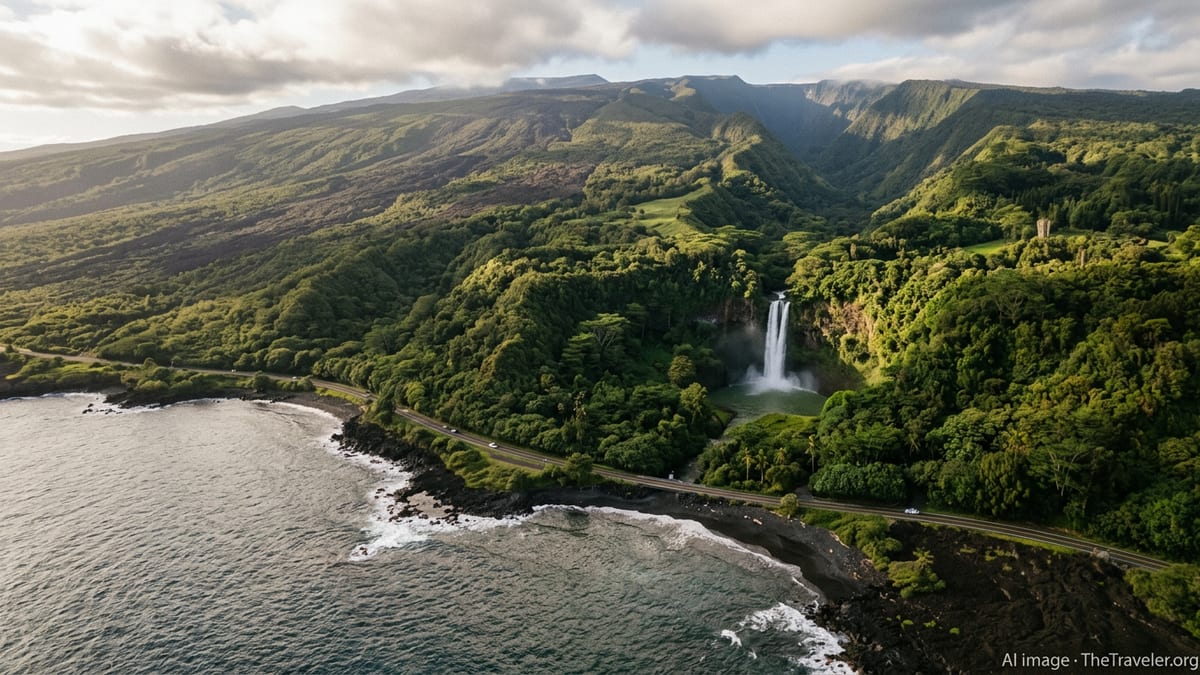
On Maui, the legendary Road to Hana serves as an all-day waterfall and coastal forest corridor. Leaving from the island’s more developed west or south shores, travelers wind along the north and east side of Haleakala through dozens of stream valleys. After winter rain, you may glimpse narrow ribbons of white pouring down distant cliffs, while in drier periods the focus shifts to lush roadside pools and bamboo-fringed paths. There are decades-old legal swimming spots and trails maintained for the public, but also many falls set behind fences or in gulches on private land. Respecting signage and choosing only sanctioned access points protects both your safety and local residents’ trust.
Farther along Maui’s east side, within the Kipahulu district of Haleakala National Park, the Pipiwai Trail leads through towering bamboo to a soaring waterfall, while lower pools near the coast draw swimmers when conditions are calm. Reservations and parking controls have tightened in recent years to limit crowding, so it is wise to secure entry well in advance and arrive early or late in the day. The combination of sea cliffs, freshwater streams and the looming bulk of Haleakala creates one of Hawaii’s most memorable day-hike landscapes.
Kauai, famed as the Garden Isle, offers yet another set of waterfall-focused day outings. Short drives from Lihue lead to lookouts over broad, fan-shaped cascades framed by forested ridges, while guided kayak and hiking tours explore river valleys where smaller falls spill into tranquil pools. The interior mountains often sit under a cap of cloud and receive heavy rainfall, which keeps the streams flowing but can trigger fast-rising water. Checking the day’s forecast, avoiding narrow gulches during storms and listening to local outfitters about recent conditions will keep waterfall chasing an inspiring, not risky, pursuit.
Coastal Towns Worth a Day Trip
Interwoven with Hawaii’s wild landscapes are coastal towns that make ideal anchors for a day’s exploration. On Oahu’s North Shore, Haleiwa blends old plantation-era storefronts with surf culture and art galleries. A lazy day here might involve browsing boutiques, sampling shave ice, then continuing along the coast to observe winter surf at renowned breaks, always from a respectful distance behind warning signs. The drive from Honolulu skirts green mountains and protected bays, inviting unhurried photo stops.
On Hawaii Island, Hilo and Kona showcase very different moods. Hilo, often visited as part of volcano and waterfall day trips, sits amid rainforests and rivers. Its historic downtown features local shops, a popular farmers market on select days and a waterfront park system that offers shaded picnic spots and views across the bay. Kona, on the sunnier west coast, delivers a more resort-oriented seafront lined with cafés and small beaches. Both towns serve as launching pads for circle-island drives that thread through ranchlands, lava fields, and upland communities, making them appealing bookends for a full-day adventure.
Maui’s Lahaina was historically one of Hawaii’s quintessential coastal day-trip towns, combining a walkable waterfront, whale-watching tours and a rich whaling-era history. The devastating wildfires of August 2023, however, destroyed much of historic Lahaina, and recovery remains ongoing in 2026. Travelers should pay close attention to current guidance about where visitors are welcomed and which areas remain closed or reserved for residents and rebuilding work. Meanwhile, other Maui communities such as Paia on the north shore and Kihei further south offer alternative coastal town experiences with beaches, food trucks and independent shops.
On Kauai, Hanalei and the broader north shore retain a relaxed, small-town feel even as visitor numbers have increased. Wooden buildings, one-lane bridges and taro fields backdropped by vertical ridges give day trippers an immediate sense of stepping into a slower rhythm. It is important here to obey parking rules, respect private drives and consider visiting during less busy hours to avoid overwhelming narrow roads. Whether your day ends with fresh-caught fish on a picnic table or a quiet walk along a crescent-shaped bay, Hawaii’s coastal towns provide a human-scale counterpoint to the drama of volcanoes and waterfalls.
Island-Hopping Logistics and Local Transport
Designing Hawaii day trips that cross island boundaries requires careful attention to flights and ground transport. Interisland services typically connect Honolulu with Hilo, Kona, Kahului and Lihue multiple times daily, but schedules fluctuate with demand, and certain routes become especially busy during school holidays and winter. Booking the first available departure out and a late return leaves room for weather delays and traffic while still enabling a full day on the ground. Many organized volcano and Kauai day trips bundle flights and transportation in a single ticket, which simplifies planning and limits the risk of missed connections.
Once you arrive, your transport choices shape the tone of the day. Rental cars allow maximum flexibility along routes like the Road to Hana, Waimea Canyon or the circle drive around Hawaii Island’s northern section, but they also demand constant attention to winding roads and unfamiliar driving conditions. Guided small-group tours, by contrast, let you focus on scenery and storytelling from local guides, at the cost of a set schedule and shared stops. Public bus systems operate on all four main islands, but routes and frequencies are better suited to slow exploration than ambitious, multi-stop day tours.
Parking is another practical consideration. Popular trailheads, scenic lookouts and small-town centers increasingly rely on paid or timed parking to manage demand. Researching these details in advance and traveling with a card-enabled payment method prevents last-minute scrambles. In some areas, shuttles now run from larger parking hubs to trailheads or viewpoints to reduce congestion on narrow roads. Staying informed through visitor information centers, official state and county websites, or your tour operator will help you adapt gracefully to evolving systems.
Finally, consider how your logistics intersect with local life. Arriving in small coastal towns at dawn with a rented car convoy, parking on residential streets or blocking driveways with quick photo stops can fray relationships between residents and visitors. By limiting the number of stops, spending meaningfully at local businesses, and leaving popular spots before evening rush hours, you can ensure your day trip supports rather than strains the communities that make Hawaii distinctive.
Respecting Culture and Nature on Short Visits
Hawaii’s most memorable day trips are not only about scenery; they also offer opportunities to encounter living culture in respectful ways. From roadside stands selling lau lau or fresh fruit to small museums and cultural centers, you will find places where local families and organizations share stories of their communities and ancestors. Taking the time to read interpretive signs, listen to place-name pronunciations and ask thoughtful questions helps ground your visit in context rather than treating landscapes as anonymous backdrops.
Even short visits benefit from learning a few basic values that guide behavior in Hawaii. The concept of kuleana speaks to responsibility, reminding visitors to care for the places they enjoy: packing out trash, avoiding fragile dunes or vegetation and not disturbing wildlife. The idea of malama, or caring for, extends to cultural sites such as heiau and burial grounds, where quiet observation and adherence to posted guidance are expected. Simple gestures, like lowering your voice at sacred overlooks or refraining from flying drones near cultural sites, communicate respect.
Environmental awareness is especially important on volcano and waterfall-focused day trips. Volcanic gases can be hazardous for people with respiratory or heart conditions, and some viewing areas may be closed when emissions are high. At waterfalls, sudden surges from upstream rain can transform serene pools into dangerous torrents, even under blue skies at the coast. Trusting local warnings, turning around when conditions feel uncertain and resisting the urge to follow others into closed-off areas are signs of a seasoned, considerate traveler.
Finally, remember that Hawaii’s recovery from recent events, including volcanic activity and destructive wildfires, continues in 2026. Certain landscapes and communities are still healing. Choosing locally owned tour companies, contributing to community-led restoration programs when possible and sharing accurate, respectful impressions of your experiences can amplify positive impacts. A well-planned day trip, approached with curiosity and humility, can leave both traveler and host community enriched.
The Takeaway
Thoughtfully planned day trips in Hawaii allow travelers to experience a remarkable range of landscapes and communities in a short time. Within a single day, you might trace the rim of a smoking crater, feel the cool spray of a waterfall in a rainforest valley, and watch the sky turn rosy over a working harbor or crescent-shaped bay. The key is to prioritize depth over breadth, leaving room for conversation, contemplation and unhurried meals rather than sprinting from lookout to lookout.
As you chart your own day-trip routes, treat Hawaii’s roads, trails and towns as living spaces rather than theme-park attractions. Confirm current conditions at volcanoes and parks, respect closures and cultural guidance, and remember that communities hosting visitors are balancing daily life, recovery and long-term stewardship. By traveling with patience, curiosity and care, you not only craft unforgettable days for yourself but also contribute to a more sustainable future for Hawaii’s extraordinary islands.
FAQ
Q1. Can I visit Hawaii Volcanoes National Park as a day trip from Oahu or Maui?
Yes, many operators offer full-day tours that include round-trip flights, ground transportation and guided time inside the park, though it makes for a very long day.
Q2. How early should I book interisland flights for day trips?
It is wise to book at least several weeks in advance for peak seasons and holidays, since early-morning and late-evening flights often sell out first.
Q3. Is the Road to Hana realistic as a self-drive day trip?
It is possible, but expect a full day of slow, winding driving. Start at dawn, swap drivers if you can, and plan fewer stops rather than trying to see everything.
Q4. Are Hawaii’s waterfalls safe to swim in?
Some legal swimming areas are generally considered safe in calm conditions, but always respect warning signs, recent rain, flash-flood risk and local advice before entering the water.
Q5. Which island is best for a volcano-focused day trip?
Hawaii Island is the only island with an active national park dedicated to its volcanoes, so day trips from Oahu or Maui typically focus on Hawaii Island’s eastern side.
Q6. Do I need a rental car for coastal town day trips?
A rental car provides flexibility for exploring coastal towns and nearby beaches, but on some routes small-group tours or limited public transit can also work for relaxed itineraries.
Q7. How can I be respectful of local communities on short visits?
Follow posted rules, park only in legal areas, keep noise down in residential neighborhoods, support local businesses and be patient with crowd-management systems.
Q8. What should I pack for a volcano and waterfall day trip?
Sturdy shoes, light rain gear, sun protection, water, snacks, a small first-aid kit and layered clothing for changing temperatures are all useful on long, varied days.
Q9. Is it better to book guided tours or explore independently?
Guided tours simplify logistics and add cultural context, while independent travel offers more flexibility. Many visitors mix both approaches during a multi-day stay.
Q10. Are there areas still recovering from recent disasters that I should avoid?
Yes, some communities, including parts of Maui affected by the 2023 wildfires, remain in active recovery. Check current official guidance to know where visitors are welcome.