

More news on this day
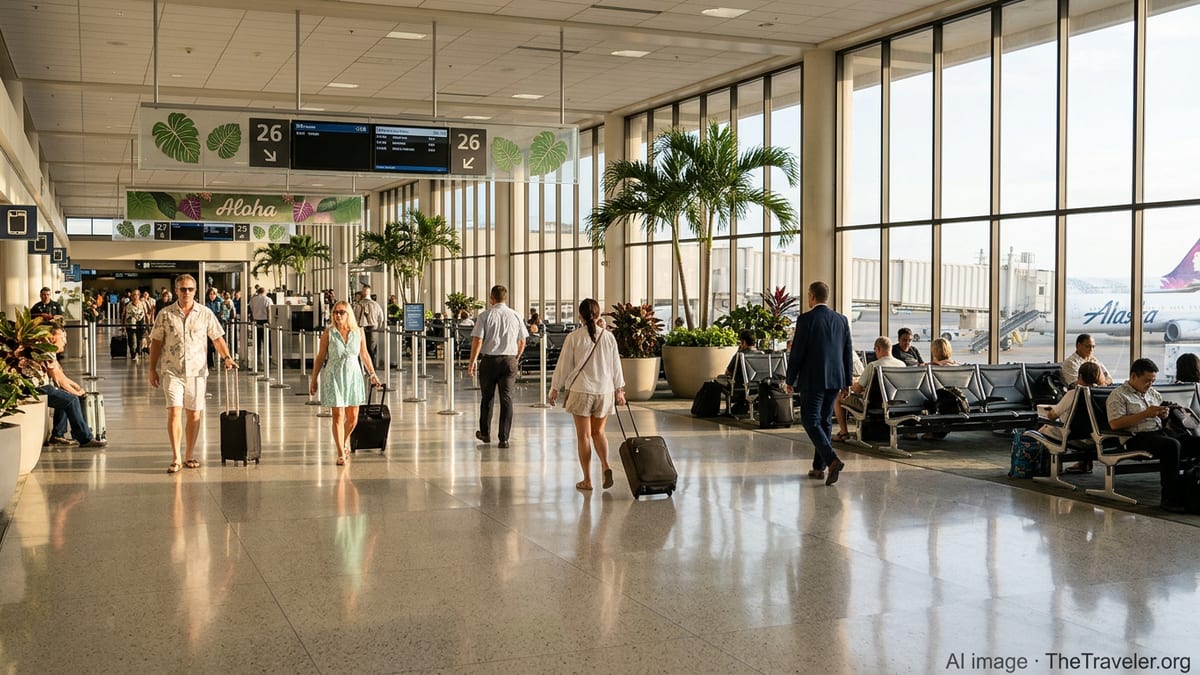
Hawaii has joined New York, Idaho, Alaska and Washington among the top-performing U.S. states for keeping flights running on time in 2025, according to new national aviation data that tracks delays and cancellations by departure state.
Fresh Data Highlights a New Map of On-Time Performance
The latest figures, compiled from U.S. Department of Transportation on-time performance data for the 12 months from July 2024 through June 2025, show Hawaii, Utah, Idaho, Oregon, Montana, Arizona and a handful of others clustered at the low end of the disruption scale. Within that group, Hawaii, New York, Idaho, Alaska and Washington stand out as states with busy air corridors that still manage comparatively few severe delays and cancellations.
Analysts define disruptions as flights that are either canceled or delayed beyond a standard threshold, a category that captures the travel headaches most likely to trigger missed connections, hotel claims and insurance payouts. By that measure, travelers departing from airports in Hawaii now face some of the lowest odds of serious schedule trouble anywhere in the country.
The rankings draw on tens of thousands of scheduled flights and exclude the smallest airfields to avoid skewed results. That methodology places regional and island airports such as Honolulu, Kahului and Kona alongside mainland hubs in New York and Washington, allowing a clearer comparison of how reliably different parts of the U.S. air network are operating in 2025.
While no state is immune to weather or air-traffic issues, the numbers suggest that in this period Hawaii and its fellow top performers consistently experienced fewer major disruptions than national problem spots such as New Jersey, Illinois and parts of the Southeast and Mid-Atlantic.
Why Hawaii’s Airports Are Beating the Odds
Industry observers point to several structural advantages that help explain Hawaii’s strong showing. Its main airports, particularly Honolulu and Kahului, handle heavy leisure and interisland traffic but rely on relatively straightforward route networks, with many flights operating point to point rather than as tight-connection hub operations that are vulnerable to cascading delays.
The islands’ location in the mid-Pacific shields them from the frequent line of powerful thunderstorms and winter systems that routinely snarl operations across the eastern half of the mainland. Tropical weather can create its own challenges, but for much of the year, prevailing conditions around Hawaii are more stable than the mix of snow, ice, fog and convective storms that afflict major U.S. hubs.
Carrier mix also matters. Hawaiian Airlines and Alaska Airlines, which have a significant presence in and out of the islands, have both invested heavily in operational reliability and schedule padding in recent years, responding to passenger frustration after earlier industry-wide disruptions. That focus, paired with relatively uncongested local airspace compared with the busiest East Coast hubs, has translated into fewer long waits on the tarmac for travelers.
Local airport operators have spent the past decade upgrading runways, gates and terminal facilities, improving their ability to turn aircraft quickly and maintain steady traffic even during peak travel seasons. Travel insurers say that claims data now clearly reflect those investments, with fewer compensation requests originating from Hawaii departures compared with many similarly busy sun destinations on the mainland.
How New York, Idaho, Alaska and Washington Stay Competitive
On the surface, it might seem surprising to see New York on the same list as Idaho or Alaska when it comes to lower disruption rates, given the chronic congestion in and around the New York City airspace. The current rankings, however, are state-based rather than airport-based, which means that a combination of secondary airports and improved performance at selected major fields can offset problem spots.
Within New York, airports such as LaGuardia and JFK have benefited from multi-year runway, taxiway and airspace modernization projects that have begun to reduce chronic delay peaks, even if the region still experiences more schedule pressure than the national average. Meanwhile, upstate facilities and smaller downstate airports contribute a meaningful share of flights with comparatively smooth operations, pulling the overall state disruption rate lower.
Idaho’s position near the top reflects a very different aviation profile. Airports in Boise and regional cities such as Idaho Falls handle far less volume than coastal hubs, but they have been praised for efficient ground operations and moderate weather patterns. Many of their most popular routes connect to larger Western gateways like Seattle and Salt Lake City, giving travelers a relatively reliable first leg out of the state.
Alaska and Washington occupy a middle ground. Both states experience challenging winter conditions and seasonal surges, yet they benefit from carriers with deep local experience and robust de-icing and winter-operations playbooks. Washington’s primary hub at Seattle-Tacoma has drawn criticism for crowding and lines, but state-level disruption figures for 2025 indicate that, taken together with Spokane and other regional airports, Washington travelers still enjoy a better-than-expected chance of departing roughly on schedule.
What “No Severe Delays” Really Means for Travelers
For passengers, the headline that a state has very few severe disruptions does not mean every flight will push back exactly on the dot. Rather, the metrics behind these rankings focus on the share of flights that are either canceled outright or pushed significantly beyond their scheduled times, often defined as more than 60 minutes behind schedule or causing missed connections.
In practical terms, a low disruption rate suggests that when delays do occur, they tend to be shorter and more manageable, with airlines able to recover schedules within a day. Travelers departing from top-performing states like Hawaii, Idaho or Alaska may still encounter late inbound aircraft or temporary ground holds, but they face a smaller risk of being stranded overnight or rerouted multiple times.
Insurers and consumer advocates watch these figures closely because they correlate with financial and emotional stress for travelers. States with higher disruption rates generate more trip-interruption claims, more rebookings and more complaints filed with the Department of Transportation. By contrast, states now sitting in the low-disruption tier are seeing fewer formal grievances and smoother peak-holiday operations.
The distinction also matters for business travelers and those making tight international connections. Consistently lower rates of long or canceled flights give corporate travel planners more confidence when routing staff through states like Washington or New York’s better-performing airports, especially during already congested summer and holiday travel windows.
Planning Your 2025 Trips Around the New Rankings
With the 2025 peak travel season approaching, frequent fliers are increasingly folding reliability data into their planning. While price and schedule remain primary considerations, a growing number of travelers now weigh which departure state and airport give them the best odds of avoiding a ruined itinerary.
For those with flexibility, starting or connecting through airports in Hawaii, Idaho, Alaska, Washington or selected New York facilities may be worth a modest fare premium, particularly when traveling with children or on time-sensitive trips such as cruises and destination weddings. A slightly longer routing that begins in a more reliable state can, in some cases, be less risky than a short nonstop from a chronically delayed hub.
Experts caution that these rankings are a snapshot in time, based on the most recent 12 months of data, and can shift as airlines adjust schedules, weather patterns evolve and infrastructure projects come online. Nonetheless, the latest figures send a clear message: in 2025, travelers who can route themselves through Hawaii and its fellow top-performing states have a statistically better chance of an on-time takeoff.
For now, Hawaii’s emergence alongside New York, Idaho, Alaska and Washington on the list of states with the fewest severe flight disruptions underscores how diverse regions of the U.S. air system are finding their own paths to more reliable operations, offering passengers new options to prioritize punctuality without giving up destination appeal.