

More news on this day
A powerful Kona Low winter storm is pounding Hawaii in mid-March 2026, unleashing dangerous flooding, widespread power outages and mounting flight disruptions just as spring break travelers converge on the islands.
Get the latest news straight to your inbox!
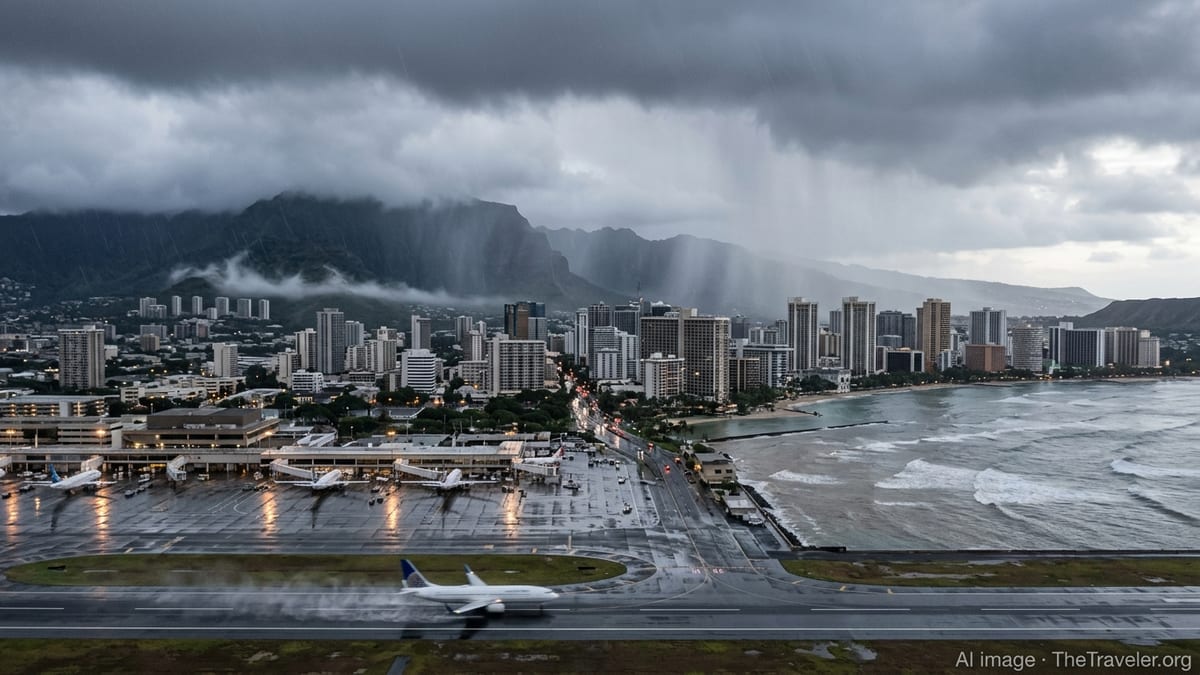
Severe Kona Low Batters Islands With Heavy Rain and Flooding
Publicly available weather information shows that a renewed Kona Low system settled near the islands in mid-March 2026, following an earlier round of severe weather. The slow-moving storm has delivered bands of intense rain, thunderstorms and high-elevation snow, with saturated ground dramatically increasing the risk of flash flooding across multiple islands.
Reports from Oahu describe the worst flooding in more than two decades, with muddy floodwaters overtopping streams and canals, damaging homes and inundating low-lying neighborhoods. Evacuation alerts have been issued at different times for communities on Oahu’s North Shore and inland areas as water levels rose rapidly. Images shared in local coverage show vehicles partially submerged and roadways transformed into fast-moving channels of runoff.
On Maui and the island of Hawaii, authorities and local updates describe overflowing retention basins, closed highways and localized landslides. Some areas that were heavily damaged by the 2023 Lahaina wildfire are now dealing with the opposite extreme, as burn scars and altered landscapes increase vulnerability to debris flows when heavy downpours hit steep slopes.
Social media and local forums indicate that coastal water quality has deteriorated around parts of the state, with brown-water conditions and multiple advisories in effect following days of intense rainfall. Stormwater runoff carrying sediment and pollutants has been washing into popular beaches, raising concerns for visitors planning to swim or surf during what is usually a busy spring holiday period.
State of Emergency and Ongoing Power and Infrastructure Disruptions
A statewide emergency proclamation issued earlier in March in anticipation of the Kona Low remains a key tool for coordinating response. The document, published by the governor’s office, notes that the storm system was forecast to bring heavy rain, damaging winds, flooding and road closures from March 10 through at least March 15, with subsequent extensions as conditions evolved.
According to publicly released utility updates, tens of thousands of customers have experienced power outages at various points during the event. Hawaiian Electric’s latest statements describe more than 30,000 customers without electricity at the height of the storm across Oahu and Maui County, with crews hampered by downed lines, fallen trees, mud and blocked access roads. Restoration is proceeding but remains uneven, particularly in rural and upland communities.
Transportation infrastructure has also come under strain. A major high-voltage transmission line problem prompted the closure of a section of the H-3 Freeway on Oahu, contributing to additional traffic backups as residents and visitors attempted to navigate around flood-prone corridors. Local reports from Maui and the island of Hawaii mention closures and delays on key routes including portions of Highway 11 and other coastal or mountain roads where runoff crosses pavement or undercut shoulders.
County announcements in recent days have highlighted the opening of emergency shelters for both residents and visitors in flood-affected areas, particularly on the island of Hawaii. Guidance has stressed that anyone using such shelters should bring basic provisions such as bedding, food, water, medications and pet supplies, reflecting the possibility of extended disruption while rainfall continues.
Flight Delays, Cancellations and Crowded Airports for Spring Break Travelers
The timing of the storm has been especially challenging for travelers, coinciding with peak March spring break traffic from the mainland United States and abroad. Airline schedule trackers and traveler accounts indicate a growing wave of delays and cancellations affecting major airports including Honolulu, Kahului on Maui and Ellison Onizuka Kona International Airport on the island of Hawaii.
Passengers have reported extended ground holds, diversions and irregular operations as airlines navigate rapidly changing conditions, from low cloud ceilings and gusty crosswinds to intermittent runway flooding and power issues in surrounding areas. Some travelers departing for mainland cities describe sitting at gates for several hours while aircraft were repositioned or maintenance checks were completed after earlier weather impacts.
Discussion in public travel forums suggests that connection windows are tightening across the network as disruptions ripple outward. Travelers with interisland connections or onward international flights are being advised through airline advisories and informal online updates to monitor their flight status frequently, build in extra time at airports and be prepared for last-minute gate changes or schedule adjustments.
Accommodation plans are under pressure as well. Recent posts from visitors on Maui detail difficulties securing flexible refunds or changes from some vacation rentals, especially in flood-affected zones such as parts of Kihei. With some roads closed and localized damage still being assessed, travelers are weighing whether to proceed, reroute to less impacted islands or postpone trips altogether.
What Visitors Currently in Hawaii Should Expect
For travelers already on the islands, day-to-day plans are being reshaped by weather alerts, road closures and changing conditions at popular attractions. Local weather briefings circulated online highlight continuing flood watches across multiple islands, along with winter storm warnings for the higher summits of the island of Hawaii, where significant snow and ice have made access roads hazardous or impassable.
Visitors in resort areas including Waikiki, Ko Olina, Kihei and parts of Kauai are encountering intermittent heavy rain squalls, strong winds and, in some locations, short-notice advisories to avoid certain roads or low-lying neighborhoods. Tourism-focused community groups are urging guests to stay off the roads during the most intense downpours, avoid driving through standing water and heed barricades where crews are working or water levels remain high.
Beach and ocean activities are also being curtailed. State and county health advisories, as summarized in local reporting, recommend avoiding brown or murky water for at least 72 hours after heavy rain due to the potential presence of storm runoff and sewage contamination. This guidance particularly affects stream-fed beaches, nearshore reefs and popular snorkeling areas, where visibility and water quality can be significantly reduced.
Indoor attractions, cultural sites and shopping districts are, in many cases, continuing to operate, though with reduced hours or weather-related adjustments. Travelers are turning to museums, aquariums and hotel-based programs as alternatives when hiking trails, scenic drives and boat tours are canceled or deemed unsafe by operators due to high surf, strong winds or flooding at access points.
Planning Ahead: Guidance for Upcoming Spring Break Trips
With the Kona Low still influencing Hawaii’s weather through the weekend of March 22, 2026, trip planners for late March and early April are closely watching forecasts. National Weather Service outlooks suggest that while the most intense rainfall may gradually ease, lingering instability could keep showers and localized thunderstorms in the picture even as the broader pattern improves.
Travel experts and consumer advocacy outlets recommend that anyone with upcoming flights to or from Hawaii review airline change policies, consider travel insurance that covers weather disruptions, and confirm accommodation flexibility in case particular regions remain affected by flooding or infrastructure damage. Some carriers have introduced limited weather waivers during the storm window, allowing changes without fees for affected dates and routes.
Prospective visitors are also being urged, through publicly available advisories and online community resources, to think carefully about planned driving routes such as the Road to Hana on Maui or remote coastal roads on Kauai and the island of Hawaii. Even after rain diminishes, landslide risk, downed trees and washed-out shoulders can persist, and local authorities may maintain closures while engineers inspect bridges and slopes.
For those determined to keep their spring break plans, flexibility remains the central theme. Monitoring updated forecasts, checking in with lodging providers, and preparing for a mix of indoor and outdoor options can help travelers adapt as the Kona Low slowly pulls away from the islands. While Hawaii remains open to visitors, this latest winter storm underscores how quickly conditions can change in the Pacific, and how essential it is for travelers to stay informed throughout their journey.