

More news on this day
Hawaii’s tourism revival in early 2026 is colliding with a new climate reality, as a series of powerful winter storms bring flooding, power outages and thousands of trip cancellations across the islands just as visitor numbers begin to recover.
Get the latest news straight to your inbox!
Record Kona Storms Upend Peak-Season Travel
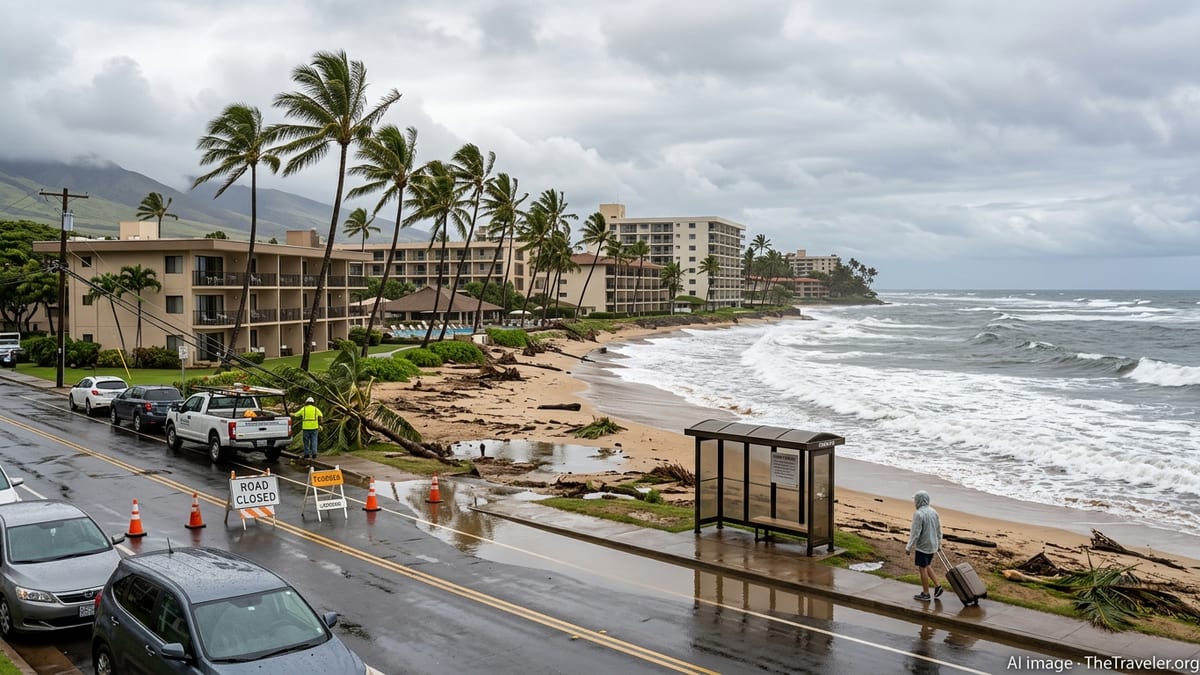
A succession of kona storms in late winter 2025 and early 2026 has battered Hawaii with heavy rain, high surf and damaging winds, disrupting air travel, shuttering attractions and knocking out power in multiple communities. Publicly available reports describe flooded roadways, landslides and extended utility outages on Oahu, Maui and Hawaii Island, forcing hotels and tour operators to suspend or scale back operations.
On Maui, local coverage indicates that bus links between East Maui and central hubs were suspended for nearly two weeks in March 2026 because of storm damage and flooding, severing a vital connection for residents and visitors. The disruptions coincided with a traditionally busy travel period, compounding the financial hit from earlier cancellations as the initial system swept the state.
Industry analyses cited by regional business media estimate that the most recent major storm alone erased roughly 35 million to 40 million dollars in hotel bookings and related spending, once lost room nights, restaurant closures and retail shutdowns are included. For an economy where visitor expenditure is a central pillar, the figure underscores how single weather events can now erase the gains of an entire shoulder season.
Travel advisories and images of flooded resort areas have also contributed to a wave of voluntary cancellations from would-be visitors on the U.S. mainland and in key overseas markets. While many airlines have offered flexible rebooking policies, hoteliers and small operators report that some of those trips are being deferred into late 2026, while others are simply being abandoned.
Visitor Numbers Rise, But Volatility Grows
Despite the storms, government tourism statistics for January 2026 point to a sector that had been cautiously regaining ground before the latest round of extreme weather. State economic data show nearly 875,000 visitor arrivals that month, with total spending up from a year earlier and several islands reporting higher per-visitor outlays.
Forecasts from Hawaii’s Department of Business, Economic Development and Tourism released in early 2026 project visitor arrivals to grow at roughly 2 percent annually between 2026 and 2028, suggesting confidence in the long-term appeal of the islands. A Hawaii Tourism Authority board briefing published in January 2026 similarly outlines incremental gains across core markets, led by the U.S. mainland, even as Japanese and some other international segments remain below pre-pandemic levels.
At the same time, climate and economic outlooks compiled by federal and university researchers warn that the state faces elevated risks from heavy rain events, marine heat waves and sea level anomalies in the 2025 to 2026 period. Seasonal assessments for the central Pacific highlight the potential for more intense rainfall episodes and localized flooding, especially during winter, which increasingly overlap with Hawaii’s visitor high season.
For tourism planners, the result is a paradoxical picture: headline visitor numbers and spending show gradual recovery from the Covid-19 downturn and the trauma of the 2023 Maui wildfires, yet each new storm season brings the possibility of abrupt, costly reversals. That volatility is now shaping how airlines schedule capacity, how hotels manage inventories and how travel insurers price Hawaii-bound policies.
Climate Tourism Taxes Face First Real Stress Test
The storms are also arriving just as Hawaii implements a high-profile shift in how it funds climate and disaster resilience. Legislation approved in 2025 raised the state’s transient accommodations tax and introduced an additional climate-focused levy on hotel stays, vacation rentals and cruise passengers, a system widely described as a “green fee” in national coverage.
A federal court ruling in late 2025 cleared the way for the new tax structure to take effect on 1 January 2026, including an 11 percent charge on gross cruise fares prorated for days spent in Hawaiian ports. Lawmakers have said in public budget documents that they intend to direct much of the new revenue toward shoreline restoration, wildfire fuel reduction and storm-hardening projects such as reinforcing roofs and upgrading drainage.
The series of winter storms is now providing an early test of whether that strategy can keep pace with mounting climate impacts. While detailed spending plans are still being refined, state and county agencies are under pressure to show that money collected from visitors is translating into tangible protections for the very beaches, roads and coastal communities tourists rely on.
Industry groups have expressed concern in public statements that higher lodging and cruise taxes could deter price-sensitive travelers, particularly from long-haul markets already facing elevated airfares. Yet the recent wave of cancellations has also strengthened arguments from environmental and community organizations that tourism must help shoulder the costs of adapting to a more hazardous climate regime.
Maui’s Uneven Recovery Meets New Weather Shocks
Nowhere is the intersection of disaster recovery and climate risk more visible than on Maui. The island is still grappling with the aftermath of the August 2023 Lahaina wildfire, which devastated a historic town and led to a prolonged slump in arrivals. Research from the University of Hawaii Economic Research Organization, cited in national travel coverage in 2024, projected that Maui would see hundreds of thousands fewer visitors in 2025 compared with pre-fire levels.
Local ordinances adopted in 2025 to phase out a large share of short-term vacation rentals in West Maui, partly to free up housing for displaced residents, have also reshaped the island’s tourism capacity. While many hotels in resort corridors such as Kaanapali have reopened and reoriented their marketing, rental inventory in some neighborhoods is shrinking, changing where and how visitors stay.
The recent kona storms have added a further layer of disruption. Reports from Maui media outlets describe flooding and access issues in Kihei and along key coastal roads, forcing the temporary relocation of retail and hospitality workers and heightening visitor concerns about travel logistics. The suspension of bus routes between Hana and central Maui after storm damage in March 2026 highlighted how quickly weather can isolate rural communities that also serve as visitor gateways.
For Maui’s tourism operators, the challenge is to reassure potential guests that most of the island remains open and welcoming, while also guiding them away from sensitive recovery zones and areas prone to flooding or landslides during storms. That balancing act is central to broader debates about how much growth the island can sustain as it rebuilds and how to spread visitor demand more evenly across seasons and regions.
Turning Cancellations into a Blueprint for Resilience
As cancellations mount, Hawaii’s tourism industry is accelerating efforts to adapt. Travel companies are promoting flexible booking policies and encouraging visitors to purchase comprehensive travel insurance that covers weather-related disruptions. Some large hotel groups have begun highlighting emergency preparedness measures and backup power capabilities in their marketing materials, aiming to reassure guests wary of being stranded during future storms.
Destination managers and community organizations are also seizing the moment to push for a more resilient and regenerative model of tourism. Policy papers and conference presentations circulating in early 2026 emphasize dispersing visitors beyond a handful of crowded corridors, investing in nature-based defenses such as reef and dune restoration, and designing itineraries that are less vulnerable to the closure of a single scenic road or trail.
For travelers, the evolving situation means that trips to Hawaii in 2026 may look a little different. Itineraries are more likely to include contingency plans, from alternative excursions inland to stays split across multiple islands or neighborhoods. Visitors are being encouraged to treat storms not simply as a travel inconvenience but as part of a larger climate story in which their spending, behavior and advocacy can influence how Hawaii rebuilds.
With forecasts pointing to modest growth in visitor arrivals over the next several years, the central question is no longer whether Hawaii’s tourism sector will rebound, but how it will adapt. The record storms and cascading cancellations of early 2026 are emerging as a pivotal chapter in that transition, revealing both the vulnerabilities of a weather-dependent economy and the possibilities of a climate-smart path forward.