

More news on this day
Hawaii’s visitor economy is facing renewed disruption in March 2026 as a powerful Kona low storm unleashes severe flooding, power outages, and infrastructure damage across multiple islands, forcing airlines, hotels, and travelers to rapidly adjust plans at the height of the spring travel season.
Get the latest news straight to your inbox!
Historic Kona Low Brings Widespread Flooding and Evacuations
A Kona low system that intensified in mid-March 2026 has produced some of the most damaging flooding Hawaii has seen in years, with intense, slow-moving bands of rain soaking every major island. Publicly available weather and government bulletins describe extensive flash flooding, washed-out roadways, and landslides, particularly on windward and low-lying coastal areas where drainage systems were quickly overwhelmed.
On Hawaii Island, reports indicate communities from Hilo to Kona have faced repeated deluges, prompting the opening of county shelters for both residents and visitors as of March 13. Low-lying neighborhoods have seen water inundate homes and businesses, while unstable slopes in rural districts increased the risk of landslides and debris flows, complicating ground transportation and emergency access.
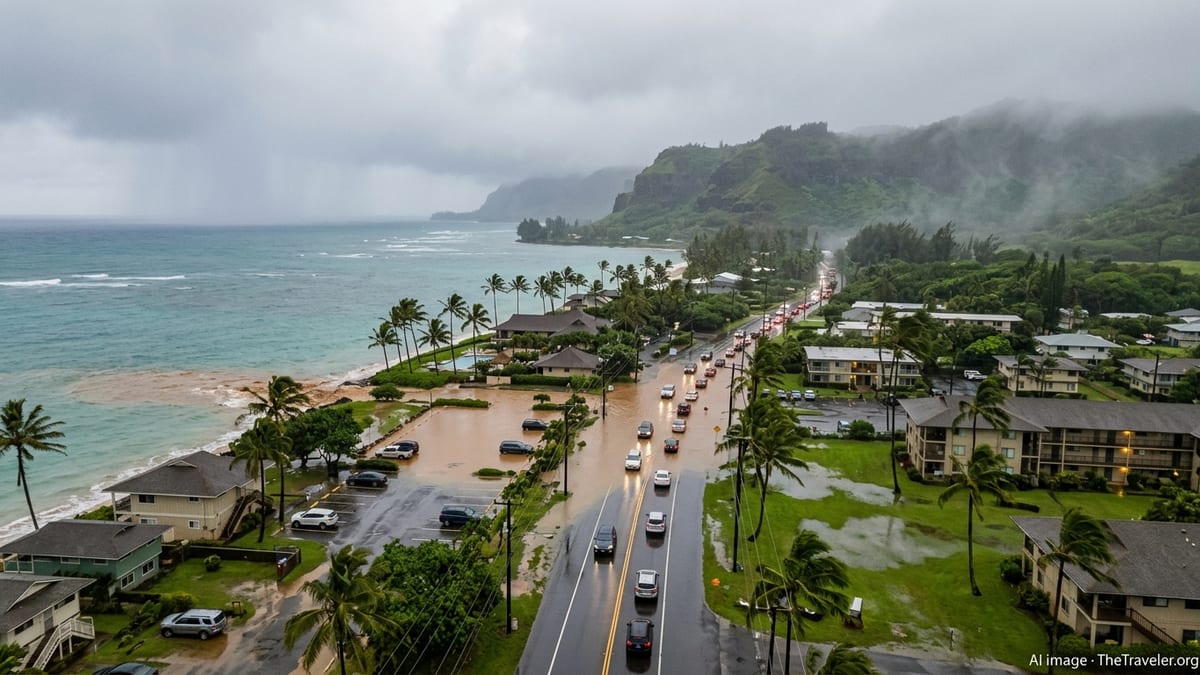
Oahu’s North Shore and parts of central and windward Oahu have also been hit hard, with images shared across local and national coverage showing homes surrounded by muddy water and vehicles stranded on partially submerged roads. Accounts from travelers and residents describe “brown water” conditions off popular beaches as runoff from saturated watersheds continues to pour into the ocean, triggering health advisories along several shorelines.
Statewide, the storm has coincided with a period of already above-average rainfall, producing what meteorologists characterize as a historic and prolonged wet pattern more commonly associated with winter than with the approaching summer tourism build-up.
Flight Cancellations, Power Outages and Delays Disrupt Visitor Travel
The flooding and high winds associated with the Kona low have rippled quickly through Hawaii’s transportation network. Airlines serving Honolulu, Kahului, Lihue, Hilo, and Kona airports have issued weather-related waivers and, according to published airline and airport updates, canceled or delayed dozens of flights on peak storm days as crews contend with lightning, low visibility, and localized runway and access road flooding.
Hawaiian Electric and other utilities have reported widespread power outages since March 15, particularly on Oahu and parts of Maui and Hawaii Island, after the storm toppled trees and damaged poles and lines. Restoration crews have been working through hazardous conditions, but intermittent blackouts have affected hotels, vacation rentals, and small businesses, leading to reduced services, backup generator use, and temporary closures in some heavily affected districts.
With roadways in several areas temporarily closed by flash flooding and rockfalls, shuttle services, rental car operations, and inter-island transfers have all experienced knock-on delays. Travelers arriving to find blocked routes to resort areas have been forced to reroute or overnight in alternative locations, while some inter-island trips have been cut short or redirected to less affected islands.
Online forums and travel advisories describe a patchwork of conditions: relatively normal operations in parts of Waikiki and south Maui, contrasted with heavily disrupted access to remote coastal communities, scenic drives, and rural attractions that are central to many visitor itineraries.
Iconic Attractions Close as Safety Warnings Mount
As the storm’s impacts have mounted, access to many of Hawaii’s marquee natural attractions has been significantly curtailed. Publicly available park and county notices indicate that sections of the Road to Hana on Maui have been closed due to landslides, fallen trees, and ongoing flash flood risk, leaving visitors with reservations in the Hana area uncertain about when, or if, they can safely travel.
High-elevation destinations such as Haleakala National Park have also faced periodic closures or restrictions as saturated slopes raise concerns about rockfall, erosion, and treacherous driving conditions on steep, winding access roads. Hiking trails across Oahu, Maui, Kauai, and Hawaii Island have been described as muddy, washed out, or unsafe, prompting land managers and local communities to urge visitors to stay off popular routes until conditions stabilize.
Ocean-based activities, usually a cornerstone of Hawaiian vacations, are constrained by a growing number of brown water advisories as storm runoff carries sediment, debris, and potential contaminants into the nearshore environment. Public health guidance warns that these conditions can pose elevated risks for illness and injury, and travelers are being encouraged to prioritize hotel pools or alternative activities when advisories are in effect.
The result is a markedly different experience for visitors who planned snorkeling trips, surf lessons, waterfall hikes, or coastal road excursions. Many are pivoting to urban dining, shopping, and cultural attractions where operations remain closer to normal, particularly in Honolulu and resort cores that have been spared the worst flooding.
Tourism Industry Faces Fresh Setback Amid Slowing Demand
The March 2026 Kona low comes at a challenging moment for Hawaii’s visitor industry, which has already been grappling with softer global demand, weaker currencies in key markets, and a gradual cooling of post-pandemic travel. Recent economic forecasts from University of Hawaii researchers and state agencies anticipated a decline in visitor arrivals and spending through mid-2026, even before the latest weather emergency.
Past events such as Hurricane Lane and historic flooding on Kauai in 2018 showed that severe storms can temporarily depress visitor numbers, particularly to hardest-hit islands, while also accelerating longer-term debates about destination resilience, infrastructure investment, and sustainable visitation levels. Analysts are now watching closely to see whether images of flooded homes, closed attractions, and stranded travelers in March 2026 further dampen bookings into the summer and fall.
Some properties in less affected zones are still welcoming guests and highlighting clearer skies between storm bands, but cancellations and rebookings are rising as travelers reconsider near-term trips. Travel insurance coverage, flexible airline policies, and refund terms for tours and accommodations are emerging as decisive factors for visitors deciding whether to postpone or proceed.
The broader economic impact will depend on how long key attractions remain closed, the speed of infrastructure repairs, and whether the state experiences additional heavy rain events during what is normally a prime period for mainland and international arrivals.
Travelers Urged to Monitor Conditions and Adjust Plans
For travelers with upcoming trips, publicly available guidance from state and county agencies emphasizes flexibility and real-time information. Airlines and airports are recommending that passengers monitor flight status closely, sign up for mobile alerts, and build extra time into connections in case of weather-related disruptions or road delays between lodging and terminals.
Local emergency management updates are encouraging visitors to avoid nonessential travel in areas under flash flood warnings, to steer clear of streams, river crossings, and flooded roadways, and to heed beach closures and brown water advisories. Tour operators are revising itineraries day by day, shifting from exposed mountain and coastal routes to more controlled environments or pausing operations altogether when conditions deteriorate.
Destination marketing and tourism agencies are simultaneously working to reassure future visitors that many parts of Hawaii remain accessible while underscoring the importance of not adding pressure on communities engaged in cleanup and recovery. Travelers are being urged to respect local guidance, stay away from heavily damaged neighborhoods, and prioritize businesses and experiences that can operate safely.
With forecasts indicating the potential for additional periods of heavy rain, the situation remains fluid. For now, Hawaii’s spring 2026 tourism picture is defined by contrasts: resilient resort districts and open urban attractions on one hand, and storm-battered rural coastlines and closed backcountry trails on the other, all under the shadow of a historic Kona low that has once again tested the islands’ capacity to welcome visitors in a time of climate-intensified extremes.