

Understanding “Central London” and How Long the Journey Really Takes
Before choosing a route, it helps to define what “Central London” means in practice. For most visitors, this usually includes popular areas such as Paddington, Marylebone, Oxford Circus, Soho, Covent Garden, Westminster, Victoria, London Bridge, and the City around Bank and St Paul’s. When you see journey times advertised, they usually refer to getting as far as Paddington or to a single central station, not necessarily to your hotel’s front door.
Heathrow is about 24 kilometers west of central London. On a good day, a direct train can reach Paddington in roughly 15 minutes, while the London Underground takes closer to 50 minutes to reach central stations like Piccadilly Circus or Covent Garden. Road journeys can vary widely. Late at night you might cover the distance in 40 minutes by taxi, but during the weekday afternoon peak it can stretch to 75 minutes or more.
Your arrival time plays a big role. A flight that lands at 07:30 on a weekday means clearing immigration, collecting luggage, and traveling during the morning rush, when roads are busiest and certain rail fares are at peak levels. By contrast, landing around 21:00 often means quieter roads, more available taxis, and less crowding on trains, even if journey times are slightly longer due to reduced frequencies.
Another key factor is luggage and mobility. A solo traveler with a small backpack has very different needs from a family of four with two large suitcases each. Some options, like the Piccadilly line, are cheap but involve stairs and busy carriages. Others, like Heathrow Express or a private transfer, cost more but offer level boarding, luggage racks, and easier access for those with strollers or limited mobility.
Heathrow Express: Fastest Rail Option to Paddington
Heathrow Express remains the dedicated non stop train between Heathrow and London Paddington. Typical journey time is about 15 minutes from Terminals 2 and 3, slightly longer from Terminal 5 once you factor in the short extra ride, making it the quickest public transport link into central London for many travelers who are staying near Paddington or need to connect to onward rail services from that station.
In 2026, a standard adult single bought on the day often costs in the region of 25 to 28 pounds. Advance purchase fares can be significantly cheaper, sometimes dropping to roughly the low to mid teens when booked ahead for specific trains, especially outside the busiest times. Children frequently travel for free with a paying adult, which can make the total for a family surprisingly competitive compared with four separate Tube fares.
Heathrow Express is popular with business travelers because of its luggage space, power sockets, and more spacious seating. For example, a traveler arriving from New York at Terminal 3 at 08:00 with only a cabin bag, staying at a hotel just north of Hyde Park, could be at Paddington by around 09:00 after clearing immigration and customs, then in a black cab to their hotel in 10 to 15 minutes, depending on traffic.
The main drawback is cost, especially for solo travelers on a tight budget or those who still need to change to the Underground or a taxi after Paddington. If your final destination is somewhere like London Bridge, Waterloo, or King’s Cross, Heathrow Express is often the fastest first leg, but you must add a second Underground or taxi fare and a transfer across platforms or stations.
Elizabeth Line: Best Balance of Speed, Coverage, and Cost
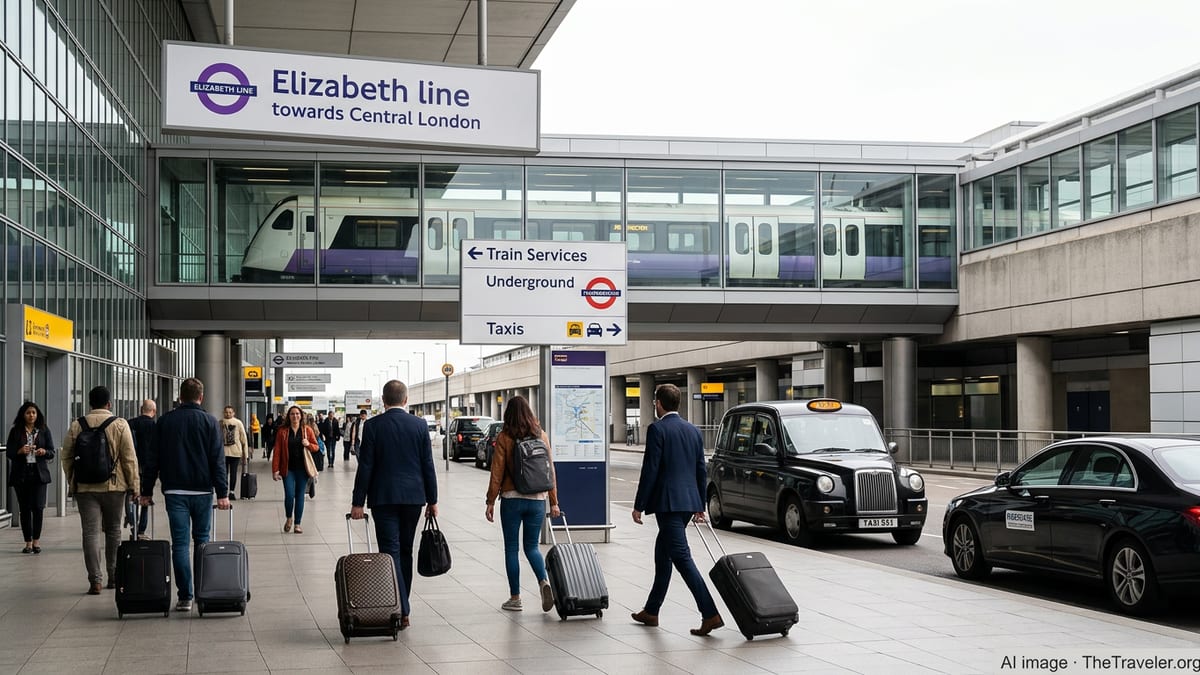
The Elizabeth line connects Heathrow directly with key central hubs including Paddington, Bond Street, Tottenham Court Road, Farringdon, Liverpool Street, and Canary Wharf. For many visitors in 2026 it offers the best balance between speed, comfort, and price. Trains are air conditioned, fairly spacious, and have level boarding that makes rolling suitcases on and off relatively easy.
Typical journey times from Heathrow to central stations are around 30 minutes to Paddington, just over 30 minutes to Tottenham Court Road, and roughly 40 minutes to Liverpool Street or Canary Wharf. Services run every few minutes during the day, with slightly longer gaps late in the evening. Most travelers pay with contactless bank cards or Oyster, tapping in at Heathrow and out at their destination. As of early 2026, a contactless single from Zone 1 to Heathrow on the Elizabeth line generally sits in the mid teens, with fares to and from Heathrow always charged at peak rates when a Zone 1 station is involved.
For example, a couple landing at Terminal 5 around 10:00 and staying in Soho can board an Elizabeth line train from the terminal station, ride directly to Tottenham Court Road in about 35 minutes, and walk or take a short taxi to their hotel. Their combined fare is usually significantly lower than two Heathrow Express tickets plus a taxi across central London, and the total journey time door to door may be similar.
The main compromises are crowding at busy times and limited dedicated luggage racks. Morning and late afternoon peaks can see very full carriages through central stations, which may feel uncomfortable if you have multiple large bags. That said, for many visitors who want a relatively quick and modern train that goes close to where they are staying, the Elizabeth line has become the de facto standard choice.
Piccadilly Line: Cheapest Direct Route on the Tube
The Piccadilly line offers the most affordable direct rail route from Heathrow to central London for most travelers. Trains run from all Heathrow terminals into central stations such as Hammersmith, Earl’s Court, South Kensington, Knightsbridge, Green Park, Piccadilly Circus, Leicester Square, Covent Garden, and Holborn. Journey time from Heathrow to central stations like Piccadilly Circus is typically around 50 minutes, sometimes a little more during busy periods when trains wait longer at platforms.
In 2026, a single adult fare using contactless or Oyster from Heathrow (in Zone 6) to Zone 1 on the Piccadilly line is usually under 6 pounds. All Heathrow Tube journeys involving Zone 1 are charged at peak fare levels, but even with that premium the Piccadilly line remains the cheapest daytime option other than buses. A family of four tapping in with contactless cards might pay roughly the cost of one standard Heathrow Express ticket for all four, depending on caps and children’s concessions.
This makes the Piccadilly line especially attractive to budget travelers and solo visitors staying directly on or near the line, for example in Earl’s Court, South Kensington, or Holborn. A backpacker heading to a hostel near Russell Square can ride the Piccadilly line almost door to door, walking less than 10 minutes from Holborn or Russell Square station, and only paying a fraction of the cost of a taxi.
The trade offs are comfort and accessibility. Piccadilly line trains are older, often busy, and have limited space for large suitcases. Many central London stations still involve stairs or narrow escalators, and there may be long walks between platforms and exits. If you are traveling with a stroller, mobility issues, or multiple heavy bags, the savings may not be worth the physical effort, particularly during the weekday rush hours when carriages between Hammersmith and Holborn can be very crowded.
Taxis, Rideshares, and Private Transfers: Door to Door Convenience
For travelers who prioritize convenience and comfort, taxis and car services remain a key option. Official London black cabs wait at ranks outside each terminal and can be hired on the spot without pre booking. In 2025 and into 2026, a typical metered fare from Heathrow to central London often falls somewhere between about 75 and 110 pounds, depending on traffic, exact destination, time of day, and any surcharges such as the airport drop off fee added to the meter.
Ride hailing services and pre booked private transfers can be noticeably cheaper than a black cab while still providing door to door service. In 2026, many travelers report Uber style rides from Heathrow to central districts like Soho or South Bank coming in somewhere around 35 to 70 pounds for standard cars in off peak times, with higher prices during surge periods or heavy traffic. Dedicated airport transfer companies may offer fixed prices, for instance a quote in the mid 50s for a car from Heathrow to a hotel near Victoria, including waiting time and parking.
These prices can be very good value for groups. A family of four staying in South Kensington might find that a pre booked car for, say, 60 pounds is competitive with four separate public transport tickets, especially if they arrive late at night when rail options are less frequent. The ability to put luggage straight into the boot at the terminal and step out right at the hotel entrance often outweighs the extra cost compared with the Tube.
The main risk is unpredictability. Road journeys are heavily affected by congestion on routes like the M4, A4, and Westway. A trip that takes 45 minutes at 21:00 on a Sunday might stretch to 90 minutes or more on a rainy weekday afternoon. Surge pricing with rideshare apps can also push fares into black cab territory during busy periods or major events. Travelers with tight onward rail connections from central London may prefer the reliability of train options even if they are less comfortable with luggage.
Buses and Coaches: Lowest Cost, But Slowest
Local buses and long distance coaches offer the lowest cash prices for getting from Heathrow to central London, though usually with longer journey times and more complex routes. Within London, regular daytime buses from Heathrow mainly serve West London neighborhoods rather than the heart of the city, so most visitors aiming for central districts would need at least one change, making bus only daytime journeys less practical for new arrivals with luggage.
During the night, however, bus routes such as the N9 provide a direct link between Heathrow and central areas including Trafalgar Square. As of 2026, a single bus fare on London’s contactless system is generally under 2 pounds, and night bus services may be particularly attractive for solo travelers landing after the last Tube or Elizabeth line connections.
For those heading towards Victoria Coach Station or other intercity terminals, long distance coach companies operate services between Heathrow and central London. Journey times can vary from about 45 minutes in light traffic to well over an hour during busy periods. Typical adult one way fares on these coaches often fall somewhere in the 6 to 15 pound range, depending on time of day, how far in advance you book, and whether you are traveling at a peak holiday period.
Coaches generally offer more comfortable seats and luggage storage under the floor, which can be welcome after a long flight. The trade off is schedule dependence and traffic. If your flight is delayed and you miss a timed coach departure, you may need to pay to change your ticket or wait for the next available seat. And like taxis, coaches are at the mercy of motorway congestion, particularly during Friday evenings and holiday getaways.
Oyster, Contactless, and Capping: Paying Smart for Your Journey
For almost all rail, Tube, and bus options between Heathrow and central London, the simplest way to pay in 2026 is with a contactless bank card or mobile wallet. You tap in at the start of your journey and tap out at the end, and the system automatically charges the correct fare. Visitors staying several days often find that daily and weekly caps make the overall cost of using public transport significantly more manageable.
It is important to understand that not all Heathrow services are treated the same way. The Piccadilly line and Elizabeth line journeys to and from Heathrow are included within Transport for London’s fare system and are subject to capping, but Heathrow Express runs on separate pricing and is not covered by normal Oyster or contactless caps. That means a single Heathrow Express ride can cost more than the entire day’s cap for multiple Tube and bus trips within Zones 1 to 6.
For example, a visitor staying in Covent Garden for three days might arrive at Heathrow and take the Piccadilly line to Holborn, then use the Tube and buses several times each day for sightseeing. By tapping in and out with the same contactless card, their total daily spend will stop once it reaches the Zone 1 to 6 cap. If the same visitor instead bought a separate Heathrow Express ticket plus pay as you go Tube and bus rides, the combined cost over three days would almost certainly be higher.
Buying a physical Oyster card is still an option, but many new arrivals skip this and simply use the contactless card they already have in their wallet or phone. One important tip is to use the same card or device for all your taps during a stay; swapping between different cards spreads your journeys across multiple accounts and prevents the capping system from working properly.
Which Option Is Best for You? Real World Scenarios
The “best” way from Heathrow to central London depends heavily on your situation. Consider these common scenarios as a guide. A solo business traveler landing at Terminal 5 at 08:00 on a Tuesday, staying near Paddington and needing a quick shower before a 10:30 meeting in the City, might value time above all. In that case, Heathrow Express to Paddington followed by a short taxi or Elizabeth line ride east could justify the higher fare, especially if paid by corporate travel policy.
A couple visiting London for a long weekend, arriving midday on a Friday and staying in Covent Garden, often find the Elizabeth line offers the best balance. One practical plan is to take the Elizabeth line from Heathrow to Tottenham Court Road, walk 10 minutes to their hotel, and use contactless payment for all journeys. They would enjoy a fast, comfortable ride, avoid an interchange at Paddington, and pay a mid range fare that is easier to justify than a taxi stuck in Friday traffic.
A family of four with two teenage children arriving from Europe at 21:30 and staying in Earl’s Court might find that a pre booked car is the easiest solution. By the time they clear passport control and collect luggage, Tube and Elizabeth line services are less frequent and everyone is tired. A fixed price transfer of, say, 60 to 70 pounds split between four people can be worth the premium over crowded late night trains and the stress of moving multiple suitcases through interchange stations.
Budget conscious solo travelers, especially those familiar with big city metros, will likely gravitate towards the Piccadilly line. A backpacker arriving midday and staying in a hostel near King’s Cross can ride the Piccadilly line to King’s Cross St Pancras in about 55 minutes for roughly the cost of a coffee in central London, and use the savings for experiences once they arrive.
The Takeaway
No single Heathrow to central London option suits everyone. Heathrow Express is fastest but also the most expensive, ideal when time and simplicity to Paddington matter more than cost. The Elizabeth line has emerged as the go to choice for many visitors, combining reasonable journey times, modern trains, and direct access to several popular central districts for a mid range fare.
The Piccadilly line remains the champion for low cost travel, particularly if your accommodation lies along the route and you are comfortable managing luggage on a busy Underground line. Taxis, rideshares, and private transfers deliver unmatched door to door convenience at a higher but often justifiable price, especially for groups or late night arrivals. Buses and coaches fill useful niches for overnight travel and budget focused journeys to specific hubs like Victoria.
When planning your route, think carefully about your arrival time, the amount and weight of luggage you have, who you are traveling with, and exactly where in London you need to be. Build in extra time if you are landing during peak hours, and keep a flexible backup plan in mind in case of rail disruption or heavy traffic. With realistic expectations and a clear sense of priorities, you can step off the plane at Heathrow knowing exactly which option will get you into the city in a way that fits your budget and your travel style.
FAQ
Q1. What is the fastest way to get from Heathrow to Central London?
The fastest regular option is usually Heathrow Express, taking about 15 minutes to reach Paddington once you are on the train. The Elizabeth line is slightly slower but still quick and often more convenient for many central destinations.
Q2. What is the cheapest way to travel from Heathrow to Central London?
The cheapest daytime option for most visitors is the Piccadilly line on the London Underground, with a single fare typically under six pounds when using contactless or Oyster. Overnight, the N9 night bus can be even cheaper, but it is slower and less convenient with large luggage.
Q3. Is the Elizabeth line better than Heathrow Express?
The Elizabeth line is usually better value because it is significantly cheaper and goes directly to several central stations beyond Paddington. Heathrow Express is faster and more comfortable for the short run to Paddington but costs more and often requires an additional connection.
Q4. How much does a taxi from Heathrow to Central London cost?
In 2025 and 2026, a typical black cab fare from Heathrow to central areas such as Soho, Westminster, or the City often falls somewhere between about 75 and 110 pounds, depending on traffic, route, and time of day. Pre booked private cars and rideshares are often cheaper.
Q5. Can I use my contactless bank card instead of buying an Oyster card?
Yes. Most visitors now use contactless bank cards or mobile wallets to pay for the Tube, Elizabeth line, and buses. Just tap in and out with the same card or device so that daily capping works correctly. You still need a separate ticket for Heathrow Express.
Q6. Which option is best if I have a lot of luggage?
If you have multiple large suitcases or are traveling with children, the Elizabeth line, Heathrow Express, or a pre booked private transfer are usually more comfortable. The Piccadilly line can be difficult with heavy luggage, especially during rush hour and at stations with many stairs.
Q7. What should I do if my flight arrives late at night?
Late at night, check the last Elizabeth line and Piccadilly line departure times before you travel. If trains have finished or are infrequent, a pre booked car or taxi is often the safest and simplest option. Night buses can work for budget travelers who are confident with London’s transport system.
Q8. Is it worth buying a Travelcard just for the Heathrow journey?
Buying a paper Travelcard only for the airport trip rarely makes sense. It is usually better to pay with contactless or Oyster for the Heathrow journey and then decide later if a multi day Travelcard suits your plans, based on how often and how far you will travel within the city.
Q9. How long should I allow to reach my central London hotel from Heathrow?
As a general rule, allow around 60 to 90 minutes from scheduled landing to reaching a central hotel if you use the Elizabeth line or Piccadilly line, and 70 to 100 minutes if you rely on a taxi or rideshare during busy daytime periods. At very quiet times, journeys can be quicker.
Q10. Which option is best for a family with children?
For families, the ideal choice depends on budget and the children’s ages. Many families choose the Elizabeth line for its mix of cost, comfort, and direct access, or opt for a pre booked car so that everyone can sit together with luggage stored securely in the boot and no transfers between stations.