

More news on this day
Hundreds of air travelers across the United Kingdom, the Netherlands and mainland Europe are facing extended waits and unexpected overnight stays after a fresh wave of disruption at London Heathrow and Amsterdam Schiphol led to around 40 flight cancellations and more than 330 delays, with knock-on effects reported at airports including Nuremberg, Geneva, Oslo and Paris.
Get the latest news straight to your inbox!
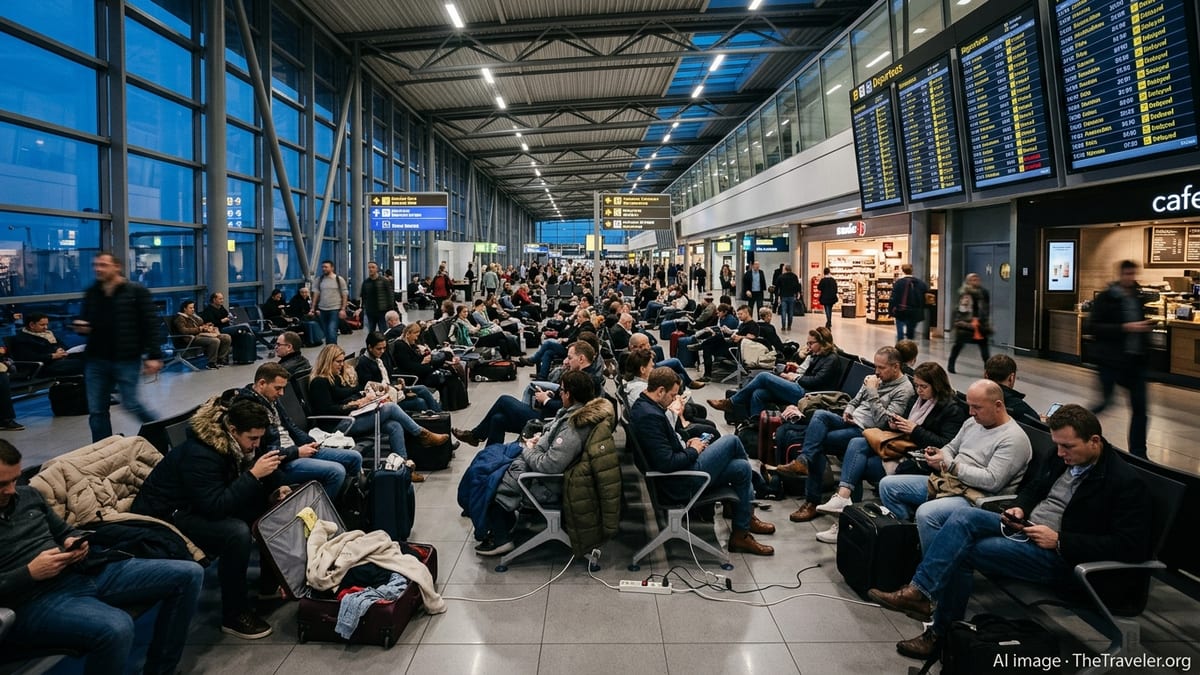
Wave of Cancellations at Key European Hubs
Publicly available flight-tracking data and airport operations dashboards indicate that London Heathrow and Amsterdam Schiphol have been at the center of the latest bout of disruption, with roughly 40 flights canceled and about 335 services delayed over the course of the day. The figures reflect a combination of outbound and inbound services, magnifying the impact on connecting passengers whose journeys rely on tight transfer windows.
The disruption comes as both airports continue to struggle with a volatile mix of winter weather, high traffic volumes and stretched ground operations. Previous seasons have already shown how quickly conditions at these hubs can deteriorate when visibility drops or runway capacity is reduced, and current patterns appear to be following a similar template. Even a relatively modest number of canceled departures can generate hours of delays as aircraft and crews fall out of position.
Heathrow and Schiphol are among Europe’s most heavily used transfer airports, handling thousands of daily movements in normal conditions. That status turns local operational issues into network-wide challenges: a missed departure slot in London or Amsterdam can cascade into late arrivals across a string of secondary airports, particularly on short-haul European routes with multiple rotations scheduled on the same aircraft.
Knock-On Effects From Nuremberg to Oslo and Paris
Reports from airline tools and passenger accounts on social platforms show the disruption rippling outward from the two hub airports into a ring of secondary and regional European destinations. Services linking Heathrow and Schiphol to Nuremberg, Geneva, Oslo and Paris have been particularly exposed, with rotations either heavily delayed or removed from schedules as airlines attempt to consolidate operations.
When an early flight out of a hub is delayed by several hours or canceled outright, the aircraft planned to operate later segments often fails to reach its next starting point on time. This can force airlines to cancel or retime departures from outstations such as Nuremberg or Oslo, leaving passengers stranded far from the original source of the disruption. Many affected travelers only discover the wider network problems when they arrive at the airport and find their aircraft still parked at a different European city.
Additional pressure is emerging at larger continental hubs such as Geneva and Paris, where delayed inbound flights from the United Kingdom and the Netherlands are arriving late into already congested evening banks. Ground handling teams are then tasked with turning around aircraft quickly while simultaneously managing spikes of stranded transfer passengers seeking rebooking, accommodation or rerouting via alternative cities.
Multiple European Airlines Hit by Operational Strain
Schedules from several major European carriers are affected, including KLM, SAS, British Airways, Finnair, Iberia and ITA Airways. Publicly accessible information on airline booking systems and airport departure boards shows a pattern of rolling delays, short-notice cancellations and aircraft substitutions across these brands, particularly on intra-European routes of one to three hours.
For hub-and-spoke airlines such as KLM and British Airways, which rely heavily on connecting traffic through Amsterdam and London, any prolonged period of disruption can quickly overwhelm customer-service capacity. When hundreds of passengers from multiple canceled flights require rebooking within a limited window, available spare seats across the network can vanish within minutes, extending the time it takes to find onward options.
Point-to-point focused carriers such as Finnair, Iberia and ITA Airways are also feeling the strain when their aircraft and crews are scheduled to feed or receive traffic from Heathrow or Schiphol. A delayed arrival from London into Helsinki or Rome can ripple into late evening departures to other European or long-haul destinations, increasing the risk that crews will hit legal duty-time limits and forcing airlines to reshuffle rosters at short notice.
Passengers Face Long Queues, Limited Options and Rights Questions
For passengers caught up in the disruption, the immediate reality at terminals across the region has been long queues at transfer desks, crowded seating areas and scarce last-minute hotel rooms around major hubs. Social media posts from stranded travelers describe overnight stays on terminal floors, extended lines for customer assistance and difficulties reaching airline call centers already stretched by earlier weather and technical incidents this winter.
The latest problems have also renewed attention on passenger protections under Europe’s air travel rules, particularly Regulation EC 261/2004, which can provide compensation and care in cases of long delays or cancellations under certain conditions. Consumer advocacy information circulating online is reminding travelers that eligibility often depends on whether the airline can claim “extraordinary circumstances” such as severe weather or airspace restrictions, versus operational or staffing issues within an airline’s direct control.
Travel experts and passenger rights organizations frequently advise documenting arrival and departure times, keeping receipts for meals and accommodation and requesting written confirmation of the reason for a disruption when possible. In recent seasons, similar large-scale events at European hubs have led to waves of claims and, in some cases, legal disputes over whether specific cancellations were unavoidable or preventable within normal operations.
Ongoing Recovery and Outlook for the Coming Days
Based on past large-scale disruptions at Heathrow and Schiphol, recovery typically takes more than a single day even if weather and operating conditions improve relatively quickly. Airlines often need several rotations to reposition aircraft and crews, clear backlogs of aircraft awaiting maintenance checks and restore regular frequencies on key city pairs.
Publicly available operational updates suggest that carriers are trimming some frequencies, merging lightly booked services and prioritizing long-haul departures in an effort to stabilize schedules. While this can help restore predictability on flagship intercontinental routes, it can also mean reduced flexibility for short-haul travelers who depend on multiple daily frequencies between regional cities and major hubs.
Travelers due to fly via Heathrow or Schiphol in the coming 24 to 48 hours are being urged by consumer travel advisories and airport information channels to check the status of their flights frequently, allow extra time at the airport and consider carrying essential items, medications and a change of clothes in hand baggage in case of unexpected overnight stays. With European aviation still operating close to peak capacity following seasons of steady demand growth, even a relatively small pocket of disruption at a major hub can have outsized effects far beyond the departure boards of London and Amsterdam.