

More news on this day
As London Heathrow traffic rebounds and business travel edges back toward pre‑pandemic levels, tourists and corporate passengers are increasingly focused on how to keep airport spending under control, from the moment they land to the time they reach the city.
Get the latest news straight to your inbox!
Choosing the Right Train: Express Speed vs Value Services
Transport from Heathrow into central London is where many visitors either lock in savings or blow a large share of their arrival budget. The premium Heathrow Express remains the fastest option to Paddington, with journey times of around 15 minutes, but walk-up standard fares for 2025 and 2026 reports show one-way tickets starting from about £25 in standard class, rising higher for flexible or first-class tickets. Travellers who book weeks or months ahead can access advance single fares from £10 on selected services, according to current Heathrow Express marketing, but those prices depend on buying well in advance and for specific trains.
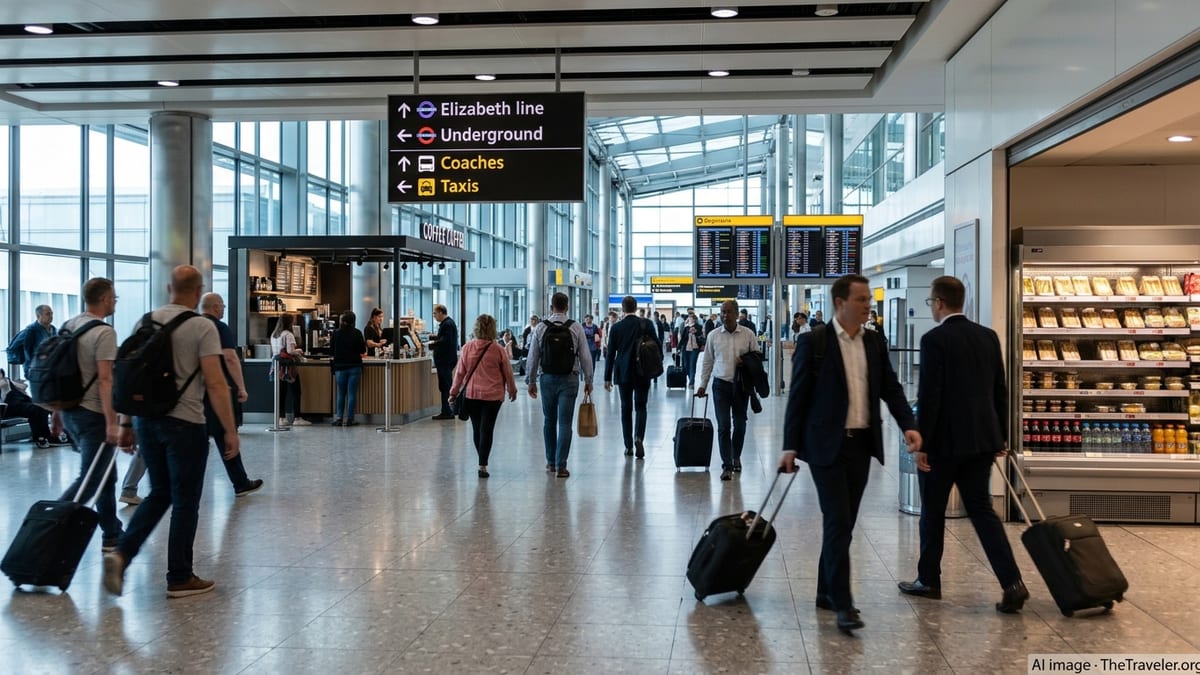
For most cost-conscious visitors, the Elizabeth line and the Piccadilly line on the London Underground offer substantial savings. Publicly available fare tables indicate that a single Tube trip from Heathrow, which sits in Zone 6, costs a fraction of the Heathrow Express walk-up fare, with a trade-off in journey time that can extend to 45 minutes or more into Zone 1. The Elizabeth line is faster and more comfortable than the Piccadilly line, but it applies special fares to Heathrow journeys that are closer to mid-range rail prices, sitting between the Tube and the premium Heathrow Express.
Budget-focused passengers are increasingly weighing whether the time saved by the Heathrow Express justifies the additional £15 or more per person compared with the Underground. Travel guides and fare comparison sites suggest that groups and families, in particular, may achieve greater value by opting for the Tube or Elizabeth line and putting the difference toward hotel upgrades or dining once in the city, especially outside peak commuting hours.
Reports aimed at business travellers note that some corporate policies still authorise the Heathrow Express for its reliability and speed, but individual travellers paying out of pocket are more likely to mix modes. One emerging pattern is using the Elizabeth line or Tube into central London, then switching to a short taxi or rideshare hop for the final leg to a client office or hotel, which can still undercut the cost of a door-to-door taxi from the airport.
Making Contactless and Caps Work in Your Favour
London’s contactless payment system has become one of the most important tools for visitors looking to control transport costs from Heathrow. Transport for London documents for 2025 show daily and weekly fare capping across zones 1 to 6 when using contactless bank cards or Oyster, meaning that after a certain spend threshold, additional rides within covered zones on the Tube, buses and standard Elizabeth line services no longer increase the total charge for that day or week.
However, travellers need to be alert to the fine print. Official fare tables and guidance note that Heathrow Express is excluded from pay-as-you-go caps and Travelcards, and online discussions among regular passengers highlight that special Heathrow fares on the Elizabeth line do not behave like standard Zone 6 trips in the capping system. This means that a single long journey to or from the airport can be significantly more expensive than standard travel entirely within the inner zones, even if a visitor assumes the daily cap will automatically limit the cost.
Consumer advice pieces recommend that arrivals use one payment method throughout a day’s travel, such as the same physical bank card or the same phone wallet, to ensure all journeys count toward the relevant cap. Splitting payments between a handset and a plastic card, even if linked to the same account, can lead to paying two separate daily caps or missing the cap altogether. For groups, each traveller still needs their own card or device; sharing one card to tap multiple people through barriers can trigger penalty fares and higher charges.
Some fare experts also draw attention to routing strategies that keep costs down without adding much time. For example, switching between lines before reaching Zone 1, or choosing the Piccadilly line rather than the Elizabeth line for the Heathrow segment, can avoid certain peak or special fares. While this often involves a slightly slower journey and at least one change of train, it can keep total daily spending closer to the standard Zone 1 to 6 cap, which remains well below the cost of a pair of peak single airport rail tickets.
Coaches, Buses and Taxis: When Slower Can Mean Smarter
For those prioritising price over speed, scheduled coaches and local buses continue to offer some of the lowest-cost ways of leaving Heathrow. National coach operators run services from airport terminals to key stations and city hubs across London and the wider UK, with advance online fares that can undercut even the Underground for longer intercity journeys. Published timetables commonly show journey times of 40 to 60 minutes into central London by coach, depending on traffic, with prices that remain comparatively stable even during peak travel seasons.
Within Greater London, the flat bus fare on Transport for London services remains significantly cheaper than Tube or rail, and bus journeys count toward daily contactless caps. Night bus routes from Heathrow, including those connecting to west and central London in the early hours, are highlighted in several independent travel guides as cost-saving options for late arrivals who are comfortable with a slower ride and a short walk at the end of the route.
By contrast, metered black cabs and app-based rides from Heathrow to central London remain among the most expensive options but can still be cost-effective for small groups at off-peak times. Guidance documents issued for recent international conferences in London estimate typical taxi fares into the central business district at several times the price of Tube or coach travel, but when split between three or four passengers, the per-person cost narrows. Travellers are encouraged to factor in luggage, arrival time and fatigue after long-haul flights when deciding whether the premium for a direct door-to-door journey is justifiable.
Reports on road congestion around Heathrow point out that journey times for taxis and rideshares can vary significantly, particularly during morning and evening peaks or when incidents affect major routes. For visitors on tight schedules, this unpredictability reinforces the appeal of rail services, even if they are marginally more expensive than buses. The key savings decision often rests on weighing the reliability of rail against the potential for a delayed but cheaper road journey.
Saving on Food, Coffee and Last‑Minute Essentials
Airport spending on food and drink can quickly erode any savings made on transport. Recent UK consumer research comparing airport and supermarket prices reports that popular snacks and confectionery at major UK airports can cost around 50 percent more than on the high street, with some share-size chocolate bags and bottled drinks showing even steeper mark-ups. While Heathrow hosts a wide range of restaurants and fast-food outlets, these are typically priced at or above central London levels.
Budget-conscious passengers are increasingly turning to airside branches of high-street chains known for value pricing on sandwiches, pastries and hot drinks, as well as to small grocery-style outlets in the terminal that stock supermarket-branded snacks and meal deals. Travel money advisers often suggest that passengers buy bulkier items such as large water bottles, snacks for long coach rides and simple picnic-style meals at these mini-markets rather than at branded cafes or bars.
Another strategy highlighted in travel coverage is to shift more substantial meals away from the airport entirely. With Heathrow located about 14 miles west of central London and connected by frequent Tube and rail services, many visitors now eat lightly on arrival, then plan a fuller lunch or dinner once they reach the city, where competition among restaurants and pubs keeps prices more varied. Hotel neighbourhoods in Paddington, Earl’s Court, Hammersmith and the South Bank are frequently cited as offering better value than terminal food courts.
Business travellers passing through Heathrow on tight layovers have fewer options, but they can still trim costs by avoiding add-ons such as premium bottled waters, oversized coffees and last-minute gadget purchases. Analysts who track travel spending warn that impulse buys of headphones, chargers and travel accessories at airport electronics shops can cost significantly more than equivalent items in central London retailers, suggesting it is better to replace such items before reaching the airport or wait until after leaving it.
Business Traveller Tactics: Loyalty, Timing and Policy
For frequent flyers and corporate travellers, Heathrow’s cost picture is shaped as much by company policy and loyalty schemes as by headline fares. Airlines and rail operators periodically promote discounts on Heathrow Express tickets to members of selected frequent flyer programmes, often offering percentage reductions on full fares booked through partner channels. These discounts typically do not apply to the lowest advance tickets, but for travellers who must keep flexibility, they can narrow the gap between premium and standard rail options.
Corporate travel managers are increasingly scrutinising the trade-offs between speed and cost. Industry reports note a shift toward encouraging staff to use the Elizabeth line or Underground except where meeting schedules or client commitments require the express service. Some policies now specify that the Heathrow Express is permitted only when the time saved exceeds a certain threshold or when connecting flight windows are particularly tight, reflecting a broader push to curb ground-transport expenses.
Timing remains one of the most powerful levers for savings. Booking Heathrow Express in advance, scheduling arrivals outside the busiest peak hours and planning meetings to allow for slightly longer but cheaper Tube journeys all contribute to lowering average trip costs. In parallel, using contactless caps strategically during multi-day visits to London can make it cheaper to cluster client meetings on fewer days, maximising the value of daily or weekly caps rather than incurring repeated single-journey peak fares.
Published advice for international business visitors also suggests combining cost control with comfort by choosing hotels positioned near key interchange hubs such as Paddington, Liverpool Street or Canary Wharf. These locations make it easier to use public transport from Heathrow while keeping taxi use to short, targeted trips. As travel volumes through Heathrow continue to grow in 2026, such tactical choices are becoming a standard part of how both leisure and business travellers approach the airport’s complex, and often costly, ecosystem.