

More news on this day
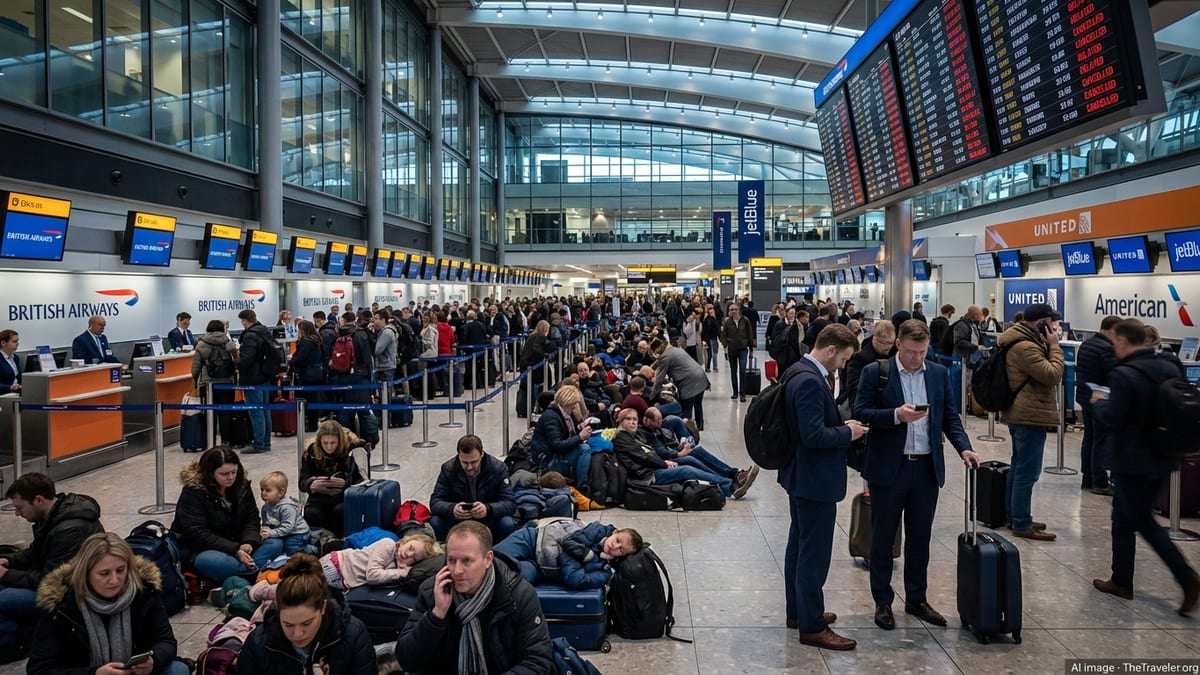
Hundreds of travellers were stranded at London Heathrow Airport on February 23 as 188 flights were delayed and 45 cancelled, triggering a fresh wave of transatlantic and European travel disruption affecting British Airways, American Airlines, United, JetBlue and other major carriers across the UK, Europe and North America.
Weather Turmoil and System Strain Converge at Heathrow
The latest disruption hit Heathrow during an already fragile period for European aviation, as a sequence of winter storms, low cloud and strong crosswinds has unsettled flight schedules from Amsterdam to Madrid in recent days. Operational data for Monday showed Heathrow coping with a complex blend of adverse weather and air traffic flow restrictions, creating what one airport staff member described as a “rolling backlog” that proved difficult to clear.
Ground conditions around London remained challenging, with intermittent squalls and gusty winds forcing aircraft to space out on approach and departure. That slowed the rate at which planes could land and take off, steadily inflating delays throughout the day. At the same time, crews and aircraft were still out of position after earlier weather systems had battered airports elsewhere in Europe, feeding further instability into Heathrow’s timetable.
While Heathrow itself avoided outright closure, the combined effect of tight weather parameters, congested skies and limited slack in airline schedules meant that operational buffers quickly evaporated. Airlines were forced to juggle scarce landing slots, reassign aircraft at short notice and negotiate with air traffic controllers to keep at least part of their programmes running.
By late afternoon, live tracking boards showed departure queues stretching deep into the evening and a similar pattern of late arrivals, underlining how even relatively short weather holds at a major hub can cascade into large-scale network disruption.
Hundreds of Travellers Stranded in Packed Terminals
The human impact of the disruption was starkly visible inside Heathrow’s terminals, where departure halls were dotted with passengers sitting on suitcases, sprawled on the floor and gathered around power outlets as they awaited updates. Families returning from school holidays, business travellers with tight schedules and long-haul passengers connecting to onward flights all found themselves trapped in a maze of rolling departure times and cancelled services.
Check in and customer service desks for British Airways, American Airlines, United and JetBlue saw snaking queues for much of the day as passengers sought rebooking options, meal vouchers and accommodation. Airport volunteers and airline staff moved through the crowds to answer questions, but many travellers expressed frustration at what they described as slow communication and a lack of clear guidance on when they would be able to depart.
With outbound flights running late or scrapped altogether, arriving passengers were also hit. Those due to connect at Heathrow to destinations across Europe and North America faced missed connections and last-minute reroutes, in some cases adding an unplanned overnight stop in London or a diversion to other hubs such as Dublin, Frankfurt or Amsterdam.
Retail and food outlets inside the terminals remained busy throughout, with long queues forming at coffee shops and convenience stores as stranded travellers sought snacks and phone chargers. Seating near flight information boards became prime real estate, reflecting how passengers were repeatedly refreshing departure times that in many cases slipped by 30 minutes or more every update cycle.
Major Airlines Across the Atlantic Bear the Brunt
Heathrow’s position as a key transatlantic gateway meant that the disruption quickly spilled over into airline operations far beyond the UK. British Airways, as the airport’s largest carrier, faced the most visible impact with delayed departures to cities across Europe as well as to key North American destinations such as New York, Boston and Toronto.
American Airlines and United reported multiple delayed and cancelled flights into and out of Heathrow, particularly on routes linking London with major East Coast hubs. Several services that did operate did so hours behind schedule, compressing turnaround times at both ends of the route and forcing airlines to reshuffle aircraft rotations to avoid crews running up against duty-time limits.
JetBlue, which in recent years has expanded its transatlantic footprint from London to cities including New York and Boston, also encountered significant disruption. With smaller fleets and more tightly scheduled aircraft than some of the traditional legacy carriers, such airlines have limited capacity to absorb extended delays or last-minute cancellations without wider knock-on effects across their networks.
Aviation analysts noted that the timing of the disruption, coinciding with busy mid-term and winter travel patterns, left airlines operating near capacity even before weather and airspace constraints came into play. That made it harder to find spare seats for rebooked passengers and contributed to scenes of crowded gate areas and long standby lists on the few flights that were able to depart close to schedule.
Ripple Effects Across the UK, Europe and North America
The problems at Heathrow were both a symptom and a driver of much broader disruption across the northern hemisphere. In recent days, winter storms and low-visibility conditions have led to widespread delays and cancellations at major European hubs including Amsterdam Schiphol, Paris Charles de Gaulle and Madrid Barajas, while a powerful nor’easter has been tearing into the northeastern United States, cancelling thousands of flights domestically.
By February 23, aviation data showed hundreds of flights across the UK and mainland Europe either delayed or cancelled as airports struggled with snow, ice and strong crosswinds. In the United States, airlines were working through a backlog after the weekend’s storm unleashed blizzard conditions and heavy snowfall on key markets such as New York and New Jersey, prompting large-scale pre emptive cancellations.
Many of the aircraft and crews scheduled to operate Heathrow services on Monday had been disrupted by these events. Aircraft arriving late from storm hit hubs were often unable to turn around in time to operate outbound flights from London, forcing airlines to consolidate services or cancel marginally loaded rotations. In other cases, carriers were left short of rested pilots or cabin crew, further throttling their ability to restore normal operations quickly.
The transatlantic nature of these disruptions created a feedback loop. Delayed or cancelled flights from North America reduced the availability of aircraft on the European side, while disruption in the UK and on the continent hampered airlines’ efforts to send aircraft and crews back across the Atlantic on schedule. For many passengers, this meant their journeys were affected at both ends, with delays on departure compounded by further hold ups upon arrival.
Operational Challenges: Air Traffic, Staffing and Slot Pressure
Behind the scenes, airlines and air traffic controllers juggled a complex web of constraints. Weather related air traffic flow measures limited the number of movements that could safely be handled in London’s crowded airspace, while staffing shortages in some ground handling teams and technical units added another layer of difficulty. Even modest delays in de icing, baggage loading or refuelling can create extended knock on effects when schedules are as dense as they are at Heathrow.
Heathrow’s status as a slot constrained airport, where airlines compete fiercely for limited take off and landing rights, further complicated recovery efforts. Once flights fell significantly behind schedule, carriers had to negotiate adjustments that allowed them to retain their valuable slots while still making best use of the constrained capacity available in marginal weather.
Staff union representatives have repeatedly warned that chronic under staffing in some parts of the aviation ecosystem leaves the system brittle when confronted with severe weather or technical problems. With sickness rates still elevated in parts of the workforce and ongoing recruitment challenges in sectors such as ground handling, even well resourced airlines can struggle to scale up quickly when large numbers of flights are disrupted at once.
Industry observers also pointed to the lingering impact of previous major incidents, such as the 2025 power outage related shutdown at Heathrow and more recent air traffic control glitches in UK airspace, as evidence that resilience remains a concern. While Monday’s disruption did not stem from a single catastrophic systems failure, it highlighted how multiple smaller stresses can combine to produce a level of chaos that feels comparable for those stuck in the terminals.
Passenger Rights, Rebooking Options and What Travellers Can Expect
For travellers caught in the disruption, one of the most pressing questions was what assistance they were entitled to receive. Under UK and European Union regulations, airlines are generally required to offer passengers on cancelled flights the choice of a refund or re routing at the earliest opportunity, as well as care such as meals and, where necessary, hotel accommodation. However, the extent of compensation for delays can depend on whether the disruption is considered within an airline’s control.
When severe weather is deemed the primary cause of irregular operations, airlines often argue that they are not liable for cash compensation, even though they remain responsible for rebooking and basic care. Many passengers on Monday reported being offered vouchers for food and refreshments alongside rebooked flights that in some cases departed a day or more later than planned, particularly on heavily booked transatlantic routes.
Travel experts recommend that affected passengers keep all receipts for any additional expenses incurred, such as overnight stays, meals and essential purchases, and contact their airlines and travel insurers as soon as practicable. Those who booked via online travel agencies or tour operators may need to coordinate with both the airline and the intermediary to secure the most convenient re routing options.
With airlines still working through backlogs caused by recent storms in both Europe and North America, passengers over the coming days are being advised to build extra time into their journeys, monitor flight status frequently and be prepared for last minute gate changes. Many carriers are also issuing flexible travel waivers, allowing customers to move flights to different dates without change fees in order to avoid the worst of the disruption.
Industry Response and Calls for Greater Resilience
The latest Heathrow disruption has reignited debate within the aviation industry about how to build greater resilience into a system increasingly exposed to extreme weather and mounting operational pressures. Airline executives, regulators and airport authorities have been examining whether additional investments in technology, staffing and infrastructure are needed to prevent relatively routine winter storms from snowballing into multi day crises.
Some aviation analysts argue that while airlines have become adept at running highly efficient, tightly timed networks, this very efficiency can leave little margin for error. When flights are scheduled to operate with minimal ground time and fleets are used to near maximum capacity, a single day of heavy disruption can take several days to unwind, particularly on long haul routes where aircraft are away from their home bases for extended periods.
Environmental campaigners and passenger groups, meanwhile, have raised separate concerns about the broader implications of aviation’s vulnerability to climate related weather extremes. As winters grow more erratic and storms more intense, campaigners say authorities must consider whether current contingency planning and passenger protection frameworks are sufficient.
In the short term, attention will remain fixed on how quickly Heathrow and its airline partners can restore something resembling normal service. For the hundreds of travellers forced to sleep in terminals or piece together complex new itineraries, however, the experience will linger as another stark reminder that in modern global air travel, a disruption in one corner of the network can rapidly ripple around the world.