

More news on this day
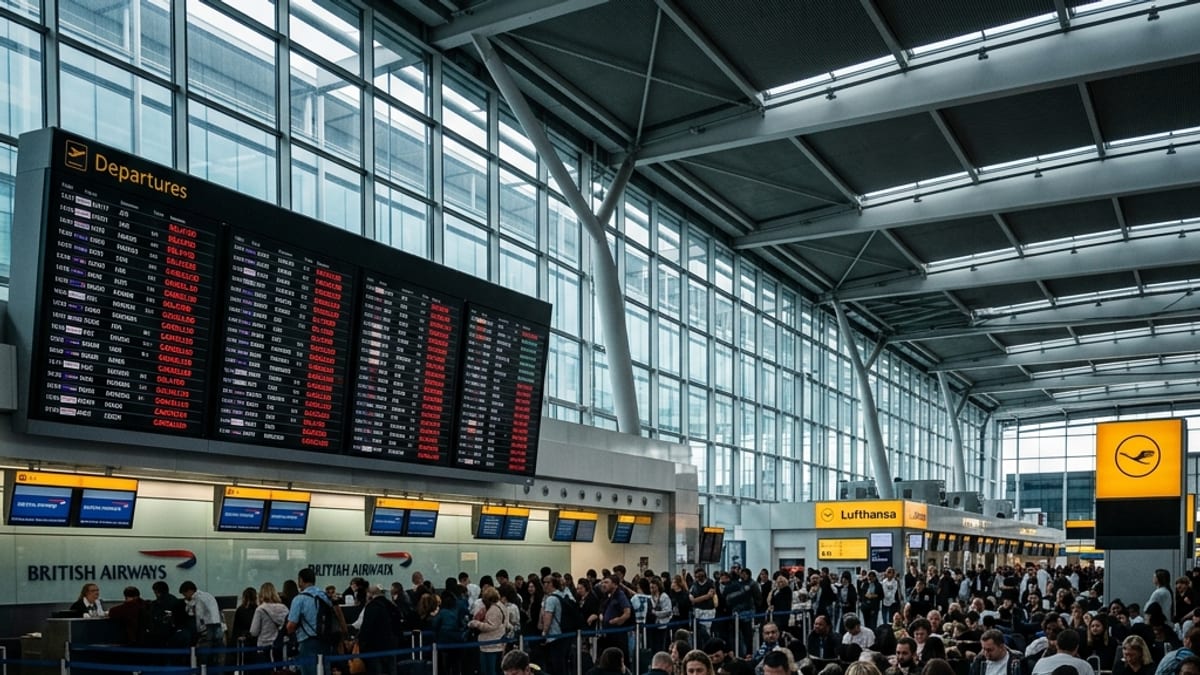
Hundreds of passengers were left stranded at London Heathrow Airport after a fresh wave of disruption saw more than 300 flights delayed and multiple cancellations affecting British Airways, American Airlines and Lufthansa services on key European and transatlantic routes.
Get the latest news straight to your inbox!
Widespread Delays Ripple Through Europe’s Busiest Hub
Operational data from flight-tracking and passenger-rights platforms in early April 2026 indicate that London Heathrow has been among the hardest-hit European hubs, with severe knock-on effects for schedules across the network. Recent tallies of disruption across England and other major European markets show more than 1,400 delayed flights and at least 20 cancellations in a single day, with Heathrow alone accounting for more than a hundred delays and several cancellations. Within that total, industry figures suggest that well over 300 movements at Heathrow involving British Airways, American Airlines and Lufthansa have either departed significantly late or been removed from schedules altogether.
Reports from aviation analytics providers describe a familiar pattern at Heathrow when disruption strikes. Once arrival banks begin running late, short turnaround times quickly erode, aircraft and crews fall out of sync with their planned rotations and congestion builds up on taxiways and stands. As delays cascade through the day, carriers turn to targeted cancellations in an effort to stabilize operations, leaving passengers on the affected flights searching for alternatives and in many cases stuck inside the terminals for hours.
Publicly available information shows that the latest disruption unfolded against a backdrop of wider European instability, with bad weather, local airspace issues and previous days of irregular operations converging. Major hubs including Amsterdam, Zurich and Dublin also reported significant delays, limiting the options for rerouting passengers away from Heathrow and intensifying the pressure on the airport’s role as a primary transatlantic gateway.
For individual travelers, the numbers have translated into long queues at check-in and rebooking desks, crowded departure lounges and uncertainty over when they will be able to depart. Social media posts and traveler reports from the terminal buildings describe passengers sleeping in seating areas, struggling to secure hotel rooms near the airport and facing lengthy waits for updated departure information on departure boards.
Flag Carriers on Core Transatlantic and European Routes Affected
British Airways, Heathrow’s largest airline, has borne the brunt of the disruption. Operational statistics for recent high-impact days in March and April show that the carrier has experienced dozens of delayed and canceled services at its primary hub, with both intra-European flights and long-haul departures to North America affected. Routes to major US cities such as New York and Chicago, already operating at high load factors during the spring travel season, have been particularly sensitive to schedule changes.
American Airlines, one of British Airways’ closest transatlantic partners, has also seen its Heathrow operations disrupted. Public timetables indicate that several departures to US hubs were delayed well beyond their scheduled departure times, with some flights canceled outright after extended ground holds. As aircraft ended the day in the wrong locations and crew duty hours expired, the airline faced further challenges in restoring its planned services on subsequent days.
Lufthansa, which shuttles passengers between Heathrow and its German hubs, has reported significant delays on its London services in line with broader disruption at Frankfurt and Munich. Aviation reports note that when central European hubs struggle with weather or airspace restrictions, feeder flights to and from Heathrow frequently arrive late, compressing turnaround times and sometimes forcing last-minute cancellations to avoid further schedule deterioration.
Alliance partnerships have helped some travelers find alternative paths across the Atlantic or back into continental Europe, but capacity constraints and already strong seasonal demand have limited the availability of spare seats. As a result, many passengers on affected British Airways, American Airlines and Lufthansa flights have found themselves rebooked a day or more later than originally planned, effectively turning brief stopovers at Heathrow into unplanned overnight stays.
Passengers Face Long Waits, Missed Connections and Mounting Costs
For those stranded in the terminals, the immediate impact of the disruption has been missed connections, lost hotel nights and additional expenses for food and accommodation. Accounts shared by travelers indicate that some passengers arriving from long-haul flights have been unable to board their onward European connections, with seats on later services already fully booked due to earlier disruptions.
Families and business travelers alike have reported difficulty securing nearby hotel rooms as disruption spread through the evening hours. With hundreds of passengers from multiple canceled flights seeking beds at the same time, available inventory around Heathrow has tightened quickly, driving some travelers to stay at properties further afield or to remain in the terminal overnight.
Missed events have added to the frustration. Published coverage of recent European disruption waves describes travelers losing prepaid tours, nonrefundable rail tickets and conference registrations when they fail to arrive on time. At a hub as globally connected as Heathrow, even a relatively small number of cancellations can cascade into a significant number of disrupted itineraries far beyond London, from Mediterranean holiday resorts to business centers in North America and Asia.
In many cases, passengers caught in the disruption wave have had to navigate complex rebooking options involving multiple carriers and changing routings. For itineraries booked through codeshares or online travel agencies, some travelers have reported uncertainty over which company bears responsibility for changes and care, further complicating efforts to secure prompt assistance.
What Travelers Need to Know About Their Rights
The latest Heathrow disruption has once again drawn attention to the protections available to air passengers under European and United Kingdom rules. Public guidance on air passenger rights explains that travelers are typically entitled to care during long delays, including access to meals, refreshments and means of communication. When an overnight stay is required, airlines may be required to arrange or reimburse hotel accommodation and transport between the airport and the lodging.
For flights departing from the United Kingdom or European Union, and for services operated by UK or EU carriers, additional financial compensation may be available when delays or cancellations are not caused by extraordinary circumstances such as severe weather, air traffic control restrictions or security incidents. Court rulings interpreting European and UK regulations have established that passengers arriving more than three hours late at their final destination may be eligible for compensation, depending on the distance of the flight and the precise cause of the disruption.
Consumer-rights organizations advise affected passengers to retain boarding passes, booking confirmations and any written notifications about their flight’s delay or cancellation, as these documents can be important when submitting claims. Travelers are also encouraged to keep receipts for meals, hotels and ground transport purchased as a result of disruption, since airlines may reimburse reasonable expenses in line with their legal obligations and internal policies.
Given the complexity of multi-leg itineraries involving several airlines, passengers whose journeys included Heathrow during the disruption period have been urged by advocacy groups and travel specialists to review both the governing regulations and the specific conditions of carriage for the airline that operated the disrupted sector. In some cases, travelers may be able to seek redress not only from the carrier but also from their travel insurer or credit card provider.
Outlook for Operations and Advice for Upcoming Travelers
Industry observers expect that the immediate disruption at Heathrow will take time to fully unwind, even after the worst of the delays subsides. Once a hub of this scale experiences several hundred delayed movements and a significant number of cancellations, aircraft and crews are left out of position around the network. Airlines must then spend days repositioning equipment and personnel, rebuilding rotations and working through a backlog of rebooked passengers.
Operational data from other recent episodes at major hubs in Europe and North America indicates that punctuality can remain below normal for several days after a major shock event, with early-morning departures particularly vulnerable as carriers attempt to reset their schedules. Travelers transiting Heathrow over the coming days may therefore continue to encounter longer-than-usual queues, gate changes and last-minute schedule adjustments, even as overall disruption levels decline.
Publicly available travel advice suggests that passengers booked on British Airways, American Airlines or Lufthansa services through Heathrow in the near term should monitor their reservations closely using airline apps or websites, and consider arriving at the airport earlier than usual during peak periods. Where possible, carrying essential items in hand luggage, including medications and a change of clothes, can help mitigate the impact of unexpected overnight stays or missed connections.
As airlines and airport operators review the latest episode, analysts anticipate renewed scrutiny of Heathrow’s resilience, including its ability to absorb shocks linked to weather, technical failures or wider European disruption. For now, however, the priority remains clearing the backlog, reuniting stranded travelers with their intended destinations and restoring confidence during one of the busiest travel periods of the year.