

More news on this day
Passengers at London Heathrow faced mounting chaos on Saturday as a fast-moving Middle East security crisis forced British and international airlines to cancel or reroute flights to Dubai, Tel Aviv, Abu Dhabi and other key hubs, leaving long-haul travelers stranded and global flight schedules in disarray.
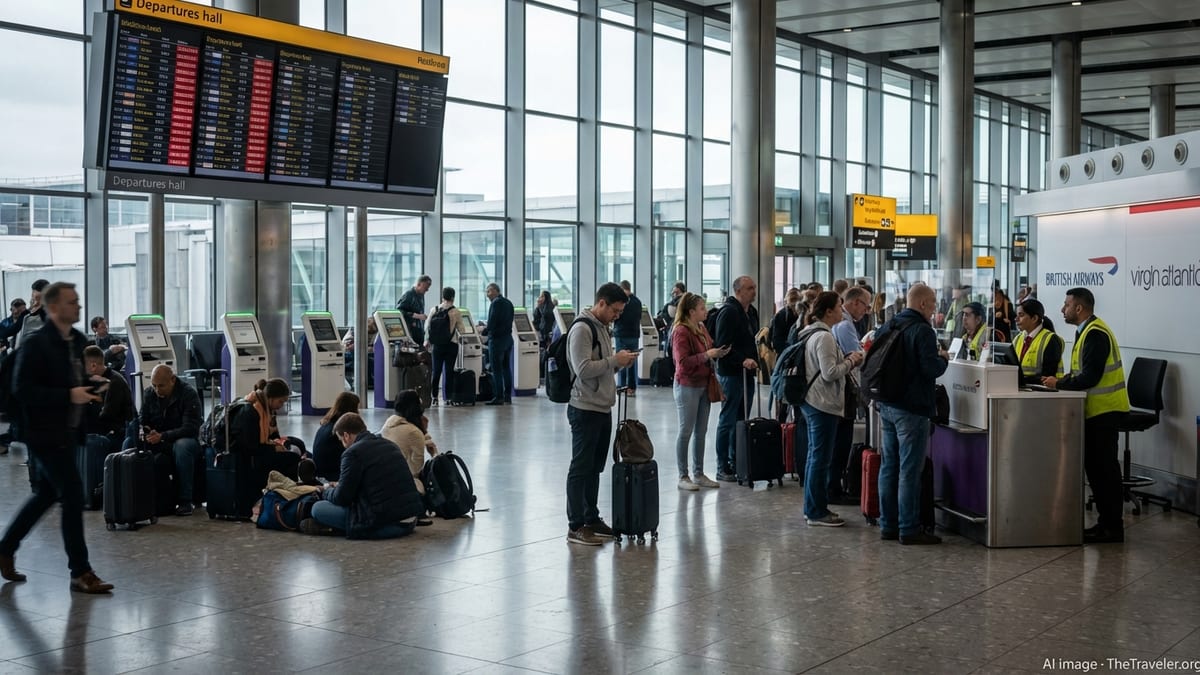
Middle East Crisis Shuts Airspace and Ripples Into Heathrow
The disruption followed joint United States and Israeli strikes on Iran in the early hours of Saturday 28 February, prompting Iran, Israel, the United Arab Emirates, Qatar and several neighboring states to close their airspace to civilian traffic. The move effectively shut down major hubs including Dubai International, Al Maktoum International and Hamad International in Doha, severing some of the world’s busiest links between Europe, Asia and Africa.
As airspace closures widened, airlines began cancelling or diverting flights that would normally overfly Iran, Iraq and surrounding territories. Aviation data providers reported that a significant share of services to Israel and a smaller but still substantial proportion of wider Middle East operations were grounded, with further changes expected as the situation evolves hour by hour.
At Heathrow, one of Europe’s primary long-haul gateways to the Gulf and beyond, the impact was immediate. Departures boards for terminals serving long-haul routes quickly filled with flashing red cancellation and delay notices for flights bound for Dubai, Tel Aviv, Doha, Abu Dhabi, Bahrain and other destinations across the region.
British Airways, Virgin Atlantic and European Carriers Suspend Key Routes
British Airways confirmed it had suspended services to Tel Aviv and Bahrain and cancelled its Heathrow flight to Amman on Saturday, citing security concerns and airspace disruption. The carrier also offered passengers booked to travel between London Heathrow and Abu Dhabi, Amman, Bahrain, Doha, Dubai or Tel Aviv the option to rebook travel or seek a refund for journeys through early March.
Virgin Atlantic cancelled its VS400 service from Heathrow to Dubai and announced that it would temporarily halt flights to Dubai, Abu Dhabi, Doha and Israel, with the suspension currently in place until early March. The airline has also rerouted other long-haul services to avoid Iraqi and Iranian airspace, warning of extended flight times to destinations in India, the Maldives and the Gulf.
Elsewhere in Europe, major carriers including Lufthansa, Air France, KLM, ITA Airways and Scandinavian operator SAS have paused some or all services to Tel Aviv and multiple Middle Eastern cities, while in many cases also suspending flights to Dubai and other Gulf hubs for at least several days. Those decisions have further constrained options for Heathrow passengers hoping to connect via continental hubs instead of flying nonstop from London.
What Travelers at Heathrow Are Experiencing Right Now
By Saturday afternoon, long queues had formed at airline service desks across Heathrow as stranded passengers sought rebookings, hotel vouchers or refunds. Many travelers heading to Asia, Africa and Australasia via Dubai or Doha found that their itineraries were suddenly unworkable, forcing them to seek scarce alternative connections through cities such as Istanbul, Riyadh or European capitals still operating limited onward services.
Airport staff reported heightened frustration as rolling announcements advised passengers not to proceed to the airport unless their airline had confirmed that their flight was operating. Some travelers who had checked in for early morning departures to Dubai or Tel Aviv discovered only at the gate that their flights had been cancelled following overnight changes to airspace permissions.
With aircraft and crews out of position across multiple continents, disruption is expected to cascade through airline networks for days. Even travelers not heading to the Middle East may face knock-on delays as carriers adjust schedules, lengthen routings to avoid closed airspace and reposition aircraft to cover remaining services.
How to Protect Your Trip if You Are Flying Soon
Airlines serving Heathrow have issued flexible travel policies to cope with the crisis, allowing many affected passengers to change their dates or destinations without the usual change fees. Some carriers are also offering full refunds for flights to Tel Aviv, Dubai and other impacted cities, particularly where local authorities or foreign ministries have tightened travel advisories.
Travel experts recommend that anyone due to fly from Heathrow to the Middle East, or to Asia and Africa via Gulf hubs, in the coming days check the status of every leg of their journey repeatedly rather than relying on older confirmation emails. Schedules are being updated frequently, and flights can shift from "on time" to "cancelled" within hours as security assessments and airspace permissions change.
Passengers are also being urged to ensure that airlines and booking platforms have up to date contact details, including a working mobile number and email address, so that rebooking offers and schedule changes can reach them in real time. Those with critical travel needs are being advised to work with agents or airlines to explore routings that avoid the most heavily affected airspace entirely, even if that means longer journeys.
What to Watch in the Coming Days
Industry analysts say the scale and duration of disruption at Heathrow and other European hubs will depend on how long airspace closures remain in force and whether the security situation in the Middle East stabilizes. If states begin reopening their skies in a coordinated way, airlines are likely to phase services back in gradually, initially focusing on repatriation and essential travel before rebuilding full schedules.
However, with multiple countries still advising against non essential travel to parts of the region, some routes particularly to Israel and neighboring states could remain suspended for longer. Carriers may also permanently adjust certain flight paths to avoid perceived high risk corridors, even after formal airspace restrictions ease.
For now, Heathrow remains a focal point of global aviation disruption, illustrating how quickly a regional security crisis can reverberate through one of the world’s busiest international airports. Travelers planning to pass through London in the days ahead should prepare for continued uncertainty, stay closely in touch with their airlines and build extra time and flexibility into any international itinerary.