

More news on this day
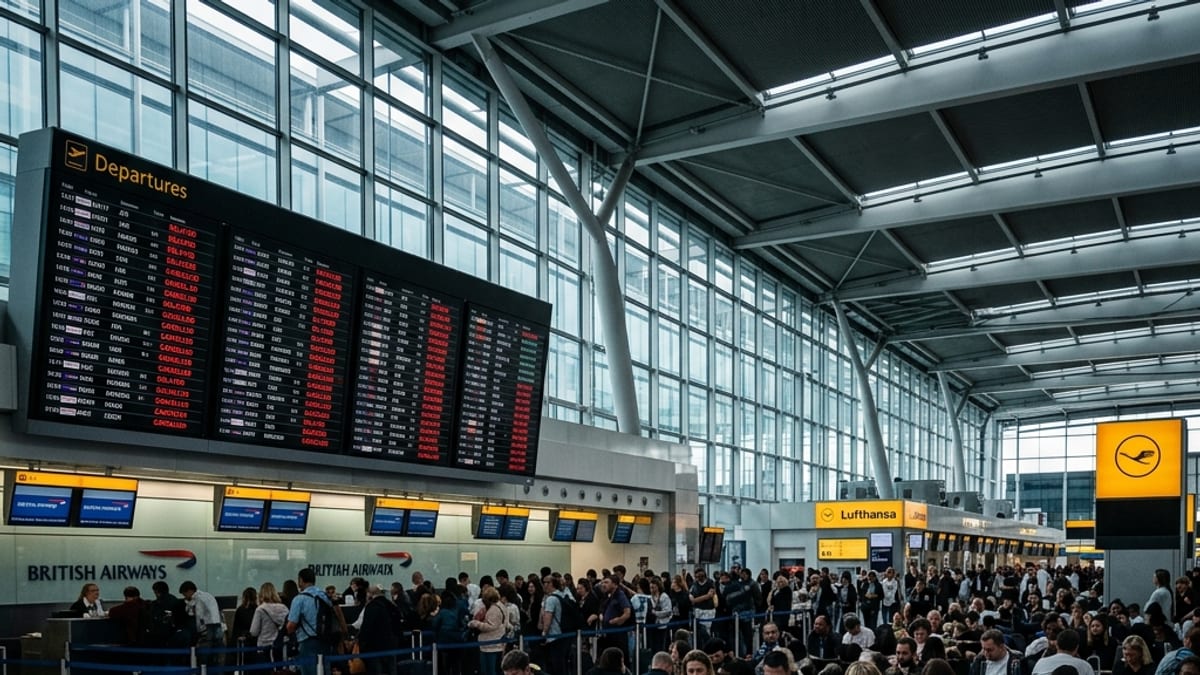
Hundreds of air travelers were left sleeping in terminals at London Heathrow after a fresh wave of disruption delayed more than 300 flights and forced multiple cancellations on British Airways, American Airlines and Lufthansa routes, snarling one of the world’s busiest international hubs at the start of the spring travel period.
Get the latest news straight to your inbox!
Heavy Delays Ripple Across Heathrow’s Global Network
Operational data from flight monitoring and passenger-rights platforms in early April 2026 shows that Heathrow has been among the hardest-hit European hubs, with more than 300 flights on a single day affected by significant delays and a cluster of cancellations. The disruption has been concentrated on short-haul European services and key long-haul links to North America, pushing passenger numbers beyond the capacity of customer-service desks and available hotel rooms.
Published coverage highlights that British Airways, Heathrow’s largest carrier, has borne the brunt of the disruption, with knock-on effects spreading to codeshare partners such as American Airlines on transatlantic services. Lufthansa operations between the United Kingdom and continental Europe have also been caught in the congestion, particularly on routes connecting through Frankfurt and Munich. As delays accumulated into missed slots and crew timing limits, airlines trimmed schedules and canceled additional services to stabilize operations.
Reports indicate that, by late evening, terminal departure boards remained filled with late-running flights, revised departure times and aircraft still “awaiting inbound” from earlier rotations. With Heathrow operating near full capacity on a typical day, even a relatively short period of disruption translated into hours of backlog, leaving passengers with little room to rebook at short notice.
Stranded Passengers Face Long Queues and Overnight Stays
Across Heathrow’s terminals, the immediate impact for passengers was visible in long lines snaking from ticket desks and service counters, as travelers sought rebooking options, meal vouchers and accommodation. Publicly available information from consumer-rights groups notes that hundreds of passengers were left effectively stranded overnight, either because onward flights had departed without them or because there were no remaining seats on later departures.
Families returning from school holidays, business travelers with tight meeting schedules and long-haul passengers connecting through London all faced the same bottleneck: limited alternative routings once peak-evening waves of departures passed. With multiple airlines drawing on the same pool of nearby hotel rooms, many travelers resorted to makeshift sleeping areas in departure halls while they waited for morning departures or newly created extra sections.
Accounts compiled by travel industry analysts describe overcrowded seating areas, queues for food outlets and uncertainty over baggage, particularly for passengers whose flights were canceled after check-in. Some travelers were encouraged to travel hand-luggage only on rebooked flights, while others were advised that checked bags would follow on later services once the operation stabilized.
Weather, Airspace Constraints and Staffing Add Pressure
Recent days across Europe have been marked by a combination of unsettled weather patterns, airspace restrictions and staffing strain in airport and air traffic control operations. Publicly available disruption summaries point to stormy conditions and strong winds moving across western and northern Europe, forcing aircraft to accept longer routings, holding patterns or reduced landing rates at several hubs, including Heathrow.
These constraints mean that even flights technically “available to depart” can be forced into extended ground holds or diversions while air traffic control manages overall capacity. Once aircraft and crew are out of position, follow-on flights later in the day become more vulnerable to further delay or cancellation. This cascading effect has been evident across recent weeks, with Heathrow-linked services to destinations such as New York, Chicago and major European capitals running significantly behind schedule when adverse conditions coincide with peak demand.
Industry briefings published over the past year have repeatedly warned that Europe’s air traffic system is operating close to its limits during busy travel periods. When weather or localized technical issues occur, the resulting congestion can quickly generate several hundred delays across the region in a single day, placing additional stress on major nodes such as Heathrow where British Airways, American Airlines and Lufthansa all operate dense schedules.
Transatlantic and European Routes Hit Hardest
According to aggregated flight-status data cited in recent travel coverage, the worst impacts of the latest Heathrow disruption have been seen on transatlantic and high-frequency European routes. British Airways and American Airlines jointly operate a significant share of flights between London and major U.S. cities, meaning that any schedule disruption in London can leave passengers on both sides of the Atlantic scrambling for alternatives.
Flights to and from hubs such as New York, Boston, Chicago and Dallas have reported extended departure delays, missed connection windows and, in some cases, outright cancellations. For travelers originating in North America and connecting onwards to destinations in the Middle East, Africa or Asia through London, the cascading effect has involved missed onward departures and involuntary overnight stays in the United Kingdom.
Lufthansa services linking Heathrow with German hubs have faced similar challenges. Delays into Frankfurt or Munich can cause a knock-on effect for passengers connecting onward into central and eastern Europe, and for long-haul journeys to Asia or North America that rely on tight banks of arrivals and departures. As aircraft and crew have been repositioned to recover the schedule, some travelers have been rebooked onto indirect routings through other European hubs, lengthening overall travel times.
Passenger Rights, Rebooking Options and What Travelers Can Do
The wave of delays and cancellations at Heathrow has once again placed a spotlight on passenger protections in the European market. Publicly available guidance on EU and UK passenger-rights regulations notes that, where disruptions are within an airline’s control, affected travelers may be entitled to meals, refreshments, hotel accommodation, ground transfers and, in some circumstances, financial compensation. Even when severe weather is a primary factor and compensation is less likely, airlines are generally expected to offer care and rerouting.
Consumer advocates urge travelers caught up in such disruption to retain boarding passes, booking confirmations and receipts for any additional expenses such as meals or off-airport hotels, in case they later seek reimbursement. Passengers are also encouraged to make use of airline mobile apps and digital channels, which often show rebooking options before they are available at crowded airport desks.
For those yet to travel, analysts recommend checking flight status repeatedly in the 24 hours before departure, arriving at the airport earlier than usual during periods of known disruption and considering the latest possible flight of the day if a missed connection would mean an overnight stay. With Heathrow operating close to capacity and European air traffic facing persistent structural constraints, industry observers suggest that similar episodes of large-scale delay and localized cancellations are likely to remain a recurring feature of peak travel seasons.