

More news on this day
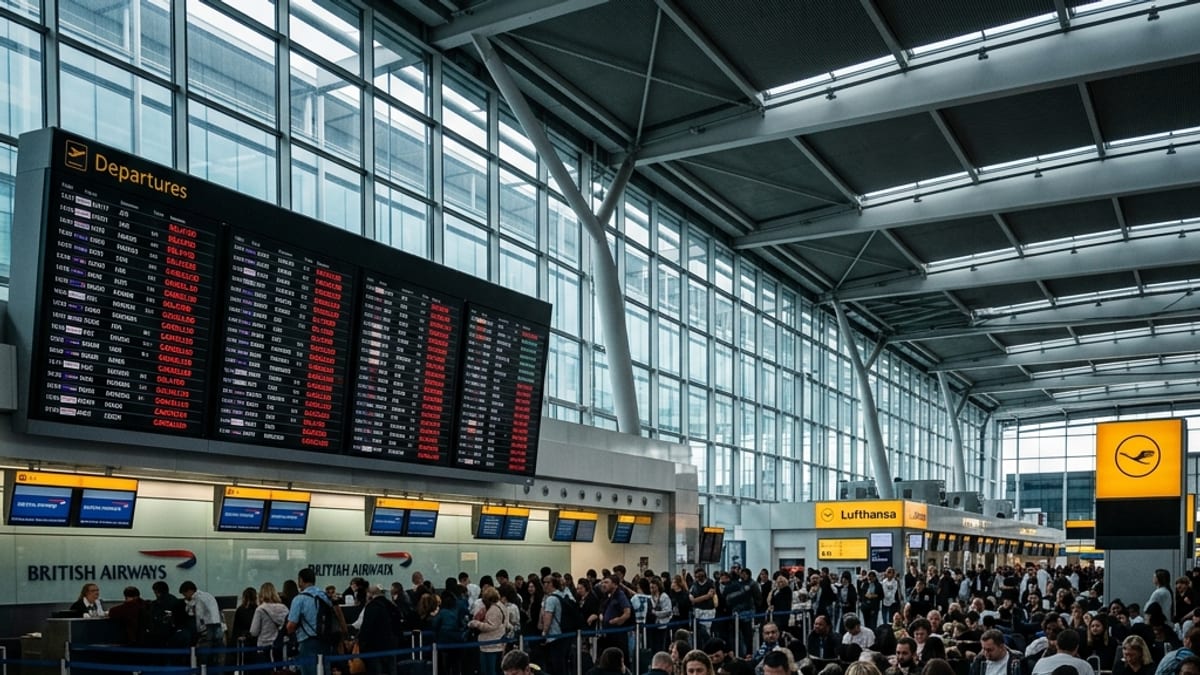
Hundreds of air travelers were left stranded at London Heathrow as more than 300 flights were delayed or canceled, disrupting busy transatlantic and European routes operated by British Airways, American Airlines and Lufthansa, according to operational data and media reports.
Get the latest news straight to your inbox!
Major Hub Brought to a Standstill
Operational data from flight monitoring platforms and passenger-rights organizations indicates that London Heathrow, already under pressure from recent bouts of severe weather and airspace restrictions, suffered another intense wave of disruption affecting routes throughout Europe and North America. More than 300 flights were reported delayed or canceled over the course of the day, leaving departure boards dominated by late departures and grounded services.
The disruption hit peak-time operations and rippled across the schedules of Heathrow’s largest carriers. British Airways saw a significant share of the delays and cancellations across both short-haul and long-haul services, while transatlantic partner American Airlines and major European player Lufthansa also experienced knock-on disruption as aircraft and crews were left out of position.
Publicly available information shows that the scale of the delays led to missed onward connections, passengers stuck in lengthy queues at service desks and crowded gate areas as travelers waited for updates. With aircraft rotations carefully timed, even a relatively short period of irregular operations quickly translated into widespread schedule changes throughout the day.
For many travelers, the impact extended well beyond London. According to published coverage on recent European disruption days, delays at hubs like Heathrow can swiftly cascade to other cities, resulting in late arrivals in destinations such as New York, Frankfurt, Madrid or Rome and forcing unplanned overnight stays when onward flights are no longer available.
Transatlantic and European Routes Hit Hard
British Airways’ extensive European and long-haul network from Heathrow meant that both intra-European services and intercontinental flights were affected. Reports from passenger-rights services and aviation data firms point to heavily disrupted rotations on routes linking London with major cities in Germany, Italy and Scandinavia, along with long-haul links to North America and the Middle East.
American Airlines was also caught in the disruption, particularly on key transatlantic corridors between Heathrow and major U.S. gateways. Delayed departures from London led to late evening arrivals in cities such as New York and Dallas, with some flights pushed back by several hours and others canceled outright, according to live departure boards and airline advisories cited in published reports.
Lufthansa operations were similarly affected as the carrier adjusted its schedule between Heathrow and German hubs, compounding a broader pattern of disruption seen across continental Europe in early April. Published coverage of recent days highlights that when multiple hubs, including Frankfurt and Munich, experience congestion or weather-related constraints, services to and from London can be especially vulnerable to rolling delays.
For passengers, the combined effect was a patchwork of rebooked itineraries, last-minute terminal changes and sudden cancellations. Travelers heading onward to secondary cities in Europe, the United States or further afield often found that their originally seamless connections had turned into complex, multi-stop journeys stretching late into the night.
Knock-On Effects Across Europe’s Air Network
The situation at Heathrow unfolded against a backdrop of wider strain on the European aviation system in early April. Recent analyses by consumer advocacy groups and travel data providers describe several days in which more than a thousand flights across Europe were delayed and well over a hundred canceled, with London, Frankfurt, Paris and other major hubs among the hardest hit.
Reports indicate that a mix of unsettled spring weather, tight staffing at some airports and ongoing airspace restrictions has created a fragile operating environment. When problems arise at a central hub such as Heathrow, airlines face the challenge of repositioning aircraft and crews while still attempting to operate much of the published timetable.
Airlines with large connecting networks, including British Airways and Lufthansa, are particularly exposed because disruption at one hub can quickly affect distant parts of the route map. If an aircraft arrives hours late from London, for example, the next departure from a partner hub in Europe or North America may also be delayed, with the pattern repeating across multiple rotations.
Passenger-rights organizations note that on high-impact days many travelers become stranded not just at their departure airports but at intermediate hubs where connections no longer line up. Crowded overnight scenes at hotels near European airports have featured in recent coverage, as travelers scramble for limited accommodation while they wait for rebooked flights.
Passenger Rights, Care Obligations and Refund Options
Publicly available guidance from European and UK consumer bodies emphasizes that travelers whose flights are delayed or canceled from Heathrow may be protected by air passenger rights regulations. Under these rules, airlines must provide care such as meals and refreshments after significant delays, as well as hotel accommodation and transport to and from the hotel when passengers are stranded overnight away from home.
Depending on factors such as the cause of the disruption, notice period and length of delay, some travelers may also be entitled to financial compensation. Specialists in EU and UK air passenger rights stress that eligibility often hinges on whether the disruption was considered within the airline’s control, and whether the arrival delay exceeded specific time thresholds.
Consumer advocates routinely advise passengers to keep boarding passes, booking confirmations, receipts for meals and hotels, and written records of delay or cancellation notices. Published guidance suggests that such documentation can be crucial when submitting claims to airlines or, if necessary, to alternative dispute resolution bodies or national enforcement agencies.
Travelers caught up in the latest disruption at Heathrow are also encouraged by rights groups to check whether their travel insurance includes coverage for missed connections, extended delays or unplanned overnight stays. Policies vary widely, but some may offer additional reimbursement for expenses that fall outside the scope of statutory passenger-rights compensation.
What Travelers Can Do During Ongoing Disruption
With Heathrow remaining one of the world’s busiest international hubs and early April marking the build-up to the main spring and summer travel season, analysts warn that periods of irregular operations are likely to continue. Recent cases across Europe show that even once the immediate cause of disruption is resolved, airlines can take days to fully restore normal schedules as they reposition aircraft and crew.
According to published advice from passenger-rights organizations and travel specialists, one of the most effective steps for travelers is to monitor flight status closely through multiple channels, including airline apps and independent tracking platforms. Same-day timetable changes and aircraft swaps are common during large-scale disruption, making it essential to check gate assignments and departure times repeatedly.
Experts in consumer travel issues also recommend that passengers consider alternative routings when major hubs like Heathrow experience extensive delays. In some cases, rerouting via a less affected airport in Europe or North America can reduce total journey time, even if it means adding a connection. However, any changes should be coordinated with the operating carrier to avoid additional costs or complications.
For those yet to travel, published guidance suggests building extra buffer time into itineraries that rely on tight connections through congested hubs. Longer layovers, earlier departures and flexible ticket options can offer a measure of protection when large-scale disruptions, such as the latest wave of more than 300 delayed and canceled flights at Heathrow, suddenly upend carefully planned journeys.