

More news on this day
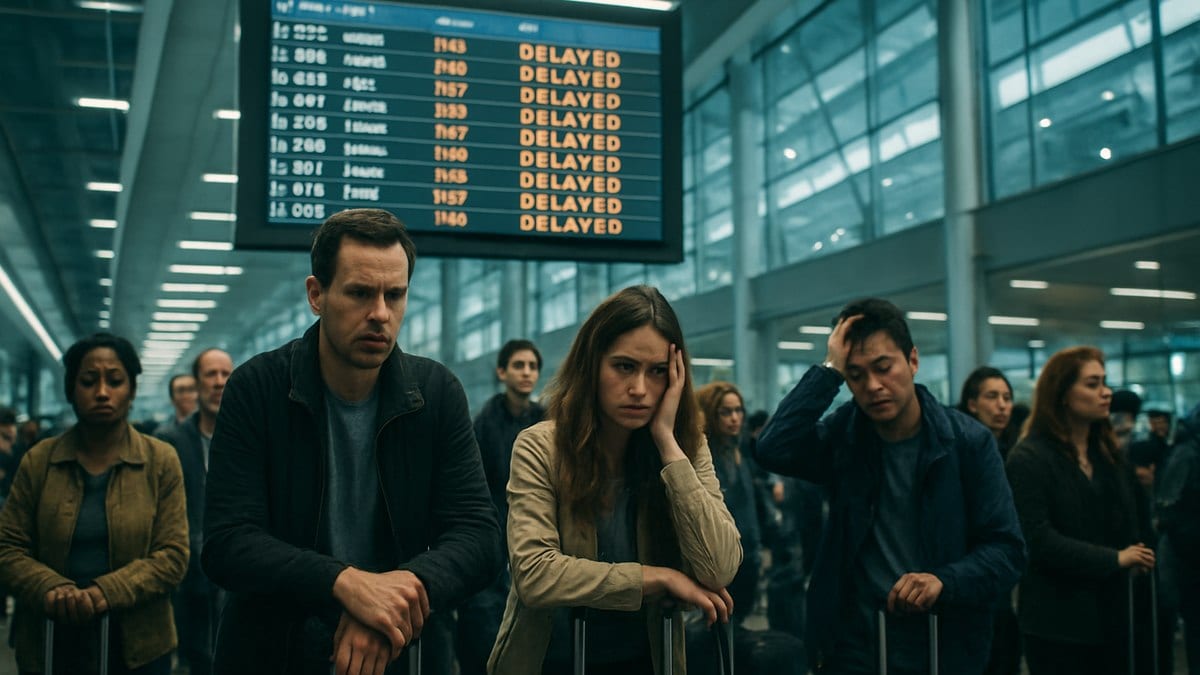
Hundreds of passengers were left sleeping on terminal floors and scrambling for scarce hotel rooms in early April as disruption at London Heathrow combined with wider European flight chaos to derail more than 300 services in a matter of days.
Get the latest news straight to your inbox!
Severe weather triggers fresh wave of disruption
Early April brought another spell of unsettled weather across Western and Northern Europe, with strong winds and heavy rain cutting capacity at several major hubs. Publicly available tracking data and disruption analyses indicate that more than 450 flights were delayed and at least 20 were cancelled at leading airports including Frankfurt, Munich, Madrid, Oslo and London Heathrow over just one 24 hour period at the turn of the month.
Heathrow, already operating close to its limits in peak periods, experienced mounting delays as aircraft waited longer for take off slots and arriving flights were held in extended landing patterns. Even when conditions improved, aircraft and crews were frequently out of position, leading to further knock on cancellations and missed connections.
The timing, coinciding with the busy Easter getaway and early spring holiday traffic, meant passenger volumes were high and spare seats on alternative services were limited. Travel industry monitoring suggests that the cumulative impact over several days pushed the total number of disrupted flights across Europe well beyond 300, with Heathrow among the hardest hit hubs.
While weather related disruption is not unusual at this time of year, observers note that the combination of regional storms, congested airspace and tight airline schedules left little room for recovery once delays began to cascade through the network.
Heathrow passengers stranded as capacity tightens
The effects for Heathrow travellers became particularly visible over the first weekend of April, when British Airways and partner airlines struggled to restore normal operations after successive days of regional disruption. Passenger rights specialists reported that on 5 April alone, more than 150 flights linked to British Airways and Pegasus Airlines were delayed or cancelled across Heathrow, Istanbul Sabiha Gökçen, Vienna and Dubai.
According to travel industry coverage, Heathrow recorded over 100 delays and a cluster of cancellations on 6 April, as airlines worked through a backlog of displaced passengers and aircraft. With hotel availability around the airport already strained by holiday demand, some travellers reported resorting to overnight stays in terminal seating areas while they waited for rebooked flights.
Data compiled by flight compensation services and travel outlets points to several hundred passengers being stranded or severely delayed at Heathrow over the first week of April, as disrupted services rippled through domestic, European and long haul routes. Even passengers whose flights ultimately departed often faced long queues at check in, repeated gate changes and missed onward connections.
Observers note that Heathrow’s role as a tightly scheduled hub meant that delays on a handful of key inbound services could quickly spread to multiple outbound flights. Aircraft arriving late from weather affected airports in continental Europe or the Middle East often turned around behind schedule, pushing knock on delays into subsequent rotations.
Knock on effects across Europe’s interconnected network
The Heathrow chaos did not occur in isolation. Reports from aviation analytics providers show that early April saw continued strain on European flight networks after a turbulent March marked by weather disruptions, airspace restrictions linked to events in the Middle East, and staffing pressures at several airports.
On 5 March, more than 1,000 flights across Europe were disrupted in a single day, while further waves of cancellations and delays followed as airlines adjusted routings to avoid sensitive airspace and contended with repeated storm systems. London Heathrow featured prominently in these statistics, with dozens of cancellations and more than 100 delays logged on several peak days.
By the first week of April, this pattern had created a fragile operating environment in which even modest weather triggers produced cascading effects. Flights arriving late into one hub translated into missed connections at another, and repositioning aircraft to cover gaps sometimes meant thinning out capacity elsewhere. The result, according to multiple monitoring services, was a rolling tally of more than 300 disrupted flights across Europe in the early days of April alone.
Passengers connecting through Heathrow bore a disproportionate share of the disruption. Missed onward services to North America, the Middle East and Asia were frequently reported, with some travellers facing waits of 24 hours or more for the next available seat on popular routes.
What stranded passengers experienced inside the terminals
Inside Heathrow’s terminals, the disruption translated into crowded departure halls, lengthy customer service queues and improvised sleeping arrangements as passengers waited for updates. Travel reporting from the first week of April highlights images of travellers stretched out on the floor with blankets and hand luggage, while others formed long lines at airline desks seeking rerouting or accommodation vouchers.
Publicly available accounts indicate that hotel rooms near the airport quickly filled up, especially on 5 and 6 April, leaving some stranded passengers to search further afield or remain in the terminal overnight. Families travelling with children and elderly passengers faced particular challenges as they navigated rebookings, meal arrangements and uncertainty over when they would finally depart.
Information flow also emerged as a recurring concern. With multiple causes converging, from local weather and airspace congestion to wider network disruption, passengers often struggled to understand why their flight had been affected or how long delays were likely to last. In some cases, departure boards and airline apps updated on different timelines, adding to the confusion.
At the same time, consumer advice platforms urged travellers to document expenses, keep boarding passes and disruption notices, and review their rights under UK and European passenger protection rules, which can entitle travellers to meals, accommodation and, in certain circumstances, financial compensation.
Airlines and airports face questions over resilience
The early April chaos has intensified debate over how resilient Europe’s biggest hubs, including Heathrow, are to increasingly frequent shocks. Aviation analysts point out that the same airport has faced several high profile disruptions in recent years, from power supply failures and technical issues to pandemic era shutdowns and industrial action.
Recent planning documents released by Heathrow itself acknowledge that extreme weather events have already forced the cancellation of hundreds of flights on individual days in past years, and warn that climate related volatility is likely to increase. Capacity constraints at the airport, where runway and terminal slots are tightly allocated, leave limited flexibility to absorb disruption without wider knock on effects.
Industry observers argue that the events of March and April 2026 highlight the need for more robust contingency planning, including greater spare capacity in schedules, improved crew and aircraft positioning strategies, and clearer communication channels when problems arise. Some experts also point to the role of fragmented airspace management and staffing shortages at air traffic control centers in prolonging delays.
For travellers, the message from consumer advocates is that disruption of the kind seen at Heathrow this April may become a more common feature of peak travel seasons. Advance planning, flexible itineraries, and a clear understanding of ticket conditions and passenger rights are likely to remain essential tools for navigating an increasingly unpredictable aviation landscape.