

More news on this day
Hundreds of passengers were left facing hours of disruption at London Heathrow Airport as 319 flights were delayed and 15 canceled, affecting a broad mix of domestic and international routes operated by major carriers including British Airways, American Airlines and Lufthansa.
Get the latest news straight to your inbox!
Widespread Delays Hit One of the World’s Busiest Hubs
The latest wave of disruption at Heathrow has rippled across its tightly scheduled operations, with delays and cancellations recorded on services to major long haul and European destinations such as New York, Dubai, Paris and Frankfurt. Publicly available flight-tracking data shows that late departures quickly cascaded into missed connections, leaving transfer passengers stranded in the terminal and at outstation airports.
Heathrow regularly handles hundreds of thousands of travelers each day, and even a relatively small fraction of flights running late can cause serious congestion at departure gates, immigration queues and baggage halls. Reports indicate that on the affected day, departure boards showed rolling delays across multiple terminals as airlines attempted to reshuffle aircraft and crews to keep as much of the schedule moving as possible.
Published coverage from aviation and travel outlets points to a combination of factors contributing to the disruption, including weather and airspace constraints elsewhere in Europe that reduced the airport’s effective capacity. When inbound aircraft arrive late into a hub such as Heathrow, outbound services can be held at the gate or reassigned to different stands, further slowing the operation.
Knock-on effects were not limited to London. Passengers connecting through Heathrow from other UK and European cities reported missed onward flights and forced overnight stays, underscoring how sensitive global networks are to delays at a key hub.
British Airways, American Airlines and Lufthansa Among Affected Carriers
Major network airlines bore the brunt of the disruption, particularly those that rely heavily on Heathrow for transatlantic and long haul operations. British Airways, the largest carrier at the airport, saw delays and cancellations on services linking London to US cities including New York, as well as to Gulf hubs such as Dubai and key European centers like Paris and Frankfurt.
American Airlines, which operates joint transatlantic services with British Airways, also experienced schedule disruption on its Heathrow to New York and other US routes, according to flight-status data compiled by independent tracking services. Delayed arrivals from the United States meant some aircraft and crews were out of position for their next scheduled departures back across the Atlantic.
Lufthansa and other European network carriers faced difficulties on feeder flights connecting their continental hubs to London. Late running flights between Heathrow and airports such as Frankfurt or Munich created missed onward connections for passengers heading to destinations across Europe, Africa and Asia. Aviation analysts note that when several alliance partners experience delays at the same time, rebooking options for stranded travelers can become limited.
Low cost and leisure airlines were also caught in the disruption, particularly on short haul routes where quick turnarounds are essential to maintaining daily schedules. With aircraft spending longer on the ground than planned, some flights were ultimately canceled to prevent further knock-on delays into the following day.
Passengers Face Long Queues, Missed Connections and Overnight Stays
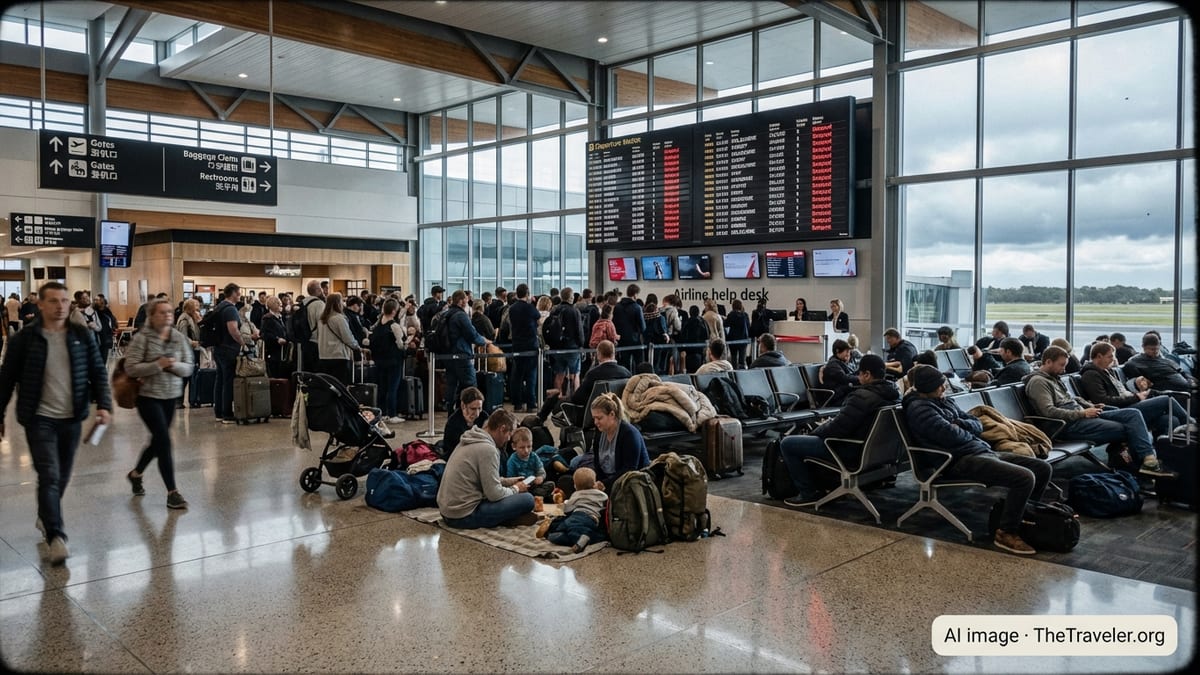
Images and accounts shared via public platforms described crowded departure halls, long queues at airline service desks and families resting on terminal floors as they waited for updates on their flights. Travelers with long haul itineraries, including those connecting to New York and Dubai, were among the most severely affected, with some facing rebookings that pushed their arrival times back by a day or more.
Reports indicate that hotel availability near Heathrow tightened quickly as airlines arranged overnight accommodation for passengers whose flights were canceled or who had missed the last connections of the evening. Some travelers opted to reroute via other European hubs such as Paris or Frankfurt when seats became available, adding extra stops and hours of travel to their journeys.
For business travelers, delayed departures and missed meetings added to the disruption. Early morning services that normally carry a high proportion of corporate passengers were among those delayed, leading some to abandon same day trips entirely. Travel management companies monitoring the situation advised clients to consider virtual alternatives or to build additional buffer time into itineraries that relied on tight connections.
Families and leisure travelers also faced complications, particularly those starting or ending holidays around school breaks. Delayed arrivals at destinations meant lost vacation time, while late returns risked knock-on issues with work and schooling commitments back home.
Operational Strain Highlights Fragility of Tight Schedules
Aviation industry observers note that the episode once again illustrates how tightly scheduled operations at major hubs leave little margin for error. Heathrow runs close to capacity in normal conditions, and data from recent disruption events across Europe has shown how quickly small delays can multiply when there is limited spare runway or gate availability.
Analysis by air travel data firms of recent high impact days across European hubs suggests that when several airports experience weather or airspace restrictions at the same time, delays can spread rapidly through interconnected networks. Flights arriving late into Heathrow from cities such as Amsterdam, Rome or Athens can in turn delay departures to long haul destinations, leaving aircraft and crew out of position for subsequent rotations.
Travel and consumer advocacy groups point out that, under European and UK rules, passengers departing from Heathrow may be entitled to assistance such as meals, refreshments and hotel accommodation when delays or cancellations exceed specified thresholds, depending on the underlying cause. They advise passengers to retain boarding passes, booking confirmations and receipts for any expenses incurred during the disruption, which can be important when submitting claims.
Specialist passenger rights organizations also encourage affected travelers to check whether they qualify for rerouting at the earliest opportunity or a refund on unused tickets. In complex cases involving missed connections on multi airline itineraries, they suggest contacting the original booking provider, whether an airline, travel agent or online platform, to clarify responsibilities for onward travel.
What Travelers Should Do If Flying Through Heathrow Next
With airline schedules taking time to fully recover after a day of severe disruption, aviation commentators warn that passengers flying through Heathrow in the following 24 to 48 hours may still face residual delays. Aircraft and crews can take several rotations to return to normal patterns, particularly on long haul routes linking London with New York, Dubai and other intercontinental destinations.
Travel advisories from industry and consumer outlets recommend that passengers monitor their flight status closely via airline apps or airport information channels before leaving for the airport. Where possible, travelers are encouraged to allow extra time for check in, security and potential gate changes, especially during peak morning and evening banks of departures.
Experts in passenger rights stress that those who experience significant delays should proactively ask airlines about available support, including meal vouchers, hotel stays and rebooking options. For travelers with tight connections, they suggest exploring alternative routings as soon as it becomes apparent that an original itinerary cannot be completed as scheduled.
While Heathrow remains one of the most connected hubs in the world, recent days of disruption across Europe show how vulnerable even well run airports are to the combined effects of weather, airspace constraints and operational strain. For passengers, careful planning, flexible itineraries and awareness of their rights can help mitigate the impact when schedules unravel.