

More news on this day
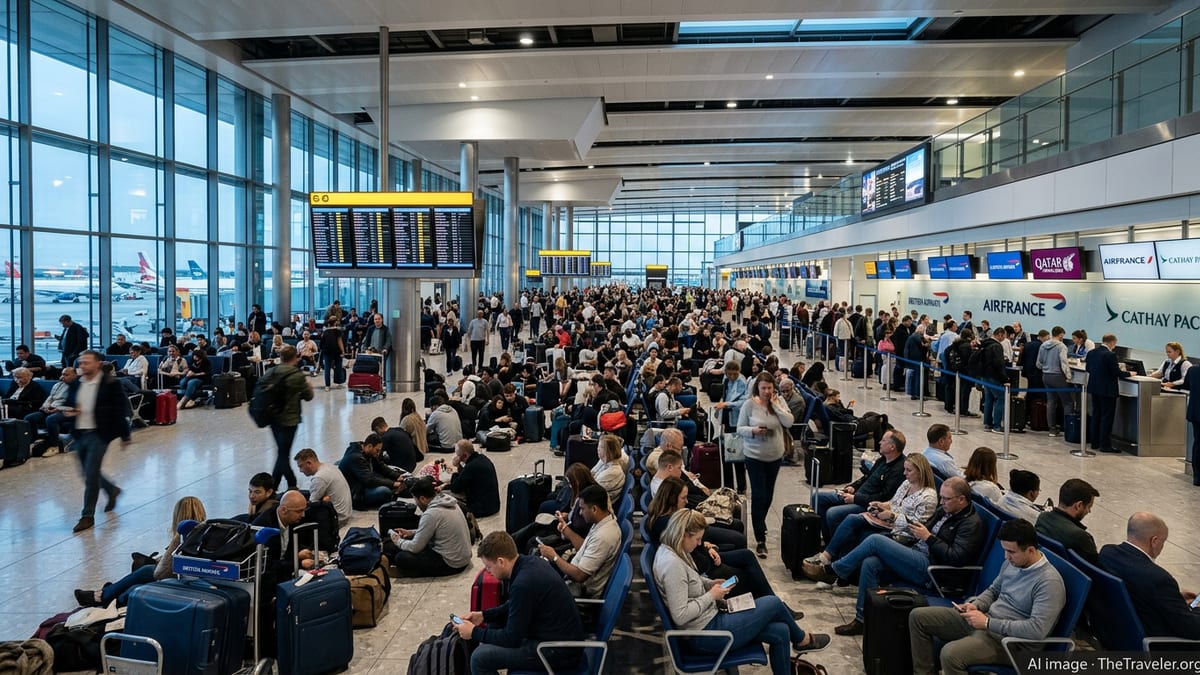
Hundreds of passengers were left stranded across the United Kingdom and at overseas hubs after a wave of disruption at London Heathrow Airport led to at least 177 delays and 26 cancellations, affecting major carriers including British Airways, Qatar Airways, Air France, and Cathay Pacific on key routes to Dallas, Paris, Newark, Frankfurt, and other global cities.
Get the latest news straight to your inbox!
Major Carriers Face Cascading Operational Disruption
Publicly available flight-tracking data and media coverage indicate that a significant share of the disruption at Heathrow involved large network carriers that rely on the airport as a primary hub. British Airways, Heathrow’s largest operator, experienced some of the most visible knock-on effects, with long-haul and European services pushed back by hours or removed from departure boards.
Flights operated by Qatar Airways, Air France, Cathay Pacific, and other international airlines were also impacted as congestion built up on departure and arrival banks. Aircraft due to operate onward legs were held on the ground or diverted, triggering a ripple effect across schedules in Europe, North America, and Asia.
The disruption translated into extended waits on concourses and at gate areas as passengers watched departure times repeatedly slide. While some aircraft eventually departed late, others were cancelled outright, forcing travelers to seek rebooking options on already crowded services.
Global Routes to and from Heathrow Thrown Off Schedule
The delays and cancellations were felt most acutely on high-demand intercontinental routes. Services linking Heathrow with Dallas–Fort Worth, Paris, Newark, and Frankfurt experienced severe timetable pressure, affecting both origin and connecting passengers. According to airport and airline operational data, these routes form part of tightly timed transatlantic and European connection banks, meaning a delay on one leg can easily disrupt onward journeys.
Travelers bound for Dallas reported missed connections onward to cities across the United States as departure slots from Heathrow were pushed back. Similar patterns were observed on Heathrow–Newark flights, which connect into dense domestic networks along the U.S. East Coast and Midwest.
On the European side, services to Paris and Frankfurt encountered schedule compression as carriers attempted to keep aircraft and crew rotations viable. Passengers who planned short business day trips or same-day returns were among those most affected, as late departures and arrivals undermined tightly planned itineraries.
Hundreds of Travelers Stranded and Rebooking Bottlenecks
The combination of 177 delayed flights and 26 cancellations resulted in hundreds of travelers being stranded at Heathrow and at airports across affected networks. Reports from passengers and travel-industry tracking platforms describe crowded customer service desks, long queues at transfer counters, and limited availability of near-term alternative flights.
Because many affected sectors were long-haul or prime-time European services, spare seats on later departures were scarce. Some travelers accepted overnight stays in airport hotels or nearby accommodations, while others faced extended waits on standby lists as airlines worked through backlogs.
Travel forums and social media posts highlighted stories of families separated onto different flights, business travelers missing critical meetings, and tourists forced to cut short or extend trips. The disruption also affected inbound visitors to the United Kingdom who arrived late or without their onward domestic connections, complicating ground transport and accommodation plans across the country.
Operational Pressures Behind the Heathrow Gridlock
While detailed, definitive causes for every delay and cancellation vary by flight, aviation observers point to a mix of operational pressures that can quickly overwhelm a hub as busy as Heathrow. Typical contributors include air traffic control restrictions, congested airspace, weather-related constraints, and aircraft or crew rotation issues that leave little room for recovery when multiple problems occur at once.
Industry analysis frequently notes that major European hubs operate close to capacity, meaning that a single cluster of late-arriving aircraft or a temporary slot restriction can cascade through an entire day’s schedule. At Heathrow, where runway and gate slots are among the most tightly managed in the world, any deviation from plan can have outsized consequences across the network.
Published aviation performance data also show that delays on long-haul arrivals can have particular knock-on effects, as those aircraft are often scheduled to operate subsequent flights with minimal ground time. When incoming services from regions such as North America or Asia arrive late, outbound legs to cities like Dallas, Newark, Frankfurt, or further afield may be forced into lengthy postponements or cancellation.
Advice and Outlook for Affected and Future Travelers
Travel organizations and consumer advocates generally advise passengers caught up in disruption of this scale to closely monitor airline apps and official channels rather than relying solely on terminal departure boards. Publicly available guidance emphasizes the importance of confirming whether a flight is delayed or cancelled before traveling to the airport, and of keeping boarding passes and receipts for potential claims under airline or regulatory compensation policies.
For those with tight connections through Heathrow, industry commentary suggests building in longer layovers when possible, especially during peak travel periods or seasons prone to weather or airspace constraints. Flexible tickets, travel insurance with interruption coverage, and advance familiarity with alternative routings via secondary hubs can also provide additional resilience when schedules unravel.
In the near term, the disruption underscores the vulnerability of complex global networks to shocks at a single major hub. As airlines and airports review the latest operational breakdown, analysts note that similar episodes are likely to recur without additional slack in scheduling, infrastructure capacity, or air traffic management. For travelers, the events at Heathrow serve as another reminder that even meticulously planned itineraries can be upended in a matter of hours.