

More news on this day
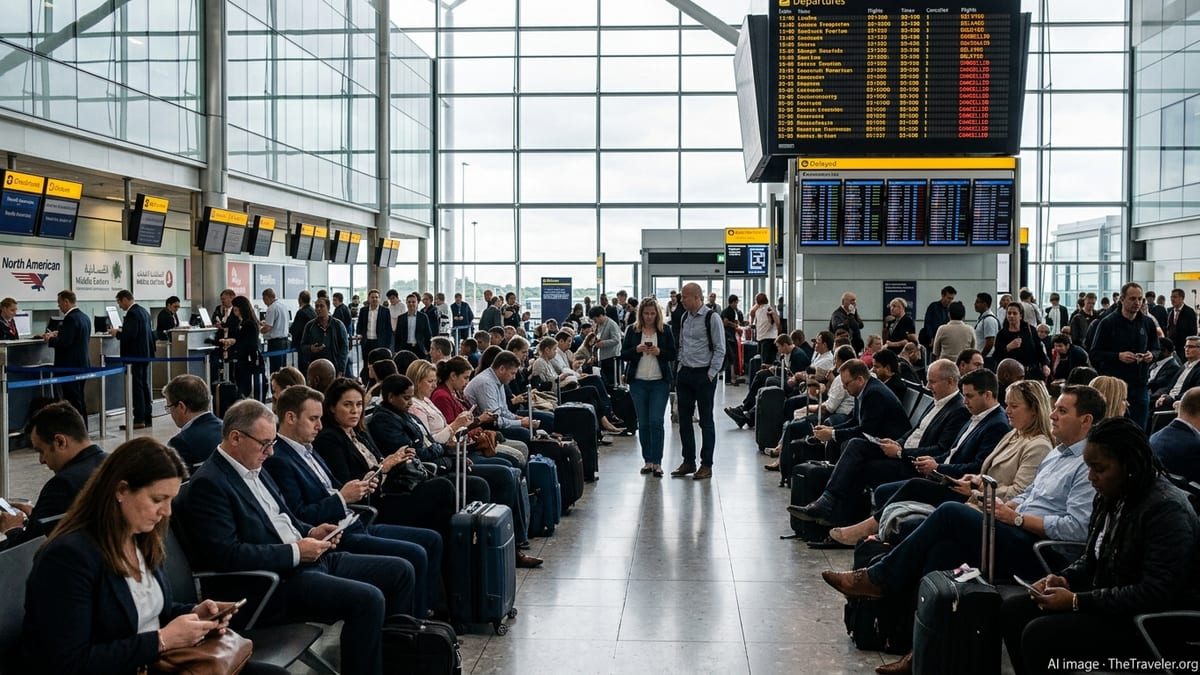
Hundreds of passengers were left stranded at London Heathrow after widespread disruption led to 38 flight delays and 23 cancellations, affecting services operated by United Airlines, Air Canada, Delta Air Lines, Saudia, Emirates, Virgin Atlantic and other carriers on key routes to Berlin, Oslo, Halifax, Dubai and Chicago.
Get the latest news straight to your inbox!
Major Carriers Hit Across Transatlantic and European Network
Publicly available flight information from Heathrow’s departure and arrival boards shows a cluster of delays and cancellations across several terminals, with long-haul and short-haul routes impacted. Services to North America and the Middle East were particularly affected, alongside key European links, compounding disruption for connecting travelers at one of the world’s busiest hubs.
Among the hardest hit were flights operated by United Airlines, Air Canada and Delta Air Lines on transatlantic sectors linking Heathrow with Chicago and Halifax. Virgin Atlantic and Delta’s joint network on North Atlantic routes also experienced operational interruptions, while Emirates and Saudia flights to and from Dubai and other Gulf and Saudi gateways saw extended ground holds and schedule changes.
European services were not spared. Flights from Heathrow to Berlin and Oslo, operated as part of wider alliance networks, faced a mix of late departures and outright cancellations. Passengers intending to connect onward within Europe faced the added complication of missed links and limited same-day rebooking options.
Operational reporting used by the aviation industry indicates that these carriers already manage relatively high volumes of delay incidents at Heathrow over a typical month, with factors such as air traffic constraints, airport congestion, reactionary delays from late inbound aircraft and weather-sensitive operations combining to create pressure on schedules.
Knock-On Effects for Stranded Passengers
The uneven spread of delays and cancellations created a fragmented picture across Heathrow’s terminals, leaving some departure halls comparatively calm while others were crowded with passengers waiting for updates or alternative flights. With key long-haul departures disrupted, many travelers found themselves facing unexpected overnight stays or lengthy re-routing through other European and North American hubs.
Travel forums and social media posts from affected passengers describe long queues at airline service desks, with some travelers redirected to partner carriers or via indirect routings to reach final destinations such as Chicago, Berlin or Oslo. Others reported being advised to seek hotel accommodation and return the following day due to limited availability of spare seats on remaining services.
For passengers on multi-leg itineraries, missed connections amplified the disruption. Those booked through to secondary North American or Scandinavian cities often had to accept complex rebookings involving additional stops, or travel on different alliance partners. The result was extended journey times, reissued tickets and uncertainty around baggage transfers.
Published consumer guidance notes that in cases of severe disruption, entitlements to care, assistance and in some instances compensation can vary depending on the airline’s operating base, the cause of the delay or cancellation and the specific regulations that apply to each carrier. Travelers have been encouraged by consumer advocates to retain receipts for meals, accommodation and alternative transport when seeking reimbursement.
Operational Pressures at a Congested Global Hub
Flight performance data released periodically for Heathrow and other major European airports highlights how congestion, tight runway capacity and air traffic control restrictions can quickly cascade into wider disruption. Reports that track delay incidents for airlines such as Emirates, Virgin Atlantic, Air Canada, United and Saudia at UK airports show recurring patterns of reactionary delays, where one late arrival triggers a series of knock-on schedule issues.
At a hub as busy as Heathrow, a relatively minor operational disturbance at peak times can require ground handling teams, airport operators and airline control centers to reshuffle aircraft, gates and crew rosters at short notice. When this happens during already busy travel periods, there is often limited slack in the system to absorb extensive delays without resorting to cancellations.
Industry analyses frequently cite weather, staffing constraints in air traffic control, unplanned technical checks on aircraft and the late arrival of inbound flights as common contributors to disruption. While the immediate trigger for the latest wave of delays and cancellations at Heathrow has not been fully detailed in official summaries, the pattern mirrors previous episodes where a combination of factors led to elevated numbers of grounded flights.
Heathrow’s role as a key transfer point for alliance networks means that disruption on a small number of long-haul flights can quickly affect passengers far beyond London. Travelers bound for destinations such as Berlin or Oslo via Heathrow may have started their journeys in cities across North America, Asia or the Middle East, making recovery from cancellations more complex and time-consuming.
Routes to Berlin, Oslo, Halifax, Dubai and Chicago Disrupted
The routes most visibly affected during the disruption underscore Heathrow’s strategic importance on both regional and intercontinental corridors. Berlin and Oslo are core European capitals linked into broader alliance schedules, serving not only point-to-point traffic but also connecting passengers from long-haul arrivals in London.
On the transatlantic side, flights between Heathrow and Chicago O’Hare form a vital business and leisure corridor used by travelers from both sides of the Atlantic, with services marketed by multiple carriers within joint ventures. Disruptions on this route can ripple through corporate travel programs and onward connections to cities across the central and western United States.
Halifax, though a smaller North American destination compared with Chicago, is an important seasonal and regional link for Canadian travelers and those connecting into Atlantic Canada. Cancellations or long delays on this route can leave limited alternative options, as frequencies are typically lower than on major trunk transatlantic routes.
Dubai remains one of Heathrow’s busiest long-haul destinations, with Emirates operating multiple daily frequencies that feed an extensive global network. Delays or cancellations on London–Dubai flights can disrupt itineraries to Africa, Asia and Australasia, forcing some passengers to be rebooked via other European or Middle Eastern hubs to reach their final destinations.
What Travelers Can Do When Disruption Hits
Travel experts and consumer organizations consistently advise that during major airport disruptions, passengers should monitor both airline communication channels and airport departure boards closely, as schedules can change multiple times in a short period. Rebooking options often appear first through airline apps and online channels before being reflected at airport service desks.
Travel insurance policies that include disruption cover can also provide an additional layer of protection, particularly for those facing extra accommodation costs, missed tours or prepaid arrangements at their destinations. Policy wording varies widely, so passengers are encouraged by consumer advocates to review coverage details before travel, especially during busy or weather-sensitive seasons.
For future journeys through congested hubs such as Heathrow, some frequent travelers suggest building longer connection times into itineraries, particularly when transferring between long-haul and short-haul flights. Although this can lengthen overall travel time, it may offer more flexibility if initial flights are delayed and reduce the risk of missed onward connections.
As operations stabilize following the latest wave of delays and cancellations at London Heathrow, airlines are expected to work through backlogs of disrupted passengers over subsequent days. However, the episode serves as another reminder of how quickly conditions at a major international hub can shift, leaving even carefully planned journeys at risk of sudden and significant disruption.