

More news on this day
Travelers heading for London Heathrow and other UK airports now face a new layer of pre‑departure red tape, as a mandatory £16 Electronic Travel Authorisation (ETA) for most visa‑free foreign visitors comes into full effect and begins to disrupt unprepared passengers’ plans.
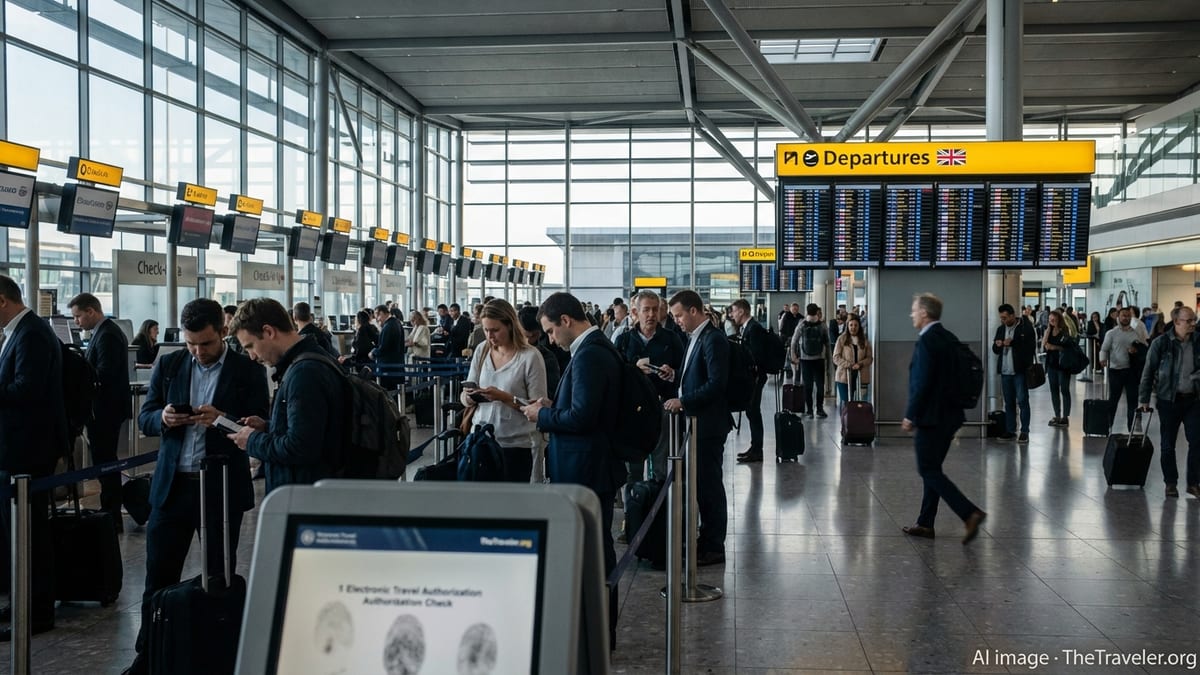
What the new ETA rule means for Heathrow passengers
The UK’s ETA scheme, rolled out in stages since 2023, is now being strictly enforced for visitors from 85 visa‑free countries arriving at Heathrow and other British airports. From 25 February 2026, most non‑visa nationals must hold an approved ETA before they can even board a flight bound for the UK, turning what had been a soft launch into a firm legal requirement.
The ETA is a form of advance digital travel permission, similar to the United States’ ESTA system. It is not a traditional visa, but travelers must complete an online application, undergo security checks and pay a fee before flying. Without this electronic sign‑off linked to their passport, passengers will be treated as lacking permission to travel to the UK.
The change is already being felt most acutely at Heathrow, the country’s busiest international gateway, where carriers are now obliged to verify ETA status at check‑in. Airport and airline staff report cases of confused travelers turned away from long‑planned trips because they assumed visa‑free entry still meant they could simply arrive with a passport and buy a ticket.
The UK government argues that the system will ultimately streamline border control by shifting checks away from the arrival hall and into digital pre‑screening. But in the short term it is catching out those who have not kept up with the staggered rollout and recent fee changes.
Who has to pay the £16 ETA fee, and who is exempt
The new requirement applies to nationals of 85 countries who previously enjoyed visa‑free short stays in the UK. This includes visitors from the United States, Canada, Australia, New Zealand, Singapore, Malaysia, Japan, South Korea and all European Union states, among others. Every traveler from these countries, regardless of age, must have their own ETA approved and linked to the passport they will use to travel.
The current fee is set at £16 per application, payable online at the point of submission. The authorization is typically valid for two years or until the traveler’s passport expires, whichever comes first, and allows multiple entries for visits of up to six months at a time. For frequent visitors using Heathrow as a gateway to the UK, that spreads the cost over potentially several trips.
Critically, British and Irish citizens are exempt from needing an ETA. So too are foreign nationals who already hold a valid UK visa, as well as those with existing residence rights in the country. Dual nationals with British or Irish citizenship must travel using that passport or carry alternative proof of status, otherwise they risk being treated like any other foreign national and could be told to obtain an ETA or refused boarding.
There are also specific rules for travelers simply passing through the UK. Passengers who remain airside and do not clear UK passport control during a connection at Heathrow or Manchester are currently exempt, while those who need to enter the UK for an overnight stay or to change airports must hold either an ETA or another appropriate visa.
How to apply for an ETA and typical processing times
Travelers can apply for an ETA using either the official UK ETA mobile app or the government’s online portal. The process requires a valid passport from an eligible country, a recent digital photograph and basic biographical details, as well as answers to a short series of security and travel history questions. Payment of the £16 fee is made by card at the time of application.
Authorities advise applying at least a few days before travel. Most applications are decided within three working days, though some are granted in minutes while a minority may be delayed for additional checks. Because the ETA is fully digital, no physical document is issued; instead, the authorization is electronically linked to the applicant’s passport and verified by airlines before boarding.
Heathrow‑bound passengers are being urged by both carriers and travel agents to treat the ETA as essential pre‑trip admin, alongside buying a ticket and checking passport validity. For those who travel regularly to the UK, applying well in advance of their next journey allows them to benefit from multiple trips on a single authorization rather than leaving the process until just before departure.
Travel experts also recommend ensuring that flight bookings are made in exactly the same name format as appears on the passport and ETA application. Any discrepancy can trigger manual checks at check‑in, adding stress and potential delays in already busy airport queues.
Immediate impact on bookings, boarding and border checks
The move from partial rollout to full enforcement has produced immediate ripples through Heathrow’s operation. Airlines have been instructed that they must deny boarding to any traveler who requires an ETA but cannot show evidence that it has been granted. As a result, front‑line airport staff have become the first barrier for non‑compliant passengers, with some reporting a spike in last‑minute ticket changes and missed departures.
Travel agents and online booking platforms are updating their customer communications to highlight the new rules at the point of sale. Industry groups say that while awareness is improving, there remains a significant cohort of independent travelers and occasional visitors who booked well in advance and are only now discovering the fee and paperwork requirement.
Inside the UK, border officers at Heathrow and other airports say that travelers who have correctly obtained an ETA are moving more quickly through e‑gates and manual passport control, as basic checks have already been completed. Officials expect that, as systems bed in, this will reduce queues at peak times, although any disruption caused by airlines resolving ETA issues at check‑in may shift delays upstream to departure airports.
For now, carriers are taking a cautious approach, requesting that passengers arrive earlier than usual and have documentation ready to avoid bottlenecks at bag‑drop and security. Heathrow, which has already been operating at near pre‑pandemic volumes, is watching closely to see how the new digital permission regime affects peak‑season throughput.
What travelers should do now when planning UK trips
The key message for anyone planning to fly into Heathrow or other UK airports in the coming months is simple: check whether you need an ETA and, if so, apply before you book non‑refundable elements of your trip. Travelers from the 85 affected countries should factor the £16 fee into their overall budget, especially families and groups for whom the cost multiplies by the number of passengers.
Passengers are also being encouraged to review their routing carefully. Those with itineraries involving overnight layovers or airport changes in the UK may move from being simple transit passengers to travelers who must clear passport control, in which case an ETA or appropriate visa is required. In contrast, through‑ticketed connections that keep passengers airside at Heathrow can in some cases avoid the need for an ETA.
For frequent flyers and corporate travelers, the two‑year validity period makes it sensible to secure an ETA well before any specific departure date. Employers with staff who regularly travel to London for meetings or conferences are being urged to audit the status of employee travel documents to avoid last‑minute disruption.
With Europe preparing its own expanded digital border checks and authorization schemes, travel specialists say the UK’s full enforcement of its ETA at Heathrow is likely a sign of things to come across the region. For now, though, it is passengers bound for Britain’s flagship hub who are on the front line of this new era of pre‑travel permission, and the safest response is to get compliant early and build the extra step into every future trip plan.