

More news on this day
Hundreds of travellers were left stranded at London Heathrow Airport on February 23, 2026, after a wave of delays and cancellations affected more than 270 flights and triggered knock on disruption across major European hubs including Oslo and Paris.
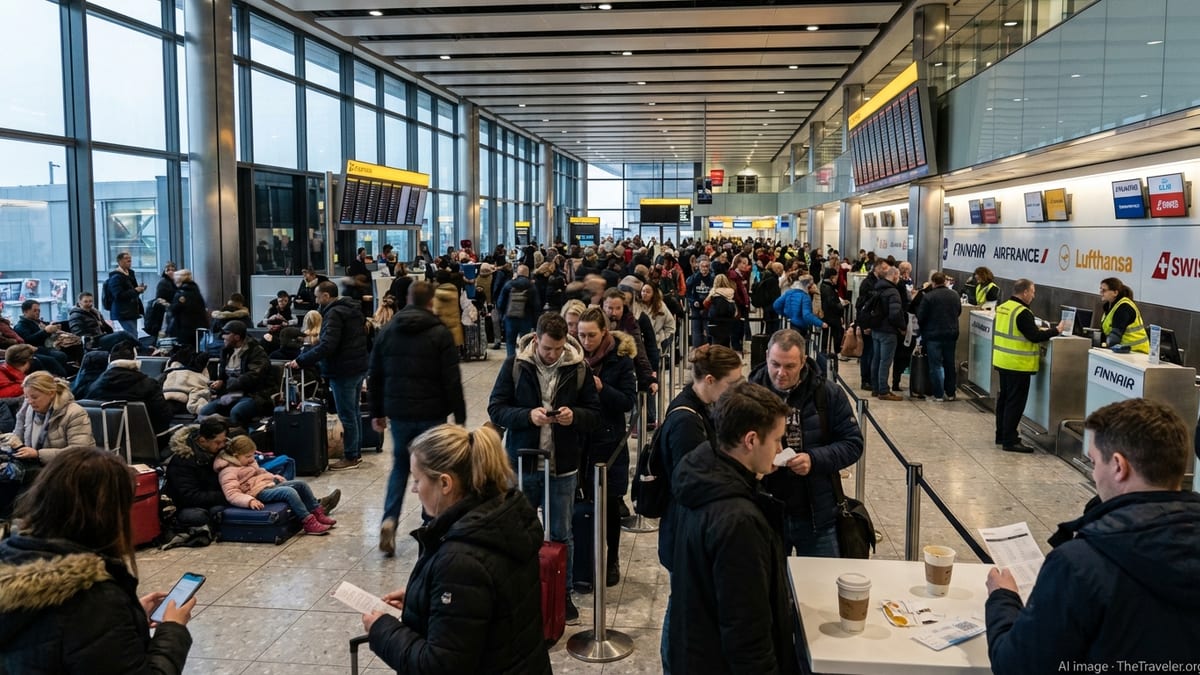
Heathrow Turns Into Pressure Point for European Air Travel
London Heathrow, one of the world’s busiest international hubs, became the focal point of Europe’s aviation turmoil as 228 flights were reported delayed and 48 cancelled over the course of Sunday’s operations, according to aggregated live flight tracking and airport operations data. The disruption translated into hours long queues, missed connections and hastily reworked itineraries for passengers heading to and from the United Kingdom.
While Heathrow is no stranger to winter weather delays, aviation analysts noted that the scale and clustering of Sunday’s problems were unusually intense for a single operational day. Long haul and short haul services were both hit, amplifying the knock on effects for connecting traffic and leaving airline control centres scrambling to reassign aircraft and crew.
By late afternoon, departure boards at several terminals showed dense blocks of red and amber status updates, as airlines issued rolling delays and quietly removed some services from schedules altogether. Airport staff reported terminal congestion building steadily through the day as incoming passengers found their onward flights cancelled or heavily delayed.
The situation unfolded against the backdrop of a wider pattern of weather related disruption across Europe in recent days, with carriers already operating tighter than usual margins on aircraft and crew availability. That background strain left little room to absorb Heathrow’s latest wave of problems.
Air France, Lufthansa, Finnair, KLM and Swiss Among Worst Hit
Although British Airways and a roster of transatlantic carriers bore the brunt of Heathrow’s overall disruption, Sunday’s conditions also hit a wide mix of European airlines serving key hubs on the continent. Flights operated by Air France, Lufthansa, Finnair, KLM and Swiss were among those delayed or cancelled out of London, with repercussions for passengers as far away as Scandinavia and North America.
Air France saw London services to Paris Charles de Gaulle heavily affected, feeding into a wider pattern of disruption on routes linking Paris with major US cities and other long haul destinations. Finnair, which has been grappling with bad weather related disruption in recent days, reported further schedule changes on services connecting London with Helsinki and onward long haul gateways.
KLM and its partners faced renewed challenges on heavily trafficked links between Heathrow and Amsterdam Schiphol, a key transfer point for Europe bound and intercontinental passengers. Swiss and Lufthansa, both of which rely on tight connections at their respective Zurich, Geneva, Frankfurt and Munich hubs, also encountered delays that cascaded through evening waves of departures.
For passengers booked on multi leg journeys, the involvement of so many different European network carriers complicated rebooking efforts. Long queues formed at transfer and ticket desks as travellers tried to secure scarce seats on later flights, while others turned to airline apps and customer service lines in search of faster solutions.
Knock On Effects Felt in Oslo, Paris and Beyond
The disruption at Heathrow quickly rippled out across the continent, adding pressure to airports that had already been contending with a spell of severe winter weather. At Oslo Gardermoen, delays and cancellations mounted as aircraft and crews failed to arrive from London and other affected hubs, squeezing capacity on already busy Nordic routes.
Paris Charles de Gaulle, one of Europe’s largest long haul gateways, reported additional congestion at terminals handling UK bound and UK originating traffic. Airlines were forced to adjust rotations and, in some cases, operate flights out of sequence to reposition aircraft stranded by earlier cancellations. That added fresh strain to airport resources and extended waiting times at immigration and security for arriving and departing passengers.
Elsewhere, knock on effects were reported at Amsterdam Schiphol, Frankfurt and Zurich, where late arriving aircraft from Heathrow and other weather hit cities disrupted carefully choreographed departure banks. Airlines operating hub and spoke models were particularly exposed, as the loss or delay of a single feeder flight affected dozens of onward connections.
Travel data firms tracking Europe wide operations noted that the Heathrow centred disruption came on top of hundreds of delays and more than a hundred cancellations already reported across the UK, France, Spain, Finland and the Netherlands over the weekend, magnifying the impact on passengers and airline schedules alike.
Weather and Capacity Constraints Create a Perfect Storm
Aviation experts pointed to a combination of winter weather, crowded skies and limited spare capacity as the underlying ingredients in Sunday’s disruption. In recent days, heavy snow, freezing temperatures and strong winds have swept across large parts of northern and western Europe, prompting widespread de icing operations and more conservative air traffic control spacing between flights.
Those conditions slowed the pace of operations at multiple airports simultaneously, including Heathrow, which already operates near its maximum declared capacity in normal conditions. Even modest departures from schedule can quickly snowball into large scale disruption when there is little slack in runway slots, gate space or aircraft availability.
To complicate matters further, airlines are still rebuilding network resilience after years of pandemic era retrenchment. Analysts say carriers have less reserve aircraft and crew standing by to absorb unexpected shocks than they did before 2020, making it harder to recover swiftly from a day of severe disruption at a major hub.
Industry observers also highlighted the interdependence of European aviation. When London and Paris are hit at the same time as Amsterdam, Oslo or Helsinki, the combined effect can overwhelm efforts to reroute passengers through alternative gateways, particularly during busy school holiday and business travel periods.
Scenes of Frustration as Passengers Face Long Waits
Inside Heathrow’s terminals, Sunday’s operational data translated into very human scenes of frustration. Families returning from half term holidays, business travellers racing to make meetings and long haul passengers facing missed connections all found themselves competing for information, rebooking options and basic amenities.
Passengers reported standing for hours in customer service lines, only to be told that hotels near the airport were already full or that the next available seats on alternative flights were days away. Some travellers slept on terminal floors or in makeshift rest areas as late night cancellations left them with few realistic options for onward travel.
Digital channels were also stretched. Airline apps and websites saw surging traffic as passengers tried to rebook or track luggage, and some reported intermittent outages or error messages as systems struggled to keep up with demand. Social media filled with images of crowded departure halls and departure boards filled with delayed or cancelled statuses.
Airport staff and ground handlers faced their own pressures as they tried to manage crowding, assist vulnerable passengers and coordinate with airlines to move aircraft and baggage in challenging conditions. Unions representing front line aviation workers have repeatedly warned that chronic staffing shortages increase the risk of exactly this kind of chaotic day.
Passenger Rights and What Travellers Can Expect
With hundreds of passengers stranded or severely delayed, attention quickly turned to the protections available under UK and European air passenger rights rules. Under current regulations, travellers facing long delays or cancellations that are not caused by extraordinary circumstances are entitled to care such as meals, refreshments, hotel accommodation where necessary and, in some cases, financial compensation.
Airlines affected by Sunday’s events began issuing guidance through their websites, apps and airport announcements, urging passengers to check the status of their flights before heading to the airport and outlining options for rebooking or refunds. Travellers whose flights were cancelled could typically choose between a full refund or rerouting at the earliest opportunity, although seat availability was often limited.
Consumer advocates advised passengers to keep all receipts for food, transport and accommodation expenses incurred as a result of the disruption, in case they are eligible to claim reimbursement later. They also recommended documenting delays and cancellations via screenshots of boarding passes and departure boards to support any compensation claims.
However, the complexity of determining whether specific delays qualify for compensation under existing rules left many travellers uncertain about their rights. Legal specialists noted that factors such as weather related constraints, air traffic control decisions and airline operational choices all play a role in assessing liability, and that these assessments are often made only after the immediate disruption has passed.
Airlines and Airports Review Resilience as Disruptions Mount
The latest wave of problems at Heathrow and across Europe is prompting renewed scrutiny of how prepared airlines and airports are for increasingly volatile winter conditions. Industry bodies have warned that climate change is likely to bring more frequent episodes of severe weather, from heavy snowfall and ice to high winds and flooding, all of which can disrupt tightly calibrated aviation operations.
Heathrow’s management has previously pledged to strengthen contingency planning and invest in infrastructure to reduce vulnerability to power outages, ground handling bottlenecks and de icing delays. Sunday’s events will add pressure on the airport to demonstrate that these plans are delivering tangible improvements for passengers.
Airlines are also reassessing how they balance efficiency and resilience. Running aircraft and crews at high utilisation levels is key to profitability, but it leaves little margin for error when storms or technical problems strike. Some carriers are exploring whether to build more flexibility into schedules during peak winter months, even if that means operating slightly fewer flights.
Regulators and passenger groups, meanwhile, are calling for greater transparency around how decisions to cancel or delay flights are made, and how responsibility is shared between airlines, airports and air traffic control. As Europe’s aviation system becomes more interconnected, the need for coordinated, cross border responses to operational shocks is becoming ever more apparent.
Advice for Travellers With Upcoming Flights
For travellers with flights booked in the coming days, airlines and travel agents are urging a cautious and well informed approach. With airports across northern Europe still clearing backlogs from the weekend and fresh weather systems moving across the Atlantic, schedules may continue to be vulnerable to short notice changes.
Passengers are being advised to monitor flight status repeatedly in the 24 hours before departure, rather than relying on a single check when they book in advance. Airline mobile apps and text alerts remain among the most reliable ways to receive real time updates, though they are not infallible during major disruption.
Experts recommend travelling with extra flexibility where possible, including allowing longer connection times and avoiding the last flight of the day on critical routes, which offers fewer recovery options if something goes wrong. Travel insurance that includes robust disruption cover can also provide an additional safety net, particularly for complex or high value itineraries.
Above all, travellers are encouraged to build resilience into their own plans, recognising that Europe’s air transport system is operating under heightened strain. While Sunday’s scenes at Heathrow and across airports in Oslo, Paris and beyond were extreme, they are not isolated, and industry insiders caution that similar episodes are likely to recur as winter weather and capacity pressures continue to collide.