

More news on this day
Hundreds of UK travellers have been left stranded or severely delayed after London Heathrow logged 205 flight delays and 15 cancellations in a single day, disrupting services operated by British Airways, Virgin Atlantic, United Airlines and several other major carriers on key routes to Europe, North America and the Middle East.
Get the latest news straight to your inbox!
Major Carriers Hit as Disruption Spreads from Heathrow
Operational data and published airport-monitoring reports indicate that Heathrow has endured one of its most challenging days of 2026 so far, with 205 delayed flights and 15 outright cancellations rippling across its global network. The disruption has been most visible on services operated by British Airways, Virgin Atlantic and United Airlines, which together account for a significant share of the airport’s long haul and premium traffic.
Short haul links to European hubs such as Copenhagen and Tel Aviv, alongside transatlantic connections to Halifax and Washington, D.C., have been among the most affected. Publicly available tracking feeds show multiple rotations arriving late into Heathrow, then departing late again or being withdrawn from the schedule entirely, amplifying knock on effects as the day progressed.
The pattern mirrors broader turbulence across the European network in recent weeks, where large numbers of delays and cancellations have been reported at airports from Manchester and Edinburgh to Copenhagen and Amsterdam. In that wider context, Heathrow’s 205 delays and 15 cancellations stand out as a concentrated shock at one of Europe’s busiest hubs.
While no single cause has been identified publicly, the combination of tight aircraft utilisation, weather related constraints at several connected airports and air traffic control bottlenecks on busy corridors has created limited room to recover once services began slipping behind schedule.
Passengers Stranded on Key Routes to Europe and North America
The latest disruption has hit a range of strategically important routes, with travellers on flights between Heathrow and Copenhagen, Tel Aviv, Halifax and Washington, D.C. reporting extended waits and missed connections according to social media posts and airport departure board snapshots.
On European sectors, delays to Copenhagen and Tel Aviv services have affected both point to point passengers and those relying on Heathrow as a transfer gateway. Late arriving aircraft from Scandinavia and the eastern Mediterranean have reduced turnaround windows, forcing tight connections to be broken and some onward journeys to be rebooked for later in the day or the following morning.
Across the Atlantic, publicly available schedules show disruptions on British Airways and Virgin Atlantic departures to the United States and Canada, including services to Washington, D.C. and Halifax. These routes are particularly time sensitive for business travellers, and delays of several hours can effectively wipe out a working day at the destination or require meetings to be rescheduled at short notice.
Operational summaries from recent days at Heathrow also highlight cancellations on other North American links such as San Francisco, Miami and Los Angeles, underscoring how quickly disruption on one side of the Atlantic can cascade into a broader tightening of available capacity for UK based travellers.
Heathrow at the Center of a Wider UK and European Disruption Pattern
The latest wave of disruption at Heathrow does not exist in isolation. Industry tracking services and recent coverage from travel media outlets describe a pattern of rolling delays and cancellations across multiple UK and European airports since early April, with hundreds of flights affected in England, Scotland, Scandinavia and southern Europe on successive days.
In the United Kingdom, recent tallies from London, Manchester, Edinburgh, Glasgow and Newcastle show hundreds of delays and dozens of cancellations within a single day, with British Airways and Virgin Atlantic frequently listed among the most impacted carriers. At the same time, Europe wide snapshots point to similar strains at hubs such as Amsterdam Schiphol, Rome Fiumicino, Madrid Barajas and Copenhagen, suggesting that many of Heathrow’s problems are shared across the continent.
Weather systems moving through northern Europe, including storms affecting airports in Scandinavia, have triggered diversions, missed slots and ground handling backlogs. When these conditions overlap with peak travel periods and pre existing staffing or capacity constraints, the result is a fragile operating environment in which any local glitch at Heathrow can rapidly escalate into a transnational issue.
For passengers, the distinction between local and network causes often matters less than the immediate reality of being stranded in terminals from London to Gothenburg while waiting for updated departure times or alternative routings.
What Stranded Travellers Are Experiencing on the Ground
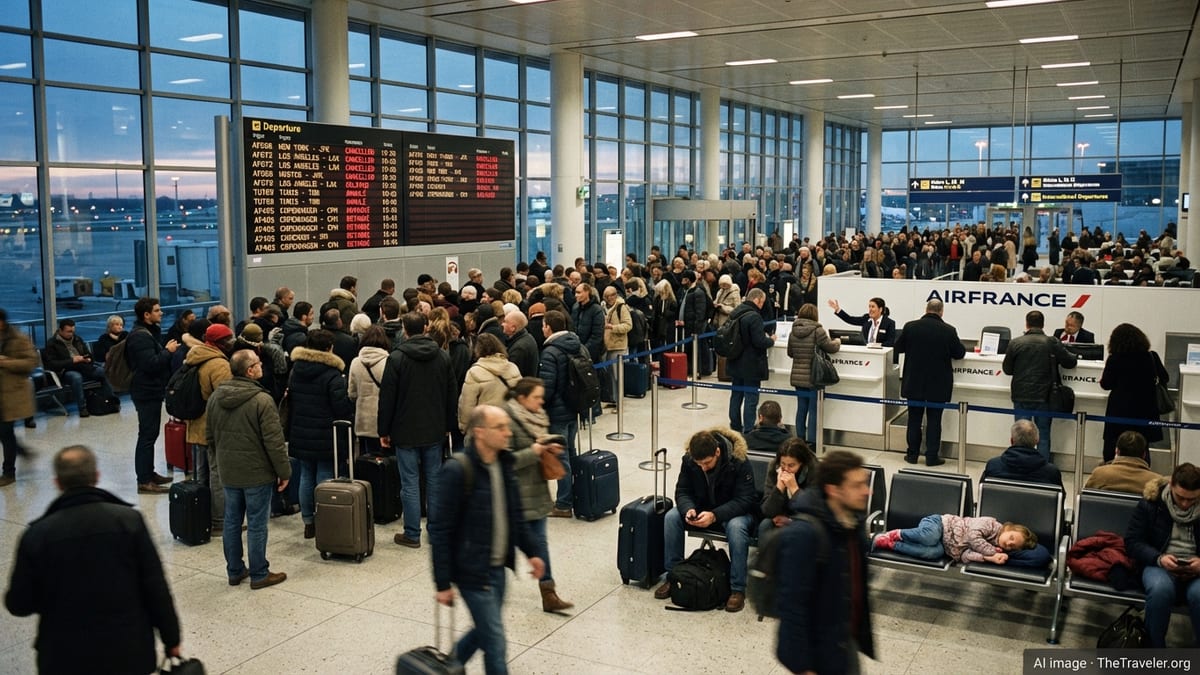
Reports from passengers and flight tracking platforms paint a familiar picture inside terminals and at departure gates. Travellers on disrupted Heathrow services have faced long queues at check in and rebooking desks, crowded seating areas near heavily delayed departures and, in some cases, overnight stays when onward flights to destinations such as Tel Aviv, Halifax or Washington, D.C. have already departed by the time inbound aircraft arrived.
Missed connections are a recurring theme, particularly for those on multi leg itineraries using Heathrow as a hub between regional UK or European airports and long haul destinations. A delay of even 60 to 90 minutes on an inbound segment can be enough to sever carefully timed transfers, leaving travellers to compete for limited seats on later departures or rerouted journeys via other hubs such as Dublin, Amsterdam or Frankfurt.
Families with young children, elderly passengers and travellers with time sensitive commitments have been especially affected by the lack of certainty over departure times. Many have turned to airline apps and third party flight tracking tools for more frequent updates than those available on airport information screens, reflecting a broader shift in how passengers seek to manage disruption in real time.
For those whose flights were cancelled outright, the practical challenge has often been securing accommodation near Heathrow, particularly when disruption coincides with busy weekends, school holidays or major events in London that fill nearby hotels.
Rights, Remedies and What Travellers Can Do Next
The scale of delays and cancellations at Heathrow raises important questions about what assistance and redress affected passengers can reasonably expect. Public guidance based on UK and EU aviation regulations indicates that travellers on eligible British Airways, Virgin Atlantic, United Airlines and other flights departing from Heathrow may, in certain circumstances, be entitled to care, rerouting or financial compensation when services are heavily delayed or cancelled.
In practice, this can include meal vouchers, hotel accommodation for overnight delays, transport between the airport and accommodation, and rebooking on the next available service to the original destination. Eligibility depends on several factors, including flight distance, total delay on arrival and whether the disruption was within the airline’s control or caused by extraordinary circumstances such as severe weather or air traffic control restrictions.
Consumer advocates commonly advise passengers to retain boarding passes, booking confirmations and screenshots of flight status updates showing delays or cancellations, since these records can support later claims. Travellers are also encouraged to submit any reimbursement or compensation requests directly through airline customer service channels or designated online claim forms, rather than relying solely on airport desks at times of acute disruption.
With Heathrow’s latest wave of delays and cancellations coming amid a wider pattern of instability across European air travel, industry observers expect continued pressure on carriers and airports to reinforce contingency planning, invest in staffing and systems resilience, and communicate more consistently with passengers when schedules begin to unravel.