

More news on this day
Heavy disruption at London Heathrow has triggered a fresh wave of travel chaos across Europe, with reports indicating hundreds of passengers stranded after widespread delays and cancellations affecting key routes to Iceland, Switzerland, Norway, Germany, France and Ireland.
Get the latest news straight to your inbox!
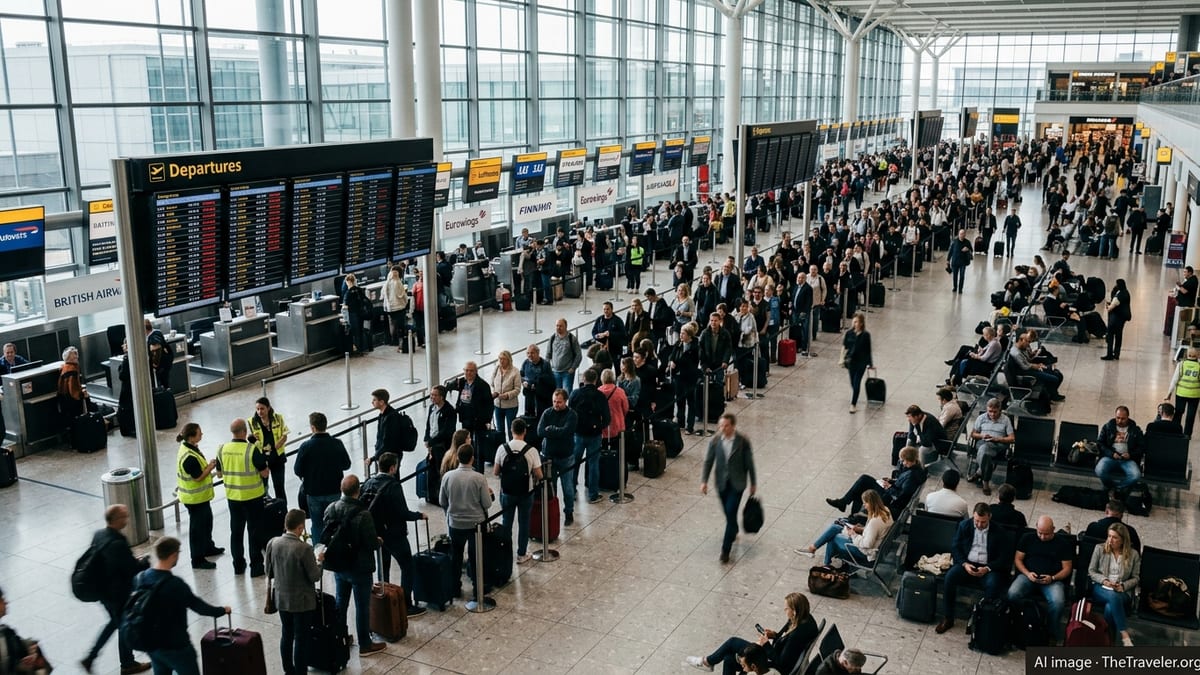
Wave of Disruptions Hits Major European Carriers
Publicly available flight-tracking and airport information shows that services operated by Lufthansa, SAS, British Airways, Finnair, Eurowings and Air France from London Heathrow have faced extensive disruption, with hundreds of passengers experiencing long delays and missed connections. The pattern of disruption includes congested transfer hubs and knock-on effects across northern and central Europe.
Reports indicate that around 420 flights connected to these carriers’ Heathrow operations were delayed, while at least 20 were cancelled outright, triggering missed onward journeys and overnight stays for many travelers. While exact causes can vary by flight, the cumulative effect has been a system-wide slowdown that is particularly visible on busy European corridors.
Travel data suggests that delays have clustered around peak morning and evening waves, when Heathrow’s schedule is densest and aircraft and crew are most tightly rotated. In such conditions, small operational issues on individual flights can quickly cascade into larger problems that ripple through an airline’s entire network.
The disruption has been especially acute for passengers relying on Heathrow as a connection point between the UK and Nordic and central European destinations, many of whom faced long queues at service desks, rebooked itineraries and uncertainty over compensation rights.
Passengers Stranded From Iceland to Switzerland and Beyond
The knock-on impact of the Heathrow disruption has been felt across a wide geography, with reports of stranded passengers in Iceland, Switzerland, Norway, Germany, France and Ireland. Travelers connecting through Heathrow on SAS and Finnair to Scandinavian destinations such as Oslo and Helsinki, and on Lufthansa, Eurowings and Air France to German and French cities, have faced missed connections and forced overnight stops.
In Switzerland, disrupted British Airways and Lufthansa passengers heading to and from Zurich and Geneva have reported being rebooked on later services or routed through alternate hubs in continental Europe. Similar reports have emerged from Iceland, where travelers connecting via Heathrow on British Airways and partner carriers have experienced extended layovers and last-minute itinerary changes.
In Ireland, Heathrow’s role as a primary gateway for transatlantic and European travel has meant that cancellations and long delays have led to crowded departure halls and rebooking backlogs. Passengers traveling on British Airways and partner airlines from Dublin and other Irish airports have described journeys extending many hours beyond their original schedules.
Germany and France, both heavily served from Heathrow by Lufthansa, Eurowings, British Airways and Air France, have seen ripple effects in the form of delayed arrivals, missed rail connections and disrupted business schedules, particularly on high-frequency city pairs such as London to Frankfurt, Munich and Paris.
Operational Strain and Tight Schedules at Europe’s Busiest Hub
Heathrow consistently operates at or near maximum capacity, and aviation analysts frequently note that this leaves little margin for recovery when problems arise. Public performance reports for European airports and airlines show that carriers such as Lufthansa, British Airways, Eurowings, Finnair and Air France already contend with a high volume of minor delays, which can quickly snowball when air traffic control restrictions, weather, or technical issues occur.
When multiple airlines share tightly timed slots at a congested hub, even brief disruptions, such as late-arriving inbound aircraft or short ground-handling delays, can push departure times back and force crews over their duty limits. This in turn can require last-minute aircraft swaps, crew changes or cancellations, each of which adds complexity to an already stretched operation.
Industry data indicates that reactionary delays are a significant factor for many European carriers, meaning a delay that begins on one leg of a journey can propagate through multiple subsequent flights. At Heathrow, where airlines like British Airways and Lufthansa group carriers schedule dense waves of connections, these reactionary effects are especially pronounced.
The current disruption has once again highlighted how vulnerable Europe’s busiest hubs are to chain reactions, and how quickly a handful of operational problems can translate into hundreds of delayed services and stranded travelers across multiple countries.
Travelers Face Long Queues, Rebookings and Missed Connections
For passengers, the most visible impacts of the disruption have been long queues at check-in, transfer and customer service desks, as well as frequent changes to departure boards and mobile app notifications. Many travelers have reported being rebooked on alternative routings involving extra stops or significantly longer journey times, particularly when trying to reach secondary cities in Norway, Germany or France.
Families and leisure travelers heading to or returning from trips in Iceland, Ireland and the Alps have faced difficult choices between accepting indirect itineraries or waiting for the next direct flight with available seats. In some cases, travelers have been split across different flights, adding further stress to an already challenging situation.
Public advice shared by consumer advocates and travel forums emphasizes the importance of keeping boarding passes, booking confirmations and receipts for accommodation, meals and transport, since this documentation can be required when seeking reimbursements under passenger-rights regulations. Many travelers affected by delays and cancellations involving European carriers look to well-known frameworks that cover long delays, cancellations and missed connections under certain conditions.
At Heathrow itself, the volume of disrupted passengers has tested terminal facilities, with busy gate areas and packed departure lounges during peak waves. Social media posts and traveler accounts describe a mix of frustration and resignation as departure times shift repeatedly and boarding processes are paused while crews and aircraft are reassigned.
What Passengers Can Do During Ongoing Disruptions
Travel specialists recommend that passengers caught up in large-scale disruption monitor airline apps and airport departure boards closely, as these channels tend to reflect schedule changes earlier than email notifications. Rebooking options can be time-sensitive, and travelers who act quickly when new flights appear may secure better routings.
Passengers connecting through Heathrow on Lufthansa, SAS, British Airways, Finnair, Eurowings and Air France are often advised to check whether every leg of their journey is listed under a single booking reference. When an itinerary is on one ticket, missed connections caused by earlier delays are typically handled as part of a through-journey, giving travelers stronger grounds for rerouting and assistance.
Travelers also benefit from knowing the basics of European and UK passenger-rights rules, as these set out what assistance, rerouting or financial compensation may be available in certain types of delay or cancellation. Publicly available guidance from consumer organizations explains how factors such as the length of delay, the distance flown and the cause of disruption all influence what passengers may claim.
With Heathrow entering another busy travel period, analysts suggest that passengers using the hub should build additional buffer time into itineraries involving critical same-day connections, especially on routes prone to congestion or seasonal weather challenges. While the scale of the current disruption is exceptional, the underlying pressures of tight schedules and limited runway capacity mean that even routine days at Europe’s largest airports can quickly become difficult for airlines and passengers alike.