

More news on this day
London Heathrow’s unprecedented shutdown following a nearby electrical substation fire continues to reverberate across airline schedules, with fresh cancellations, rolling delays and stranded passengers still working their way through the system days after the airport formally reopened.
Get the latest news straight to your inbox!
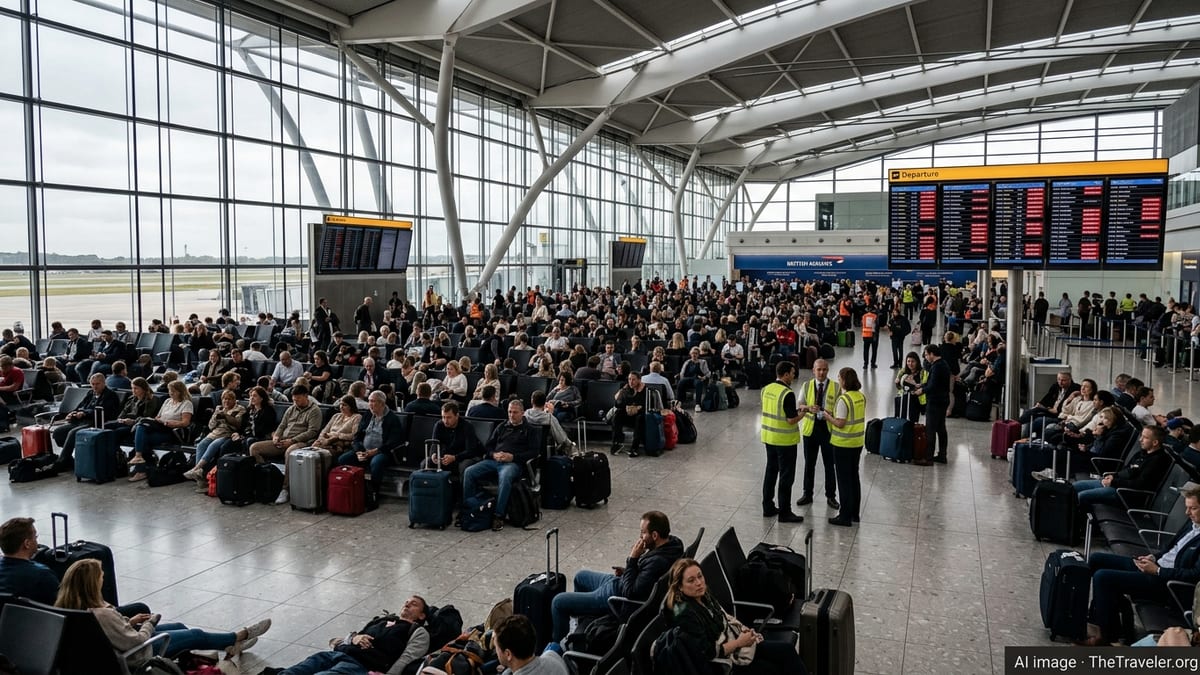
Power Failure Triggered Mass Cancellations Across Heathrow
Publicly available reports indicate that an overnight fire at the North Hyde electrical substation in Hayes on March 20, 2025, cut grid power to Heathrow Airport, forcing a complete halt to passenger and cargo operations on March 21. The outage affected all four terminals, disabling critical systems and leaving the airport unable to function at normal capacity. Backup power reportedly kept essential lighting and safety infrastructure running, but not enough to operate a full flight program.
Analyses of the disruption suggest that more than 1,000 flights were cancelled or diverted in a single day, affecting well over 100,000 passengers. Airlines concentrated on diverting inbound long haul services to other UK and near‑European airports and advising departing passengers to stay away from Heathrow. Travel advisories issued by insurers and aviation risk consultancies described an exceptional event for one of the world’s busiest hubs, with ripple effects expected to last for several days.
Data from subsequent traffic statistics underline the scale of the shock. Even as Heathrow moved back toward normal operations, official movement figures show hundreds of additional cancellations in the following weeks, far above a typical winter baseline. Those cancellations, combined with disrupted aircraft rotations, set the stage for a prolonged period of irregular operations that travelers are still feeling when rebooked journeys intersect with seasonal congestion and weather‑related delays.
Passengers Stranded as Aircraft and Crews Fell Out of Position
Accounts shared on travel forums and social media describe passengers stranded both at Heathrow and at airports worldwide, often sleeping in terminals or nearby hotels while waiting for replacement flights. With aircraft and crews out of position, airlines had limited flexibility to restore cancelled services quickly, particularly on long haul routes that rely on carefully choreographed rotations.
Many travelers reported multiple rebookings as carriers attempted to patch together itineraries using any available seats across their own networks and alliance partners. In some cases, passengers leaving North America or Asia were advised not to travel to the airport or warned that flights operating into the United Kingdom might not have a guaranteed onward connection through Heathrow. Others were rerouted through alternative hubs such as Gatwick, Manchester, Amsterdam or Doha, adding one or more extra connections to already long journeys.
The disruption went beyond leisure trips. Business travelers, students and those connecting to family events or cruises described scrambling to rearrange schedules at short notice. Some passengers opted to abandon trips entirely, turning to travel insurance for reimbursement of unused arrangements. Others chose to continue with heavily modified itineraries, accepting overnight layovers and indirect routings simply to reach their destination.
Ongoing Cancellations and a Tight Winter Operating Environment
Although Heathrow reopened after the emergency, the knock‑on effects combined with an already strained winter operating environment in early 2026. Industry commentary has described a pattern of elevated cancellations linked to a mix of factors including tight staffing, aircraft maintenance demands, poor weather episodes and strong seasonal demand that leaves little slack in the system.
Recent statistics from the UK Civil Aviation Authority for January 2026 show nearly 750 cancelled air transport movements at Heathrow in that month alone, a total significantly higher than at other major London airports. While not all of these cancellations are directly traceable to the power outage, experts note that large one‑day shocks can have lingering consequences as airlines adjust schedules, retire underperforming routes and consolidate frequencies to protect operational reliability.
Travel analysis pieces also point to a broader pattern of schedule trimming and route reshaping at Heathrow as airlines focus their limited slots on higher‑yield long haul and trunk European services. That approach can leave thinner routes more vulnerable to cancellation when an aircraft or crew is unavailable, intensifying the impact on passengers whose journeys rely on less frequent services into the hub.
What Travelers Need to Know About Rights, Rebooking and Costs
For passengers caught in Heathrow‑related cancellations, Europe’s air passenger rights framework is central to understanding what support is available. Under the UK version of Regulation 261, travelers on qualifying flights whose services are cancelled are generally entitled to a choice between a refund or rerouting to their final destination at the earliest opportunity or at a later convenient date, subject to seat availability.
Public guidance from regulators, consumer advocates and insurers notes that airlines must also provide care and assistance when passengers are delayed for long periods. This can include meals, refreshments, hotel accommodation where an overnight stay becomes necessary and transport between the airport and the hotel. If a disrupted passenger decides to make their own arrangements because queues at help desks are long or phone lines are busy, receipts are essential for later reimbursement claims.
Travel insurance advisories released after the Heathrow power outage remind policyholders to distinguish between airline responsibilities and insurance coverage. In many cases, insurers will only consider claims for additional travel and accommodation costs once the airline has fulfilled its legal obligations or where specific policy triggers such as abandonment are met. Travelers are encouraged to check policy wording carefully, especially for trip interruption, missed connection and delay benefits, and to keep documentation from airlines outlining the cause of cancellation.
Consumer groups also highlight that passengers whose journeys start outside the United Kingdom but connect through Heathrow may still have protections if they travel with a UK or European carrier. However, entitlements can vary for purely domestic segments, codeshare flights and itineraries involving non‑European airlines, making it important for travelers to verify the operating carrier and applicable jurisdiction on each leg.
Practical Advice for Upcoming Heathrow Departures and Connections
With Heathrow’s hub schedule gradually stabilizing but winter operations remaining tight, prospective travelers are being advised to build more resilience into their plans. Travel columns and airline advisory pages recommend allowing longer connection times when routing through Heathrow, particularly for itineraries that combine long haul and short haul flights or involve separate tickets on different carriers.
Frequent flyer communities stress the value of monitoring flights through both airline apps and independent tracking tools. These sources can give early warning of creeping delays or equipment changes that might signal a higher risk of cancellation. Where possible, booking the day’s earlier departures on a route can create more options to be rebooked later the same day if something does go wrong.
Passengers with critical time‑sensitive trips, such as cruises, tours with fixed departure dates or important events, are increasingly opting for arrival at destination at least one day earlier than strictly necessary. This buffer can help absorb disruption if a Heathrow connection is missed. Some travelers are also choosing itineraries that connect through alternative European hubs to diversify risk, though this often means trading convenience for resilience.
For those already booked through Heathrow in the coming weeks, experts suggest reconfirming contact details with airlines, checking bookings regularly for schedule changes and reviewing both airline and insurance terms before departure. While the immediate crisis around the substation fire has passed, the episode has underlined how quickly a single infrastructure failure can cascade into widespread travel chaos, particularly at a tightly scheduled global hub.