

More news on this day
London Heathrow has cemented its status as Europe’s busiest airport, handling more than 84 million passengers in 2025 and narrowly overtaking rivals in Turkey, Germany, the Netherlands, France, Switzerland and Austria to reassert the United Kingdom’s dominance at the heart of the continent’s aviation network.
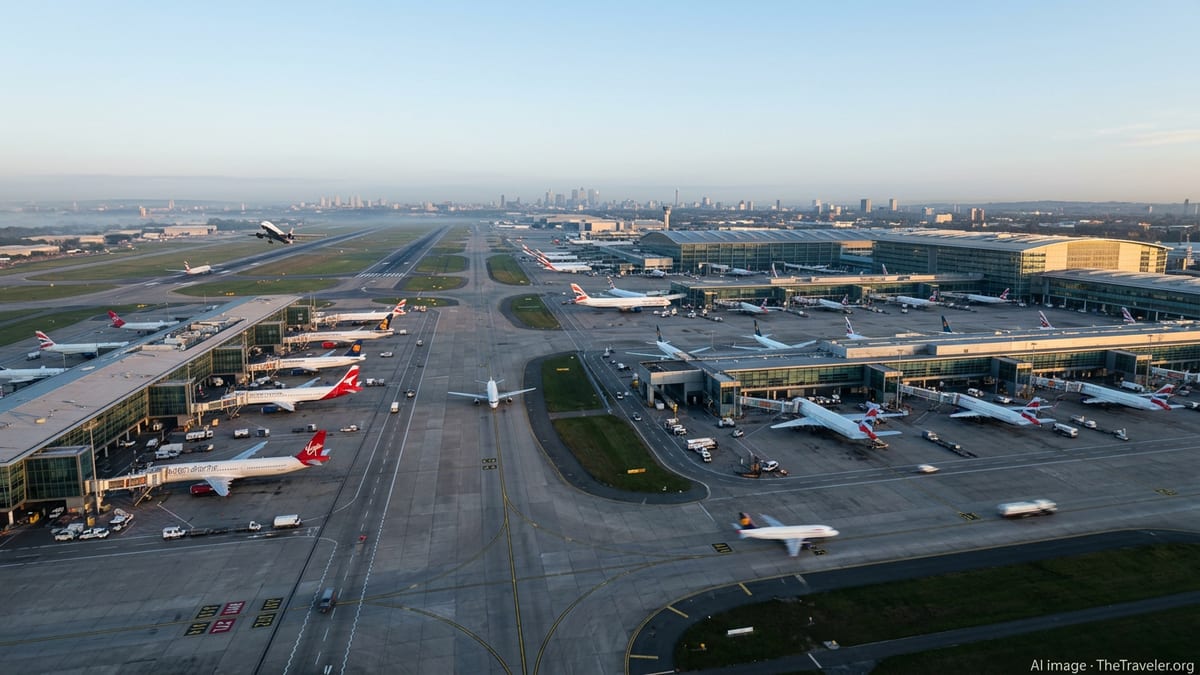
Record Passenger Volumes Lift Heathrow Above European Rivals
Fresh traffic figures show Heathrow at the top of the European rankings, with just over 84.4 million passengers passing through its terminals in 2025. That total places the London hub fractionally ahead of Istanbul Airport and well in front of major continental gateways in Paris, Amsterdam, Madrid, Frankfurt, Zurich, Vienna and beyond, underscoring the United Kingdom’s position as one of the world’s most connected aviation markets.
The new numbers build on a strong rebound in 2024, when Heathrow already led Europe with nearly 84 million travelers and continued to close the gap on pre-pandemic volumes. The airport’s growth has since slowed relative to some of its competitors, many of which are still catching up from steeper declines in previous years, but the raw scale of throughput at Heathrow has kept it marginally in front.
Heathrow’s passenger mix remains heavily international, with long haul services to North America, the Middle East and Asia playing an outsized role. Routes such as London to New York, Dubai and Doha are among its busiest city pairs, supporting both business travel and a resurgent premium leisure segment that has helped to fill widebody aircraft across key global corridors.
Industry analysts note that the latest ranking is particularly significant because it has been achieved despite the airport operating at or near maximum runway capacity. With only two runways and tight slot controls, Heathrow’s ability to squeeze out additional growth while maintaining its lead is seen as a testament to its entrenched position in airline networks.
United Kingdom Consolidates Its Role as a Global Aviation Powerhouse
Heathrow’s performance is part of a broader resurgence in UK aviation. The country handled an estimated 261 million passengers in 2024 across its airports, putting it firmly among the world’s largest air travel markets and ahead of any single nation in Europe. That momentum continued into 2025, with domestic and international demand remaining robust despite economic headwinds and elevated airfares.
Alongside Heathrow, other British airports such as Gatwick, Manchester and Stansted contribute to a dense and diversified network that serves both short haul European traffic and long haul intercontinental routes. Together, they give the United Kingdom a reach that extends deep into North America, the Gulf, South Asia and Africa, reinforcing London’s role as a global financial and cultural capital.
Carriers based in the UK and partner airlines from across the oneworld, Star Alliance and SkyTeam networks rely on Heathrow as a primary transfer point for Europe-bound and transatlantic passengers. The airport’s slot-constrained environment has, paradoxically, enhanced its attractiveness for network airlines, which concentrate high-yield services there to connect onward to dozens of secondary cities across the continent.
For the British government, Heathrow’s latest showing strengthens the argument that aviation remains a central pillar of national competitiveness. Ministers have repeatedly highlighted the value of connectivity for trade, tourism and investment, pointing to routes from London to emerging markets as critical to the country’s long term economic prospects.
Intense Competition From Istanbul, Paris, Amsterdam and Madrid
The race for the title of Europe’s busiest airport has grown tighter, with Istanbul Airport in particular emerging as Heathrow’s closest challenger. Istanbul welcomed around 84.4 million passengers in 2025, just behind Heathrow by a small margin, underlining Turkey’s ambitions to position itself as a global transfer hub bridging Europe, Asia and Africa.
On the European Union side, Paris Charles de Gaulle, Amsterdam Schiphol and Madrid Barajas have all posted solid growth, each serving more than 60 million passengers a year. Frankfurt, Barcelona, Zurich and Vienna round out a field of high-performing hubs that compete with Heathrow for both direct origin and destination traffic and transfer passengers.
These rival airports often benefit from room to expand, with additional runway capacity or more flexible planning environments that allow for incremental growth in flight movements. Airlines have responded by building secondary hubs and point-to-point operations that reduce their dependence on London, especially in the low cost and short haul sectors where alternative airports can offer lower charges and fewer constraints.
Despite that competition, Heathrow’s geographic position on the transatlantic axis, combined with the concentration of global corporate headquarters and financial services in London, continues to give it an edge in higher yielding segments. Industry observers say that while the margin over rivals may narrow from year to year, the airport’s structural advantages make it difficult to dislodge from the top of the European table.
Capacity Constraints and the Long Debate Over a Third Runway
The renewed spotlight on Heathrow’s status has also revived scrutiny of its long running capacity challenge. Executives at the airport have warned that the existing two runways are close to full, limiting growth in flight movements even as demand for seats continues to rise from airlines and passengers alike.
Plans for a third runway, first approved in principle by the UK Parliament several years ago, have faced legal challenges, environmental concerns and cost inflation. The estimated price tag for a full expansion, including new terminal infrastructure and surface transport links, now runs into tens of billions of pounds. Supporters argue that the investment is essential if Britain is to protect its share of global air traffic and prevent rival hubs from capturing future growth.
Opponents, including local campaign groups and climate advocates, counter that further expansion would undermine the United Kingdom’s emissions targets and worsen noise and air quality for communities under the flight path. They have called for more emphasis on rail alternatives for short haul journeys within Europe and better use of capacity at other UK airports rather than concentrating additional traffic at Heathrow.
Regulators at the Civil Aviation Authority are weighing how to balance the commercial interests of Heathrow’s predominantly overseas investors with the need to keep fees at levels that airlines and passengers can bear. The outcome of those decisions will help determine whether the airport can fund large scale expansion while maintaining the competitive position it has just reaffirmed.
What Heathrow’s Lead Means for Travelers and Airlines
For travelers, Heathrow’s renewed claim to the top European spot is likely to translate into even greater choice on key long haul routes. Airlines are already adding capacity to North American and Middle Eastern destinations, while Asian carriers rebuild schedules that were cut during the pandemic. Increased competition on these trunk routes can help moderate fares, even if underlying costs remain elevated.
The airport is also pushing ahead with terminal upgrades, security enhancements and baggage system improvements aimed at smoothing the passenger experience at peak times. While crowding and queues remain a concern during holiday periods, recent investments in technology and staffing have reduced some of the disruption that plagued the early post-pandemic rebound.
For airlines, Heathrow’s scale and connectivity mean that scarce slots at the airport continue to command a premium. Legacy carriers and new entrants alike see value in maintaining or securing a foothold, whether for flagship routes or niche services that rely on feed from the larger network. Trading of slots, alliances and joint ventures remain central tools in shaping the competitive landscape around the London hub.
As the global aviation industry looks beyond recovery toward a new phase of growth, Heathrow’s ability to stay just ahead of Istanbul, Paris, Amsterdam and other rapidly expanding rivals will be watched closely. The latest passenger figures confirm its status as Europe’s busiest airport and, for now, the beating heart of the region’s aviation supremacy.